The emerging risk of resource extinction in India
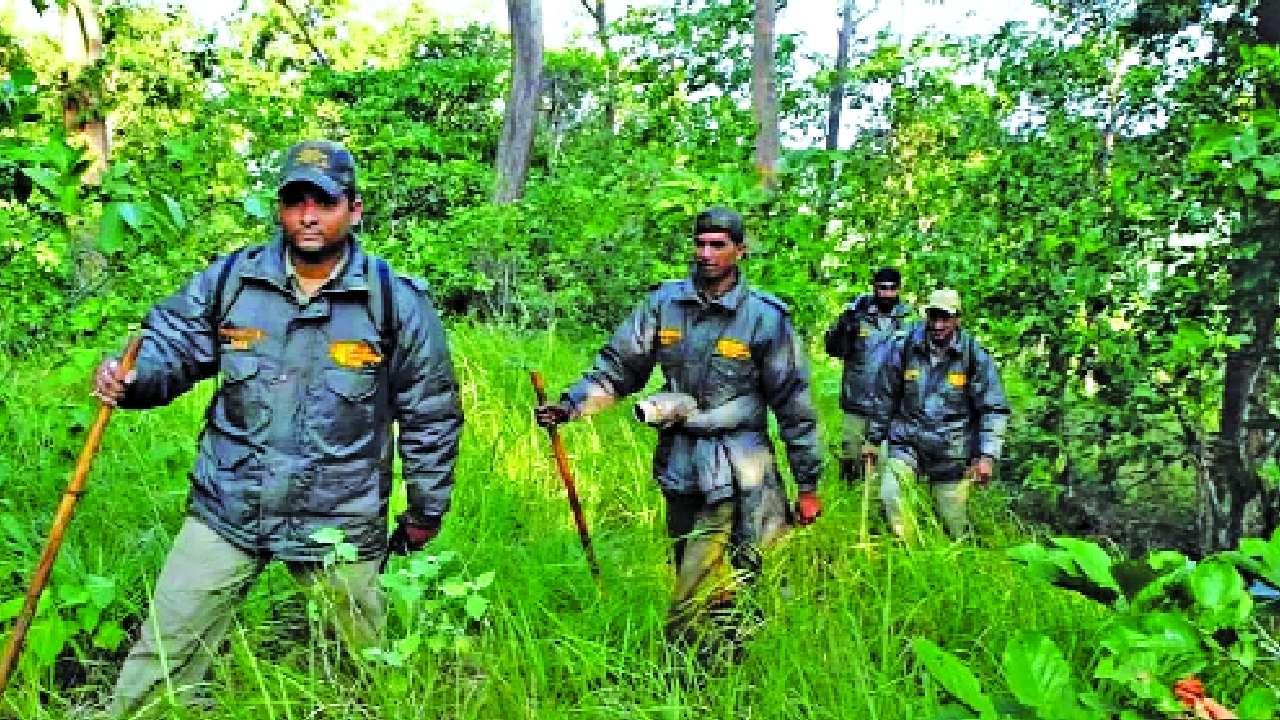
Forests have long served as a crucial source of subsistence and economic security for human societies. In India, this relationship remains particularly significant for millions of tribals and forest-dwelling communities, where the central element of this socio-economic connection is Minor Forest Produce (MFP), also known as Non-Timber Forest Produce. It includes all non-timber forest produce such as fruits, seeds, tendu leaves, resins, gums, medicinal plants, honey, bamboo, lac, etc.
Gum karaya, commercially known as Indian tragacanth, is an important MFP obtained from the exudate of the Sterculia urens tree. Also known as the ‘ghost tree’ because of its smooth, papery, shimmering silver bark with an apparent nocturnal luminosity, it is commonly found in central and peninsular India, primarily in Madhya Pradesh, Chhattisgarh, Maharashtra, Telangana, and Andhra Pradesh. Gum Karaya finds use in the food, pharmaceutical, textile, printing, and cosmetics industries.
Till 1996, the Forest Department auctioned Gum Karaya and controlled its removal through Transit Permits. The administrative oversight over both extraction and trade was ensured by enforcement of non-destructive methods of extraction and assessment of the harvestable gum from the designated forest tracts. Institutions like the Girijan Cooperative Corporation (GCC), Andhra Pradesh (est. 1956); Tribal Development Corporation (TDC), Maharashtra (est. 1972); and MFP Federation, Madhya Pradesh (est. 1984) predominantly handled its trade and ensured remunerative prices for the gum collectors. Simultaneously reducing the dominance of private intermediaries, they strengthened the institutional framework for marketing, storage, and distribution. The Panchayats (Extension to Scheduled Areas) Act, 1996 (PESA) marked a significant step towards decentralised governance. It endowed Gram Sabhas with the ownership of MFPs. Within six years, another nationwide framework for governance of ‘biological resources’ was created through the Biological Diversity Act 2002 (BDA).
Under this, the Biodiversity Management Committees (BMCs) at the local level were empowered to document the biological resources, charge a levy on those moving into the market, and assist the access-and-benefit-sharing mechanism associated with their commercial utilisation. Thereafter, the Forest Rights Act 2006 (FRA) was enacted to recognise and vest in Forest Dwelling Scheduled Tribes (FDSTs) and Other Traditional Forest Dwellers (OTFDs) the rights of ownership, access, and disposal over MFPs traditionally collected by them.
Interestingly, separate institutions handle the five major statutory instruments exercising control over the MFPs, including Gum Karaya. The Indian Forest Act 1927 (IFA) and Wildlife (P) Act 1972 (WLPA) are implemented by the Forest Department in forest areas, except in the ‘Community Forest Resource’ areas where Gram Sabhas under the Rural Development Department (RDD) implement FRA Rules; BDA by the institutions under the National Biodiversity Authority on all lands; PESA by the Panchayati Raj Ministry in ‘scheduled areas’; and FRA by the Tribal and Social Welfare/Rural Development Department on forest lands.
While overlapping legal mandates and institutional ambiguities have impacted different dimensions of MFP governance, the enforcement of misinterpreted provisions of the Acts is pushing MFPs’ resource bases towards a biological collapse. The Gram Sabhas, endowed with “ownership of minor forest produce” in scheduled areas as per PESA, were expected to manage the ‘commercial aspects’ of the produce after it was “severed” from the tree or forest land. These could include MFP trade, distribution to members, value addition, pricing, etc.
The management of the MFP’s ‘biological aspect’, being ‘species-specific’ and inextricably linked to the integrated treatment of total biodiversity in the area of its occurrence, requires adherence to silvicultural principles. It has traditionally been handled by the Forest Department. An over-enthusiasm for democratisation, perhaps, led to the glossing over of this critical aspect, and management of the resource base, i.e. the forest ecosystem, was given to Gram Sabhas.
While implementing the FRA also, the interpretation of the ‘right of ownership on the MFP traditionally collected’ has been overstretched to presume that it inherently includes the ‘right of management of the forest that produces the MFP’. The clause ‘MFP which has been traditionally collected’ has been stretched to hand over the complete commercial exploitation and trade of MFPs like tendu leaves to the Gram Sabhas. Further, although the FRA is mandated to benefit only the FDST and OTFD communities, the rights of ownership of MFP and management of the community forest resource area are recognised in favour of Gram Sabhas, considering them to be ‘eligible communities’, while completely disregarding their heterogeneity and without fulfilment of criteria mandated under the FRA.
From 1996 onwards, the institutional role of the forestry sector, of providing technical guidance on management practices, though a critical requirement, has not been incorporated into the governance frameworks created by different ministries. State-specific PESA Rules, such as those notified in Maharashtra, grant Gram Sabhas the discretion to seek technical advice from the Forest Department and to decide whether such inputs should be incorporated into local resource management decisions. Similarly, forestry officials are not included as formal members of BMCs or Community Forest Resource Management Committees (CFRMC) constituted under FRA provisions. The Ministry of Tribal Affairs (MoTA) has gone to the extent of asking the states to dissolve all Joint Forest Management Committees (JFMCs) in the Forest Department, disregarding the fact that the scope, beneficiaries, as well as the area of operation of CFRMC and JFM are distinctly different.
Going further, the CFR-related guidelines issued by the MoTA in 2023, followed by the PM-JUGA framework in 2024, have effectively alienated the Forest Department and its silvicultural expertise by introducing private ‘technical partners’ on a contractual basis.
Fragmented institutional arrangements and siloed implementation of Acts by different departments on the same resource have undermined sustainable MFP management by complicating landscape-level coordination on essential aspects like fire control, non-destructive harvesting, regeneration, invasive species management, and ecological monitoring.
The practices driven by short-term market incentives and mediated through rural elites and intermediary-dominated value chains have tended to prioritise immediate economic returns over long-term resource stewardship. The overstretched interpretation of ‘owning the resource’ has rendered the field-level enforcement of seasonal restrictions, tapping permits, transit rules and, in some instances, temporary bans on harvesting to promote resource conservation and sustainable yield management, executed previously by the Forest Department, a thing of the past. The ecological consequences of these, as evident in the case of Sterculia species as a representative source of MFP, have simply been disastrous.
Sterculia trees demonstrably suffered the proverbial ‘tragedy of the commons’, with widespread tree mortality threatening their extinction. With the forests treated practically as a commodity warehouse, Gum Karaya’s domestic production reduced from 2720 MT to 540 MT, an eighty per cent fall in the last thirty years.
Institutions like GCC, historically a monopoly buyer, have started importing, processing and re-exporting Gum Karaya sourced from African countries; MP and Chhattisgarh Federations had to transition from “Service Providers” to “Revenue Earners” for the State, and with the only tool with the State being a “ban on tapping”, these organisations are now gasping for the resource with just the Bastar area available for harvesting today. The TDC in Maharashtra approaches Gram Sabhas, buying even from areas where the gum collectors have been trained to inject the trees with chemical stimulants (like ethephon) for increasing the yield. The perceived reliability and value of Indian Gum Karaya have suffered in the global pharmaceutical market and have adversely affected India’s export reputation. While we celebrated ‘rights’ and democratisation, Sterculia trees silently moved towards extinction and the site of rural livelihood generation shifted from India to African countries. India cannot afford to let forests become biologically unproductive and economically irrelevant. It must prioritise forest sustainability since the long-term resilience of MFP-based livelihoods will depend on the development of a seamlessly integrated governance framework that harmonises people’s rights, scientific forest management, and market regulation, while avoiding an apparent jurisdictional turf war amongst sectors. An integrated approach is no longer a choice but a necessity for the survival of our natural resources.
The writers are Former PCCFs of UP and Maharashtra; views are personal