The echo chamber against Modi: When ideology outpaces evidence
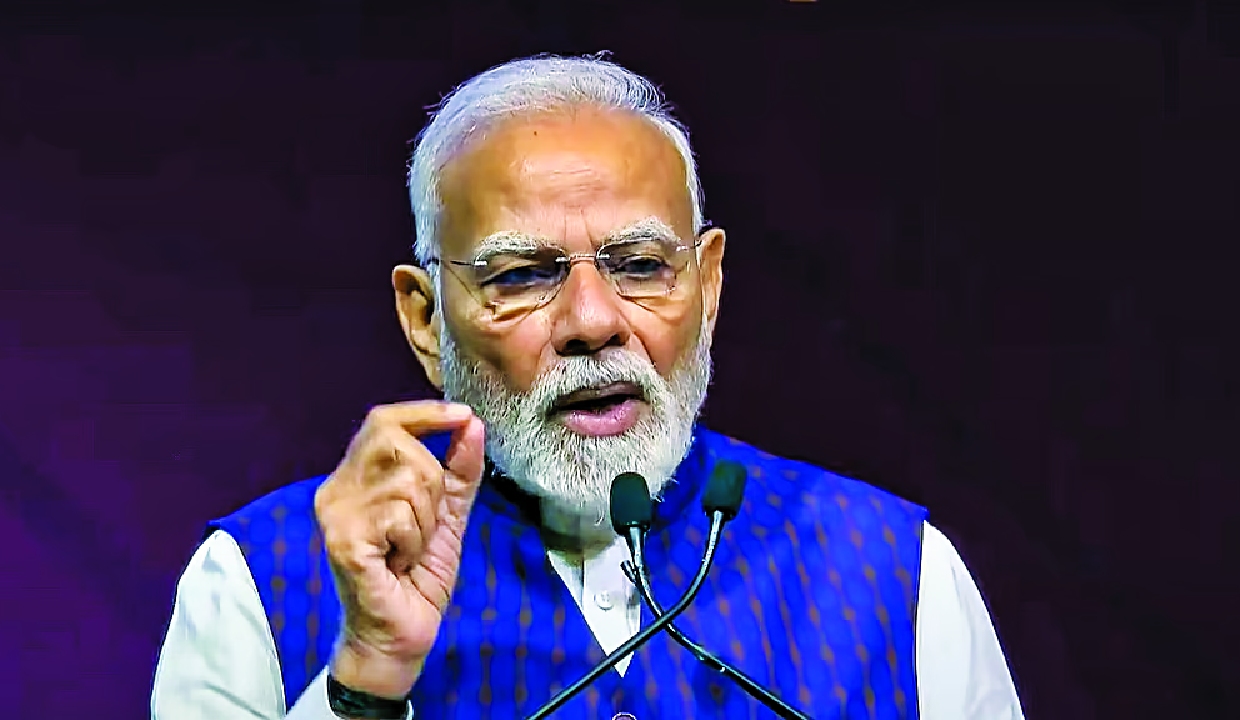
Narendra Modi has won three national elections in a row, in 2014, 2019, and 2024, each time growing or strengthening the BJP-led National Democratic Alliance. Alongside his continued popularity in polls, India has seen major improvements in infrastructure and digital systems. For instance, national highways have almost doubled since 2014, and digital tools like the Unified Payments Interface (UPI) now handle trillions of rupees in transactions every month. Internet connections have jumped from about 250 million to nearly 970 million. The government has also taken a more active role in foreign policy by joining the Quad, building closer ties with Gulf countries, and leading vaccine diplomacy.
Even with these changes, many Indian left-leaning writers, the Delhi-based 'Lutyens' English media, and much of the Western media still describe Modi's time in office as authoritarian and anti-democratic. This article argues that their criticism often reflects their own beliefs more than policy results, and that the pattern is less about careful analysis than a self-reinforcing echo chamber that uses selective standards and old narratives.
Modi's ascent, originating from a non-dynastic, RSS-linked background in Gujarat, bypassed the usual power structures. Because he reached out to people directly through rallies, his 'Mann ki Baat' radio show, and social media, he did not have to rely on traditional media. Many established English-language media outlets, which used to follow Congress-era views, have seen changes in their audiences and owners. As TV news has become more divided, some channels have backed the current government and focused on Hindi and regional-language viewers.
Critics call these channels 'Godi media' (lapdog media), but earlier media often did not question Congress scandals or dynastic politics and rarely faced criticism for that. (BJP) policies challenge the traditional Nehruvian paradigm, which equates progress with Western-style secularism and state-led redistribution. Policy initiatives such as the abrogation of Jammu & Kashmir's special status (Article 370), the Citizenship Amendment Act (which expedites citizenship for persecuted non-Muslim refugees), and proposals for a uniform civil code are frequently described as 'anti-minority.'
Proponents argue that these measures aim to correct historical imbalances or address security concerns.
However, the article argues that the available data indicate a more nuanced reality.
These international rankings deserve a closer look because they rely heavily on experts' opinions on issues like 'freedom of expression' and 'civil society.' On the other hand, clear facts, such as regular multiparty elections, voting rights for all, and peaceful changes in government, are presented as evidence of India's strong democratic record. Indian government reviews, including those from the Economic Advisory Council, have found problems with these rankings. They cite unclear expert selection, reliance on outdated polling data, and comparisons that may not fit each country's unique circumstances.
The Indian populace after 2014 seems to align with the BJP's rise in culture and politics more than with any real decline in election fairness. Similar rankings have been criticised for favouring liberal-internationalist ideas over local ways of governing in diverse, developing countries. The article says double standards are clear. Western media often closely examines how India handles dissent or communal issues, but gives softer or less coverage to similar problems in countries like China (with Uyghurs), Pakistan (blasphemy laws and minority migration), or even Western countries when it suits their politics. For example, India was criticised for buying cheaper Russian oil during the Ukraine war for 'values,' while European countries making similar choices faced less criticism.
Media stories about the Citizenship Amendment Act (CAA) and farm law protests often focus on 'minority rights' or 'farmer distress' but don't always provide sufficient legal, economic, or historical context. This is part of a broader trend: when non-Western countries, especially India with its Hindu majority in a mostly Muslim region, show national or cultural pride, they are often described as illiberal. Since 2014, India's path of economic reform, infrastructure building, modernising defence, and pursuing a more independent foreign policy has challenged the idea that every country should follow a Western liberal model.
As China's influence has grown, India has also taken a more practical approach, but major Western media still give critical coverage.
They often mention issues like control of institutions, mistreatment of minorities, and economic problems, usually linking them to investigations by the Enforcement Directorate (ED) and Central Bureau of Investigation (CBI) against opposition leaders, even though these actions happened before 2014, too. Opposition-led state governments also employ comparable strategies, and the judiciary continues to function as a check on executive authority. When media members are arrested, it is usually for charges under current laws about incitement or other offences, not because of broad censorship. Critical digital and print media are still active. The situation for minorities is complex and involves different trade-offs. Hate speech and occasional violence do happen and are tracked by the NCRB and civil society groups.
What is needed is the well-being of marginalised groups across numerous communities. Assertions of widespread 'othering' frequently emphasise perceived intent rather than measurable outcomes and may neglect the policy context of illegal migration and security challenges following partition. The introduction and the early rollout of GST caused problems, and issues such as unemployment and inequality persist. Still, India has experienced steady, strong growth among the world's major economies, increased foreign investment, rapid expansion of digital infrastructure, and a push for manufacturing and services through PLI schemes.
There are real criticisms, such as gaps in policy implementation, increased polarisation, some government overreach, and uneven welfare delivery, all of which deserve fair review. But ongoing outrage often goes beyond the facts and shows more about existing biases than about what is actually happening in India.
Indian voters have chosen continuity again and again, no matter what international rankings or the media say. The changes seen under Modi, even with their flaws, force established institutions to adjust to a world where Western views are no longer the only ones that matter. In this changing situation, countries in the Global South are placing greater emphasis on sovereignty, development, cultural identity, and democracy. The ongoing echo chamber shows how hard it is to change deep-rooted opinions, rather than pointing to any one feature of Modi's government.