Social ‘lurkers’ better than ‘users’
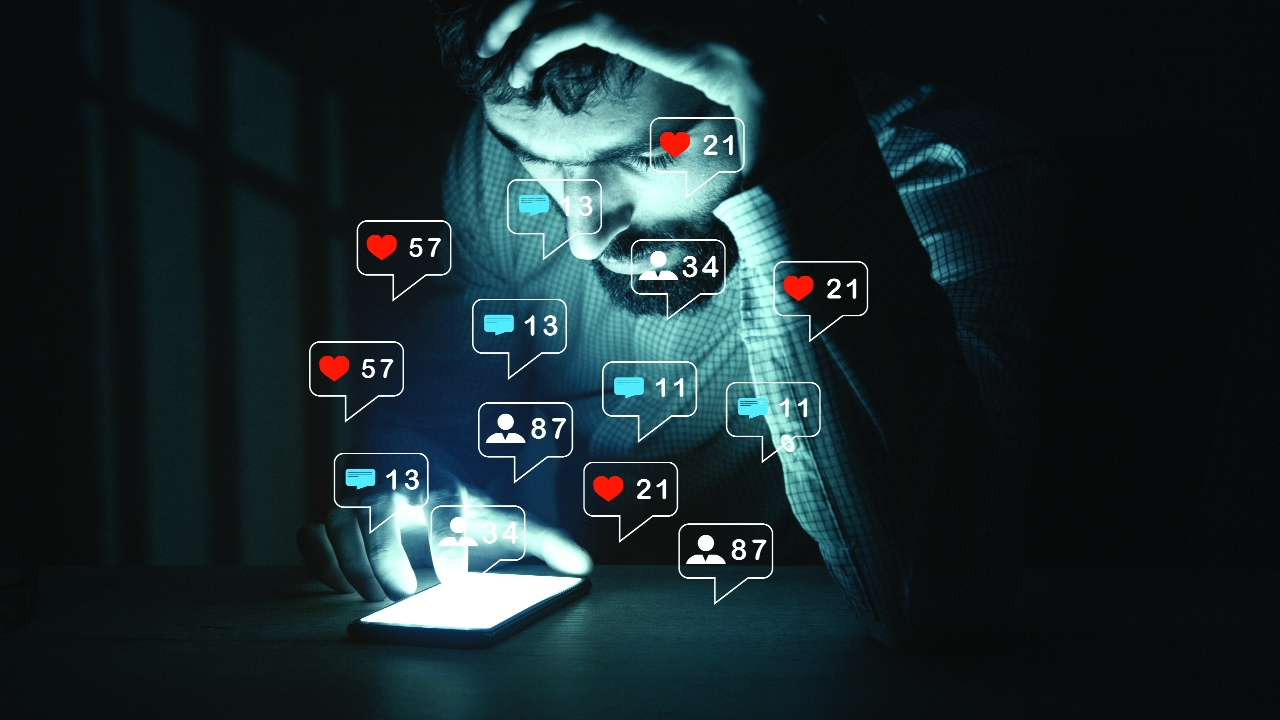
I did a simple exercise after I read an insightful piece on the psychology of those who are present on social media but “do not comment,” “do not share,” and “do not post.” Of the 250 ‘friends’ on Facebook, a pitiable and puny number compared to most friends, about 30-odd interact aggressively, i.e., either daily or once in 2-3 days. Another 30-odd are passive-aggressive, or engage with the platform at least once-a-week. In effect, this is about a fourth of my so-called friends, who include more acquaintances that I may have met once, or did not meet at all.
Psychologists will dub me as a social media ‘lurker,’ who wishes to be present online but hides away from doing anything much except perhaps, an occasional ‘like’ on posts, maybe 3-4 times a week. But this includes 75 per cent of my friends. Shocking as it may seem, I am the lucky one. Recent research shows that 90 per cent of social media users are ’lurkers,’ who view online content, and that is it. “That is an enormous silent majority…. (But) the lurkers get treated as background noise. Or worse, as somehow failing at social media by not contributing,” states the latest piece that I read.
However, experts contend that lurking may not be a failing but a strength. Those who are present on social media, and merely observe and absorb from what is happening out there, are not disengaged. They imbibe, and content still influences them in myriad ways. It is something like what happens on WhatsApp, or with Instagram reels. One may not react to texts but reads them in the first instance. Similarly, one watches reels at random, like a mad person on Insta. Lurking is like hearing and seeing, and reflecting on it.
Hence, lurking is a healthy choice. One is not sure if it is healthier than social media engagement but that does not matter. In contrast, researchers feel that those who engage actively “highlight idealised versions of themselves, suppress what does not fit the image, and engage in constant impression management.” The fact remains that this process is “cognitively and emotionally expensive.” It creates a split personality of sorts among the low minority ‘users.’ They either show the good side, or the bad (more acceptable) one, and invest in a form of low subterfuge, and hiding, which is different from the lurkers.
Of course, there are studies that indicate the opposite. One of them linked depression with lurking among college students. Passive browsing triggers comparisons, as it does, and inculcates FOMO. This happens to me sometimes when I see personal posts of holidays, and dinners, and professional ones of people giving lectures, being panel members, and addressing workshops. Hence, the
difference lies between compulsive lurking, and doing it by choice, and deliberately. The latter may be a different feeling, if one browses for information, and yet opt out of the “self-preservation circus.” Research makes a distinction.
A study found that “lurking behaviour is driven by multiple factors, not all of them negative. Some people lurk because of social media fatigue. Some lurk to protect their privacy. And some lurk because they have to get what they need from the platform, information, connection, awareness, without paying the psychological tax….” According to the writer of the piece I read, “That last group fascinates me…. They have kept the first (information function), and discarded the second (performance function). And when you frame it that way, it starts to look less like passive consumption, and more like an intentional choice.”
I remember that I switched off years ago, maybe 15 years ago, for several reasons. One was the distinction, rightly or wrongly, in my mind that active social media engagement introduces negativity. This happens when a new book you wrote gets five likes, and a new portrait photo of a ‘friend’ gets 878 likes. My reason for being there was different. I wanted to connect with friends who could tell me about interesting articles, fascinating books, and talks and lectures. Instead, I was bombarded with cooked food, holidays, and random thoughts.
Indeed, the image of social media platforms, being in the profession that I am, as a manipulative, money-making, eye-ball-scrounging, and antitrust entities generally pulled me away from them. More so, when my ‘wall’ was bombarded by sponsored content, and of those that the platforms wanted me to follow. I did not want that content. I had to wade through dozens of the unwanted posts before I could reach those by friends. This happened on Facebook's news feed too. In the end, it became oppressive, meaningless, and bizarre.
One feels that I was right. Recent research shows that “even a one-week reduction in social media use led to significant decreases in anxiety and depression symptoms among young adults (not that I am young by any standards). The lead researcher (in the study) noted that by the third week of reduced use, participants showed a 24 per cent decrease in depression symptoms, and 16 per cent reduction in anxiety. Those are meaningful numbers. And while that study looked at overall reduction rather than lurking specifically, it supports the broader idea that reducing your active engagement… has real psychological benefits.”
According to the author of the piece I read, “stepping back from the performance of social media is not avoidance. For many people, it is a form of self-preservation. Lurking is not laziness. It is a choice to consume without performing, to observe without being observed, and to stay informed without handing your mental energy over to an algorithm that profits from your participation. In a world that rewards noise, choosing silence is one of the most deliberate things you can do.” I agree, although I am not a true lurker, given the ‘likes’ I give.
More importantly, lurking or disengagement on social media give rise to a phenomenon that is possibly most required today. It makes a person stay away from random, immediate verbal-violence bursts that escalate into abuses, and physical violence. In the rage of online disagreements, as happens in the case of verbal fights between couples, and family members, we go overboard, and say things we never should have, or could have. In some cases, the anger, supported by past emotions, makes us act like we never should. As studies and experiences indicate, violence on the streets, and at homes, may stem from social media.