Ram Navami: Devotion, discipline, and its cuisine
Ram Navami, marking the birth of Lord Ram, commemorates not only the advent of a revered deity but also the ideals that have shaped civilisational thought for centuries. Observed on the ninth day of the bright half of the Chaitra month, the festival unfolds as a moment of
profound spiritual significance across India. In Hindu belief, Ram is an incarnation of Vishnu, who takes birth to protect the virtuous and re-establish moral order whenever dharma declines. The festival, therefore, celebrates with joy a cosmic intervention to restore order and righteousness. Homes are sanctified, temples resonate with recitations, and communities gather in prayers and hymns. In this atmosphere, food, regarded as an extension of faith, is prepared with care and devotion where recipes, and methods of preparation align with spiritual intent.
The historical roots of Ram Navami can be traced back to ancient traditions of the Indian subcontinent, where the Ramyana evolved not merely as a literary text but as a guiding framework for ethical living. In remembering and honoring these moral tenets, the teachings are relived and their relevance to modern day life re-affirmed. Fasting assumes a central role in this observance, reflecting both discipline and devotion. Devotees often abstain from grains, onion, garlic, and heavy foods, choosing instead preparations that are light, sattvic, and pure. This dietary restraint reflects the larger philosophical understanding that food influences both body and mind, and that it complements purity in thought. As the day progresses from prayer to family and communal gathering, the cuisine comes into focus as a medium through which devotion is expressed and shared.
Celebrations of Ram Navami in Ayodhya, revered as the birthplace of Lord Ram, is especially immersive and elaborate. The entire town transforms into a sacred landscape of illuminated temples, and a grand shobha yatra (procession) marks the moment of Ram’s birth at noon. The atmosphere is devotional yet celebratory, with thousands of pilgrims gathering at ghats along the Sarayu River for ritual bathing and prayer. What distinguishes Ayodhya’s celebration further is its deeply rooted food tradition, which remains strictly sattvic, reflecting the same ideals of restraint, devotion, and harmony that define the life and legacy of Ram.
Across India too, preparations begin in earnest early in the day with prayers offered in temples, recitation of the Ramayana, fasting and processions marking the birth of Lord Ram. Homes are cleaned and decorated, deities are bathed in milk and adorned in fine garments. Sabudana is soaked to the precise softness required for cooking, lentils are rinsed and left to rest, coconut is grated fresh, and spices are carefully laid out. Soon, the kitchen comes into focus. Traditional recipes are recalled by the elders and the younger members learn with patience and attentiveness. What appears to be the preparation of a festive meal becomes the preservation of a living tradition carried through generations with repetition and care.
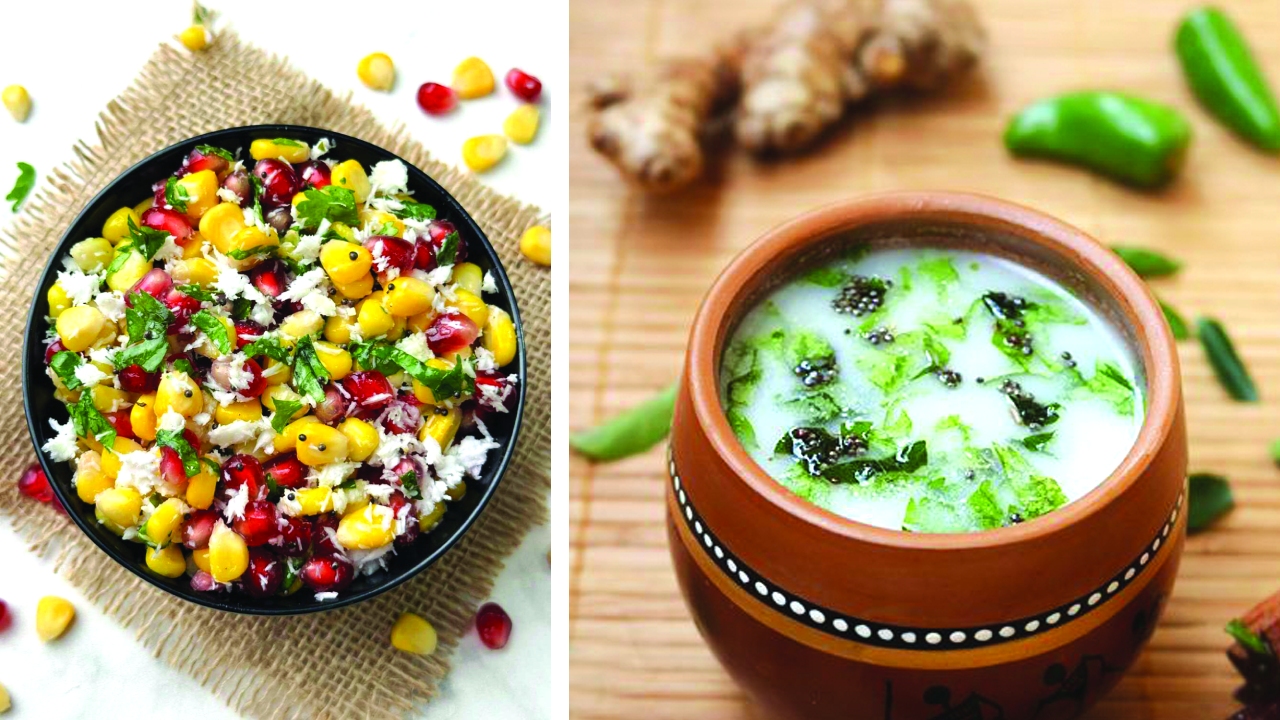
Among the most widely prepared offerings is panakam, a traditional beverage that holds both ritual and practical significance. Prepared using jaggery dissolved in water, it is flavoured with dry ginger, black pepper, and cardamom, creating a drink that is both cooling and invigorating. The inclusion of spices balances the sweetness of jaggery, making it suitable for the onset of warmer weather that coincides with the festival. This is first offered to the deity before being shared as prasad, reinforcing humility and gratitude, and recognizing that nourishment is a divine blessing, not merely a personal entitlement. Alongside panakam, neer mor or spiced buttermilk is also prepared, particularly in southern India. Yogurt diluted with water is tempered with curry leaves, mustard seeds, and green chillies, creating a light and refreshing drink that aids digestion while offering respite from the heat.
Kosambari, a simple yet nourishing salad of soaked lentils, grated coconut, and cucumber, represents another essential preparation that precedes the main meal. Lentils are soaked with care taken to preserve their natural texture and nutritional value. Tempered lightly with mustard seeds and curry leaves, the dish embodies the principle of minimal intervention, allowing ingredients to retain their inherent qualities. This approach is visible across many Ram Navami dishes, where cooking techniques are deliberately restrained to preserve the integrity of each
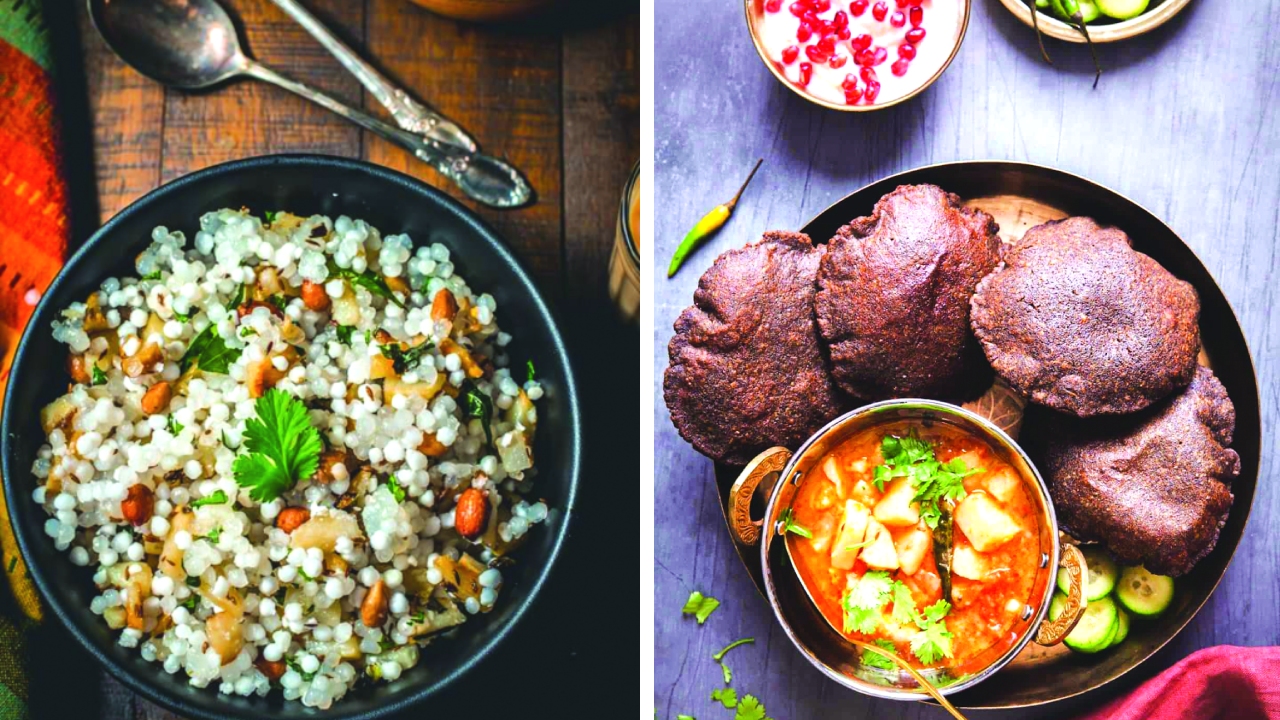
ingredient. The main meal often comprises sabudana khichdi that stands out as one of the most recognisable dishes associated with fasting. Tapioca pearls are soaked until soft and then cooked with roasted peanuts, cumin, and green chillies. The addition of boiled potatoes provides substance, while a squeeze of lemon adds brightness. The dish is both filling and easy to digest. Similarly, buckwheat or kuttu flour lends itself to a variety of breads such as kuttu ki puri, kuttu ki roti, and lightly pan cooked parathas, while other fasting flours like rajgira and singhara are used to prepare rajgira rotis and singhare ki puris. Alongside these, preparations such as sama ke chawal ki roti and farali thalipeeth further expand the range, each offering a distinct texture while adhering to fasting traditions. These are often paired with aloo sabzi prepared without onion or garlic, where the potato curry is flavoured with cumin, ginger, and green chillies. The potato curry, which acts as an
accompaniment, is flavoured with cumin, ginger, and green chillies. Another staple is sama ke chawal, or barnyard millet, which serves as a substitute for rice during fasting. Cooked either as a pulao with mild spices and vegetables or as a kheer with milk and sugar, it demonstrates the adaptability of traditional grains within dietary restrictions.
Rice based preparations also feature prominently. Adapted according to regional traditions and availability of ingredients, the rice dish is made with tamarind, lemon, coconut, and curd but shares a common emphasis on simplicity and digestibility. Akki payasa, a rice pudding prepared with jaggery and coconut milk, offers a variation. The use of coconut milk lends a subtle richness while maintaining a lighter profile. In many households, jaggery pongal is prepared, where rice and lentils are cooked together and sweetened with jaggery, then enriched with ghee, cashews, and raisins. The dish carries both ritual significance and culinary satisfaction, often offered as prasad before being shared.
Lauki ki sabzi, prepared from bottle gourd, is another common dish. Cooked gently with minimal spices, it retains its natural flavour and lightness, aligning with the sattvic nature of the cuisine. Arbi ki tikki, made from colocasia roots, offers a variation in texture. The boiled roots are mashed with spices and shaped into patties before being shallow fried until crisp. The exterior develops a light crust while the interior remains soft, creating a contrast that enhances the eating experience. Similarly, farali patties, often prepared during fasting periods, combine mashed potatoes with a filling of coconut, peanuts, and mild spices, resulting in a dish that is both nourishing and flavourful.
Sweet preparations occupy a place of pride in the cuisine of Ram Navami, though they differ in character from the rich desserts of other festivals. Rava kesari, prepared from semolina roasted in ghee and cooked with sugar, water, and saffron, offers a gentle sweetness complemented by the aroma of cardamom. The texture is soft yet structured, and the dish is often garnished with cashews and raisins. Similarly, sabudana kheer and makhana kheer are prepared by simmering soaked tapioca pearls or roasted fox nuts in milk with sugar and cardamom until they reach a creamy consistency. The translucence of sabudana and the soft, porous texture of makhana create desserts that are both light and satisfying. Another frequently prepared dish is sweet potato halwa, where boiled sweet potatoes are mashed and cooked with ghee, jaggery, and cardamom. Coconut laddoos and dry fruit laddoos, made using grated coconut, nuts, and natural sweeteners, are shaped into small spheres that are easy to prepare and distribute. In parts of southern India, aval payasam prepared from flattened rice simmered in milk or jaggery offers a lighter, fragrant variation that complements the sattvic nature of the meal.
Fruit based preparations also assume importance during Ram Navami. Fresh fruits are often consumed directly or incorporated into dishes such as fruit chaat, where seasonal fruits are combined with a light seasoning of rock salt and pepper. Often s dash of lemon is added for flavour. The emphasis on fruits reflects both their availability during the season and their suitability for fasting, offering natural sweetness and hydration.
The diversity of beverages prepared during Ram Navami deserves particular attention. Beyond panakam and buttermilk, drinks such as badam milk are frequently prepared. Almonds soaked and ground into a paste are mixed with milk, saffron, and cardamom, creating a beverage that is both nourishing and aromatic. Tender coconut water is also widely consumed, valued for its natural electrolytes and cooling properties. In some regions, jaggery based sherbets infused with herbs and spices, such as bel sharbat prepared from wood apple, are offered as a refreshing alternative that complements the lightness of the meal. These beverages not only provide hydration but also balance the dietary simplicity of the festival.
Across India, the temple prasad offered on Ram Navami reflects a rich regional diversity, but conforms to the principles of purity and devotion associated with Ram. In North India, especially around Ayodhya, panakam, panchamrit (a blend of milk, curd, honey, ghee, and sugar), and simple kheer are commonly distributed, symbolizing nourishment and auspiciousness. In Maharashtra, offerings often include sooji halwa and sabudana khichdi, aligning with fasting traditions. Moving south, in states like Tamil Nadu and Karnataka, temples prepare panakam alongside kosambari emphasizing cooling, easily digestible foods suited to the season. In Andhra Pradesh and Telangana, pulihora (tamarind rice) and chalimidi (a rice flour and jaggery sweet) are distinctive offerings, blending taste with ritual significance. Eastern regions, including parts of Odisha and West Bengal, favor chuda dahi (flattened rice with curd) and seasonal fruits, reinforcing simplicity and sattvic balance. Despite these regional variations, the essence of prasad remains uniform, food sanctified through offering, shared as grace, and rooted in a timeless cultural ethos.
In its entirety, Ram Navami represents more than a ritual observance. It is recognized as a civilizational observance that binds history, spirituality, and culture into a tradition. The celebration of the birth of Ram is not merely devotional but a reaffirmation of values that have shaped the societal ideals like dharma, restraint, and just conduct across centuries. Its spiritual depth is reflected in prayer, introspection, and the preparation of sattvic cuisines, where purity of food mirrors purity of thought and intent. In an age of rapid change and cultural transformation, I believe that preserving the essence of such festivals becomes essential, not as nostalgia, but as a conscious effort to carry forward a refined moral and cultural inheritance. For future generations, Ram Navami offers not just a story to remember, but a way of life to understand, embody, and sustain.
As evening approaches and the day’s observances draw to a close, what remains is a sense of quiet fulfilment. The meals prepared and shared throughout the day leave behind a sense of purity, duty and contentment. In my view, the cuisine of Ram Navami offers a lesson that extends beyond the festival itself. It reminds us that food, when approached with awareness and intention, can become a medium of discipline, gratitude, and connection. It becomes, therefore, our collective responsibility to safeguard these traditions, and carry forward a heritage to ensure that the essence of Ram Navami continues to endure in both spirit and sustenance.
(The writer is Secretary, Cuisine India Society); views are personal