No fuel for vehicles without valid PUC certificate from Thursday
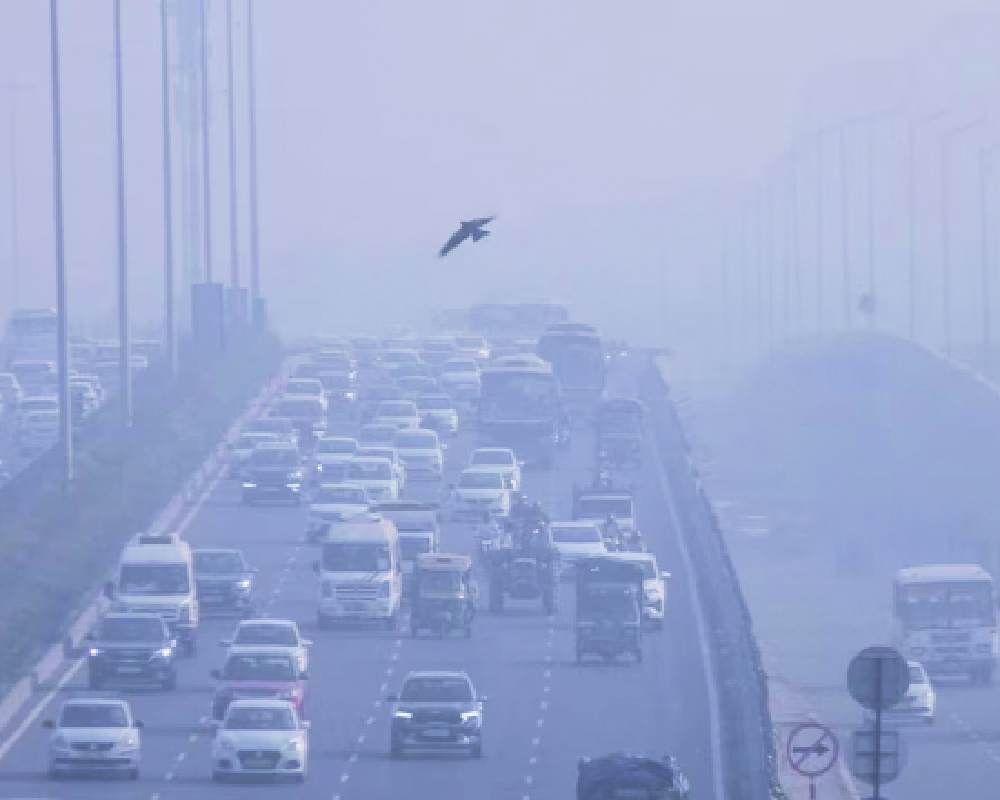
As the air pollution level touched a severe zone, the Delhi Government on Tuesday announced that vehicles without a valid Pollution Under Control (PUC) certificate will not be allowed to refuel at petrol pumps in the national Capital from Thursday.
Apologising for the rising air pollution in the national Capital, which is impacting everyone’s health, Delhi Environment Minister Manjinder Singh Sirsa on Tuesday announced a fresh set of strict measures to curb air pollution in the national Capital, including a ban on fuel for vehicles without a valid Pollution Under Control (PUC) certificate and restrictions on the entry of non-BS-VI vehicles from outside the city.
“To control vehicular tail pipe emissions, all the dealers of the petrol/diesel/CNG pumps are directed to dispense/sell the petrol/diesel/ CNG to motor vehicles only on production of a valid Pollution under Control Certificate (PUCC). Vehicle owners have been given one day to comply with the PUC norms,” said Sirsa, addressing a press conference here.
“Cameras installed at petrol pumps will automatically identify vehicles without valid PUC certificates, and from Thursday, such vehicles will be denied fuel without any confrontation or disruption,” Sirsa said. All other older vehicles from outside Delhi will be restricted from entering the national capital. Residents with compliant vehicles can continue normal travel and refuelling within the city, while strict enforcement will be in place at entry points and petrol pumps.
The Minister clarified that Automatic Number Plate Recognition and on-ground checks will be deployed to verify PUCC status and emission category of vehicles, and directed citizens not to argue with enforcement officials at fuel stations and borders when found non-compliant.
Sirsa said penalties have already been imposed on more than 8 lakh vehicle owners who currently do not possess valid PUC certificates. It is mandatory for all vehicles running on Indian roads, including two-wheelers, to have a PUC certificate. It also should be renewed and updated regularly. The PUC certificate is a legal document that certifies a vehicle meets the required emission standards and is up-to-date.
He added, “To protect Delhi’s air, all vehicles registered outside of Delhi and below the BS-VI category will not be allowed to enter Delhi when GRAP III & IV is in place. Delhi will not allow any polluting vehicle to enter and pollute the air.” Additionally, any vehicles carrying Construction materials will not be allowed to enter Delhi when GRAP Stage IV is in place. The minister said that from Thursday and until further orders, only BS-VI compliant vehicles from outside Delhi will be allowed to enter the city. The minister also apologised for the toxic air in the national capital. “I would like to apologise to the people of Delhi and state that it is not possible for any elected government to completely reduce pollution levels within 9–10 months,” Sirsa said at a press briefing. “This disease of pollution is given to us by the Aam Aadmi Party, and we are working to fix it,” he said.
Meanwhile, Congress MP Priyanka Gandhi Vadra on Tuesday took a swipe at Sirsa over his apology for the worsening air quality in the national capital, questioning its purpose and accused the Central government of failing to initiate meaningful discussion in Parliament on the issue. Speaking to reporters, the Congress MP said, “What is the point of apologising?... We have said that everyone should collectively take solid decisions, but not even a discussion is happening here (in the Parliament).”
Targeting the Aam Aadmi Party (AAP), Sirsa alleged that the party had been in power in the last 10 years but failed to take effective steps to control pollution, and is now blaming the present government and staging protests.
The minister said Delhi’s air quality remained better for nearly eight months in 2025 compared to the same period last year. Acknowledging that pollution levels have worsened recently, he claimed that the situation is still better than last year due to sustained efforts by the current government over the last 10 months.
Highlighting Government iniatives to curb pollution, Sirsa said actions are being taken daily. The height of the capital’s garbage mountains have been reduced by 15 metres; of the total 202 acres of land affected by legacy waste, 45 acres have been cleared and reclaimed, and plantation drives have begun there, he said, describing it as a major achievement in the last 10 months.
Similarly, the Delhi Pollution Control Committee has installed more than 2,000 pollution-monitoring plants so far and collected fines to the tune of Rs 9.21 crore. The enforcement is also being carried out by other departments, he said. Sirsa said biomethanation plants also contribute to pollution, and the government has provided 10,000 heaters to reduce emissions and ensure cleaner operations. While the previous government had identified 13 pollution hotspots in 2018, the current government has identified 62, and is working to address them. The Air Quality Index levels in these locations were lower this year than in the past decade -- barring during the Covid period -- which is a significant achievement, the minister said.
Sirsa said Delhi currently has 3,400 electric buses. The government is pushing for cleaner public transport, and plans to deploy 7,500 electric buses that would significantly reduce vehicular pollution. A scientific committee has been constituted, which has already held meetings to recommend effective pollution-control measures.
He also criticised Congress leaders Rahul Gandhi and Priyanka Gandhi Vadra for commenting on the issue now. “Today, they are talking about wearing masks. Where were they when the AQI was around 380 on this day last year? They were silent because they were in support of the AAP at the time,” Sirsa said.
In the last few days, authorities in Delhi and the National Capital Region invoked the strictest level of pollution control under the Graded Response Action Plan, known as GRAP-4, after air quality levels deteriorated sharply into the severe or severe plus category.
This triggered emergency measures, including restrictions on heavy vehicle entry, reduction of office attendance with work-from-home directives, and shifting school classes to hybrid or online modes for several grades.
DPDA welcomes the No PUCC, No Fuel rule
New Delhi: The Delhi Petrol Dealers’ Association (DPDA) on Tuesday welcomed the “No PUCC, No Fuel” rule to be enforced from Thursday in view of plummeting air quality, but noted that its effective enforcement would be an “extremely difficult and arduous task”.
In a statement, the association said it has consistently maintained that petrol pumps are not an enforcement agency and also deal in essential commodities.
The implementation of the “No PUCC, No Fuel” rule is the responsibility of the competent authorities vested with statutory powers. Any attempt by petrol pump staff to enforce this rule may lead to law-and-order disturbances, a position the DPDA has repeatedly emphasised on several occasions. In these challenging times, when air pollution is gravely impacting public health, extraordinary steps are indeed necessary, it noted.
“We welcome the initiative taken by the Delhi government. However, effective enforcement of this directive remains an extremely difficult and arduous task,” the statement read.
The DPDA requested the government to ensure effective implementation of the order by deploying personnel from the concerned enforcement authorities at every petrol pump.
The association said it wholeheartedly supports all measures being taken by the Delhi government to combat the severe air pollution crisis that is causing immense hardship to the residents of the national capital.
It also stressed that the city is suffering more from transboundary pollution than from sources within the city limits.
“Pollution does not respect geographical boundaries. Measures confined solely to the National Capital Territory (NCT) of Delhi are unlikely to yield the desired results unless uniformly implemented across the entire National Capital Region (NCR),” the statement noted.
I would like to apologise to the people of Delhi and state that it is not possible for any elected government to completely reduce pollution levels within 9–10 months