Last frontier: The ideological battle against Naxalism
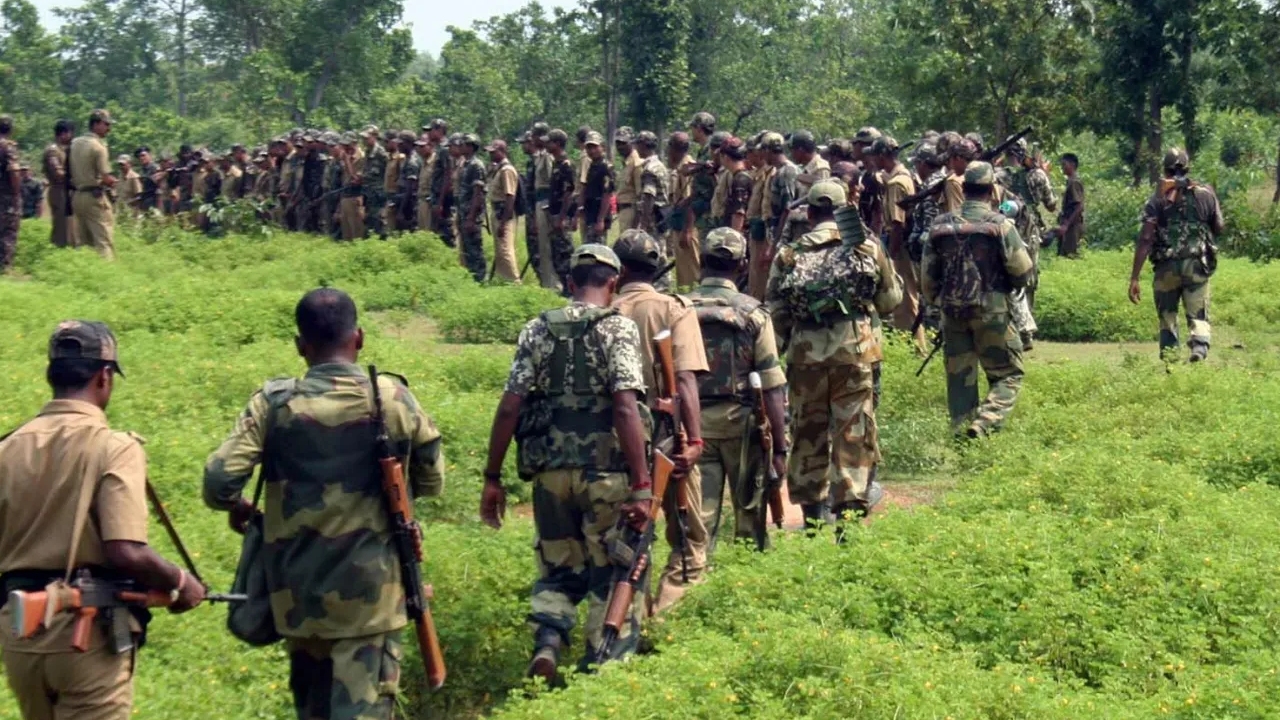
What began as a radical peasant uprising nearly six decades ago and evolved into one of the country's most persistent internal security challenges appears to be approaching its final phase. While the armed movement is nearing its collapse, the ideological battle that underpins the Naxal ideology remains far from over.
The Naxal movement traces its origins to the Naxalbari uprising in West Bengal in 1967, where a peasant revolt ignited the broader Maoist insurgency. By 1969, the formation of the Communist Party of India (Marxist - Leninist) under Charu Mazumdar gave organisational structure to this revolutionary impulse. However, the movement soon faced decline in the 1970s due to state crackdowns, internal divisions and leadership losses. The insurgency re-emerged in the 1980s-1990s through groups such as the People's War Group (PWG) and the Maoist Communist Centre (MCC), eventually culminating in their merger in 2004 to form the CPI (Maoist). This marked the beginning of the movement's most violent phase, between 2005 and 2010. This is the phase where Maoists controlled vast stretches of land across eastern and central India, called the 'Red Corridor'. From being described as the 'single biggest internal security challenge facing the country,' the discourse around Naxalism has evolved significantly in recent years. Repeated assertions by the Hon'ble Prime Minister and the Union Home Minister have emphasised that the movement is now in its terminal phase, with a clear national objective of eliminating Left Wing Extremism by March 2026. Recent data highlights a clear pattern of decline in Maoist capabilities and a weakening morale of existing cadres. Arrests and Surrenders have surged, reflecting internal demoralisation and a shrinking support base.
Large-scale attacks - once the hallmark of Maoist operations - have significantly decreased, now replaced by sporadic, localised violence lacking strategic coherence. Coordinated security operations, improved intelligence, and sustained political focus and will have reduced the insurgency to a shadow of its former self. Perhaps the most striking indicator is the contradiction of the movement's geographical footprint.
From 126 affected districts in 2013, the number dropped to 38 by 2024 and further to 11 in 2025. This is about a 91% reduction in districts affected by Left Wing Extremism in 12 years. This dramatic rollback is not merely a security success; it represents a structural weakening of the insurgency's ability to sustain itself. The 2026 target represents not just political will and ambition but actual measurable progress on the ground.
While evidence paints a picture of a movement in terminal decline - the data revealing a shift from Maoist actions to defensive and reactive behaviour - history offers a cautionary lesson. Instances within our country and abroad provide examples of how 'ideas are bulletproof'. Ideas are inherently more resilient than armed formations. They exist beyond territory, weapons, or organisational hierarchies to survive. Even as Naxal violence declines, the ideological narratives that sustained the movement continue to circulate. These narratives often reframe violence as legitimate resistance against perceived state oppression, thereby diluting moral condemnation and sustaining sympathy for the cause. The disconnect between the security operations' success and ideological persistence presents India's next major challenge beyond 31st March 2026.
Maoist ideology is not confined to the remote forested regions. It thrives within a broader urban ecosystem that includes intellectual spaces, academia, theatre, cultural platforms and digital spaces. These narratives are disseminated through debates and activism, often romanticising armed violence. Cultural mediums play a powerful role in shaping public imagination, portraying the Naxal movement with moral sympathy while questioning the state's legitimacy.
This ecosystem is not necessarily a coordinated conspiracy, but rather a layered network of influences that collectively sustain and legitimise Maoist thought. Its resilience lies in its decentralised nature and its ability to operate independently of the insurgency's physical presence.
Maoist narratives spread through certain identifiable channels. Digital media has amplified the reach of these ideas, enabling them to transcend geographic boundaries and target new audiences, especially the youth. Young people are particularly vulnerable to ideological influences due to the role of peer networks, campus movements, and emotionally resonant narratives. These narratives shape and sway public perceptions more powerfully than factual counter arguments, making ideological contestation a long-term endeavour.
As security forces 'reclaim' the erstwhile Naxal territories, the State is faced with its most consequential challenge of demonstrating that governance can bring tangible gains to
the lives of the communities affected by the Naxal violence. It wouldn't be an exaggeration to suggest that the durability of peace in these areas will be incumbent upon the perpetual delivery of peace, justice and development by the government institutions. Roads, schools, healthcare facilities, and digital connectivity are not mere developmental projects - they are instruments of legitimacy. Economic revival is equally critical. Restoring markets, livelihood, and local economies integrates these regions to the national mainstream, fostering peace and stability.
The post - 2026 phase requires a strategic shift from conflict management to peace consolidation. This involves a long-term commitment to inclusive governance, sensitivity to local cultures, conflict mapping and sustained engagement with affected communities. A transition from a security-centric approach to a service-delivery model is essential.
This must take precedence as it would appropriately address the root cause that was once exploited by Naxal narratives, leading to Maoist mobilisation. Equally important is the need for a fact-based public narrative that counters misinformation and acknowledges, along with the surrendered cadres, the victims of Naxal violence. Youth-focused skill development programmes can further serve as a powerful tool for preventing radicalisation by creating economic opportunities.
India's progress against Naxalism is undeniably remarkable. What was once described as the country's 'single biggest internal security threat' has now been reduced to a limited law-and-order challenge confined to a few districts. However, this is not the end of the journey against the Naxal movement. The final battle lies not in the realm of the 'jungle and zameen', but in the realm of ideas. Without addressing the ideological ecosystem that sustains Naxalism, there is a risk that
The movement could re-emerge in new forms. Durable peace rests on the pillars of opportunity, legitimacy and trust. Development must create opportunities; governance must build legitimacy, and sustained, area-specific engagement must foster trust between the state and the tribal communities of the region.
We may have won the battle of arms, but the war of ideas continues, and Bharat's success in eliminating Naxalism from its soil ultimately would depend on its success in winning both.
The writer is Research Fellow at India Foundation; views are personal