Jaishankar defends India’s humane decision as Iranian warship IRIS Lavan docks in Kochi
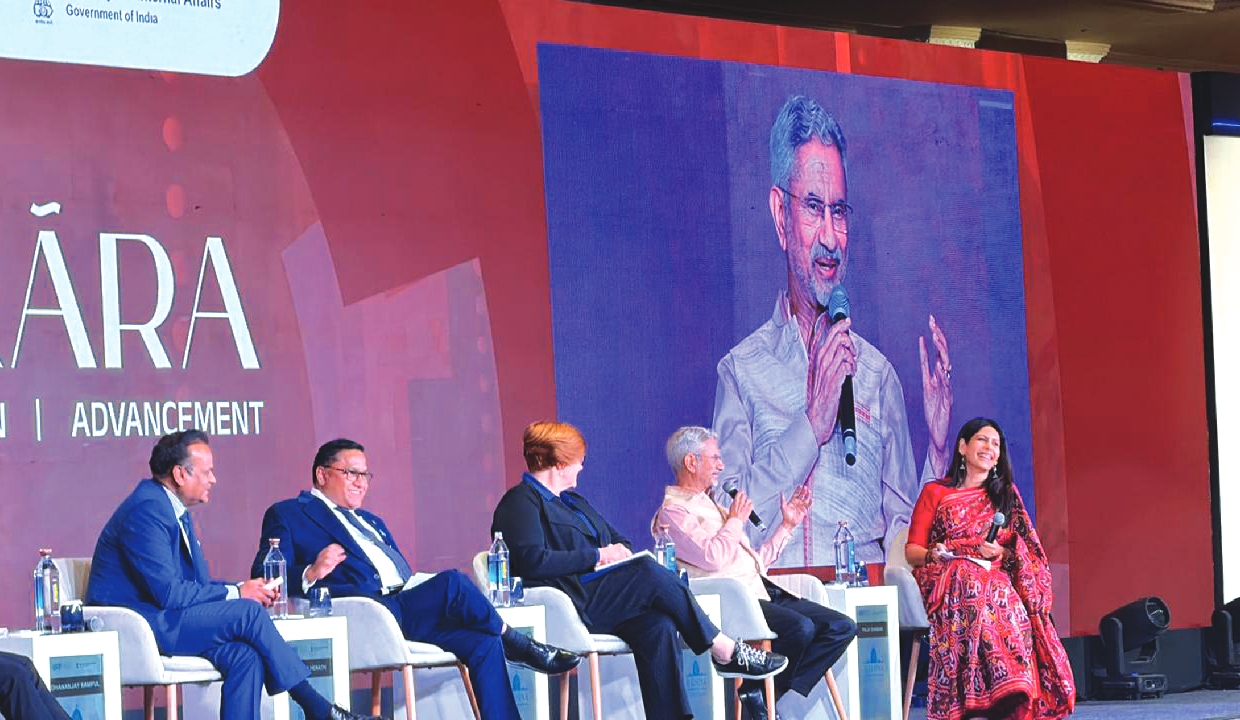
External Affairs Minister S Jaishankar said India’s decision to allow the Iranian naval vessel IRIS Lavan to dock in Kochi was guided by humanitarian considerations, even as the development coincided with rising tensions in regional waters.
Speaking at the Raisina Dialogue during a session titled “Heart of the Seas: The Future of the Indian Ocean,” Jaishankar explained that the Iranian ship had sought emergency access to an Indian port after reporting technical difficulties while operating close to India’s maritime boundaries.
“We felt it was the humane thing to do,” Jaishankar said, referring to New Delhi’s decision to permit the vessel to dock. He noted that the ship had originally been scheduled to arrive in India for a fleet review but had ultimately been “caught on the wrong side of events.”
According to the minister, Iran had approached India on February 28 seeking urgent permission for the vessel to enter port due to technical issues. The request was approved on March 1, after which the ship took several days to reach India before docking at Kochi earlier this week.
Jaishankar noted that the ship carried several young naval cadets, underscoring the humanitarian dimension of India’s response. “They were coming in for a fleet review and then they got in a way caught on the wrong side of events,” he said.
The docking has drawn attention because it came just days before another Iranian warship, IRIS Dena, was reportedly sunk by a United States submarine off the coast of Sri Lanka while returning from an international naval exercise hosted by India. More than 100 sailors are believed to be missing or presumed dead following the incident.
Referring to developments in the region, Jaishankar said that countries sometimes face difficult decisions in rapidly evolving security situations. “One obviously had a similar situation in Sri Lanka, they took the decision which they did and one of them unfortunately didn’t make it,” he remarked.
Emphasising India’s approach, Jaishankar said the Government had considered both legal and humanitarian aspects before granting permission. “We approached the situation from the point of view of humanity, other than whatever the legal issues were, and I think we did the right thing,” he said.
The minister also reiterated India’s support for international maritime norms, particularly the United Nations Convention on the Law of the Sea (UNCLOS), which governs navigation rights and responsibilities in international waters.
Addressing the wider strategic debate surrounding the incident, Jaishankar noted that the Indian Ocean has long witnessed the presence of foreign military forces. He pointed out that the US military base at Diego Garcia has existed in the region for nearly five decades, while international military deployments in Djibouti began in the early 2000s. He also referred to the development of Sri Lanka’s Hambantota port during the same period, indicating that the Indian Ocean’s strategic landscape has been evolving for years.
Officials said the IRIS Lavan, carrying a crew of 183 personnel, is currently stationed at Kochi, where the sailors are being accommodated at Indian naval facilities while the vessel undergoes necessary checks.
The episode has unfolded amid heightened geopolitical sensitivities in the Indian Ocean region, where growing military presence and maritime competition among global powers continue to shape the security environment.