Inside GenZ’s political mind
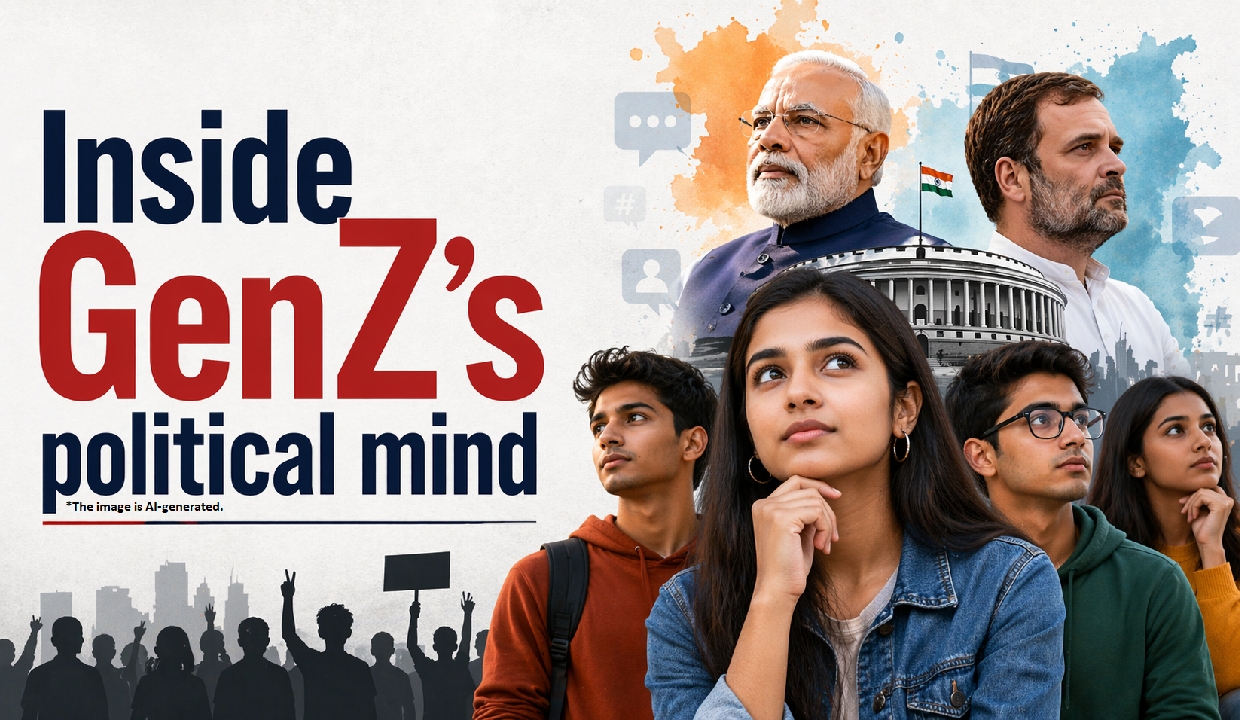
India’s political conversation is quietly being reshaped by a generation that grew up with smartphones, digital payments, and real-time information. Urban Gen Z voters, those between 18 and 22 today, do not evaluate politics through the traditional lenses of ideology or party loyalty. Instead, they assess leadership much like they evaluate apps or start-ups: by performance, usability, and outcomes.
Forget the stereotype of the “distracted teen.” After my informal interactions with over 1,000 urban Gen Z respondents in Delhi, Mumbai, Bengaluru, Hyderabad, and Ahmedabad recently, I found a demographic that is deeply analytical and surprisingly pragmatic. For this cohort, politics is about a ‘market-fit product’. When looking at the two primary faces of Indian politics, Prime Minister Narendra Modi and LoP Rahul Gandhi, this urban demographic is leaning towards the former because his governance style hits the specific “likes” of a generation raised on efficiency.
Two of the highest “likes” in our interactions were “performance-driven leadership” and “measurable outcomes”. PM Modi’s mantra, “We inaugurate what we lay the foundation for,” resonates with a generation that values speed over rhetoric. For an undergraduate Gen Z, witnessing India become the world’s third-largest start-up ecosystem with over 2 lakh start-ups within a decade of the Startup India Mission is a lived reality. This is also visible in the rapid execution of the India AI Mission, with India ranking third in the Global AI Competitive Index by Stanford and hosting a global AI summit within just two years of its launch. Similarly, the India Semiconductor Mission saw the Sanand plant inaugurated in just 900 days from its foundation, with nine more coming up in less than five years of its launch. From the world’s tallest rail bridge (Chenab) to the Atal Setu and Sela Tunnel, these mega projects were completed in record time, shattering the “decades of delay” seen under previous Congress-led governments. These are not just headlines; they are lifestyle upgrades delivered by their leader, instilling a firm belief in these youngsters that their future in India is exceptionally bright.
Urban Gen Z’s political views have moved towards meritocracy and consistency, creating a clear disconnect with Rahul Gandhi. This hustling generation often sees Rahul Gandhi as a “part-time politician”. His legislative record shows 51 per cent attendance in the 17th Lok Sabha, 52 per cent in the 16th, and 43 per cent in the 15th. His frequent absence from key debates in Parliament during important discussions, often due to trips abroad, falls below national averages and suggests a lack of commitment. For young voters, holding on to ‘supreme leader’ status solely due to dynastic succession after nearly 100 electoral losses goes against the merit-based culture that Gen Z values.
Moreover, Rahul Gandhi’s approach to negative politics, which includes endorsing negative slogans like “Modi teri kabra khudegi” and supporting the “shirtless protest” at the India AI Impact Summit, conflicts with a generation that wants a constructive approach. By reportedly praising those who tried disrupting a global tech summit in front of foreign delegates, Gen Z says he chose a political stunt over India’s global reputation. This attitude against development, opposing every pro-people decision, and engaging in “propaganda politics” from abroad suggests a leadership based on conflict rather than policy. In the end, Rahul Gandhi’s focus on caste-based discriminatory politics and attacks on democratic institutions makes his style harder to connect with for a development- and innovation-driven Gen Z.
For Gen Z professionals in commerce and tech, the opposition’s dismissal of “Make in India” and UPI has been decisively debunked by a high-performance economic reality. In FY 2025, India’s total exports hit a record $825.3 billion, bolstered by a 73 per centsurge in FDI ($47 billion). Among its highlights is India’s ascent as the world’s second-largest mobile manufacturing hub and smartphones becoming the top export category in FY 25. Simultaneously, UPI has democratised finance, handling 50 per cent of global real-time payments with a monthly average of $20 billion transactions in FY 25-26, all fuelled by the world’s cheapest data at Rs 8-9/GB even in the far corners of the country. Beyond domestic success, PM Modi’s reception of top civilian honours from 29 nations, recent landmark trade deals with the UK and USA, and secured energy corridors through the Strait of Hormuz for India’s energy vessels during the West Asia crisis signal a level of global stature. To a generation prioritising tangible results over political rhetoric, Rahul Gandhi’s perceived anti-development stance feels like a direct threat to their career trajectory, cementing their alignment with the visionary leadership of PM Modi focused on a “Viksit Bharat”. Today, India’s median age is around 29 years, rising to 38 by 2047 — making Viksit Bharat a vision for today’s Gen Z. While Rahul Gandhi instigates youth to stand against democratic institutions, PM Modi inspires through his vision of bringing 1 lakh youth from non-political backgrounds into politics to end the rot of nepotism and build Viksit Bharat. Gen Z chooses PM Modi’s inspiration over negative narratives because they see a leader spending every minute for the nation. Standing by his side, they are the architects of 2047, choosing a future built on development rather than an anti-growth agenda.
The writer is a Founder, Bhavya Bharat Foundation & Socio-Political Youth activist Public Policy Researcher; Views presented are personal.
Leave a Comment
Comments (1)
Insightful. Great work.