India must get ready for climate extremes
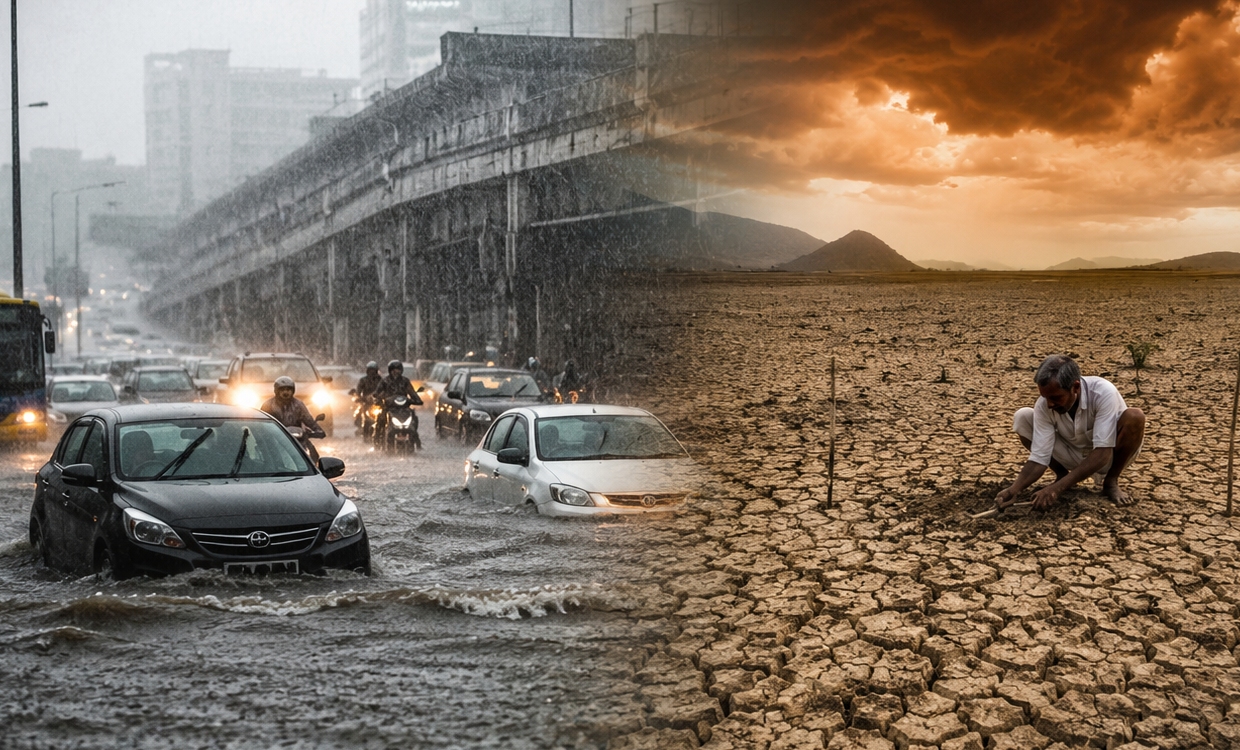
For three summers running, India has broken its own temperature records, and three years running, its monsoon has refused to behave like a season at all. In 2026, nearly all of the world’s hundred hottest cities were Indian; Balangir in Odisha touched 48°C, Banda in Uttar Pradesh crossed 47°C, and the power grid logged an all-time peak demand of close to 271 gigawatts as a nation reached for its air-conditioners and coolers. A year earlier, the country recorded extreme weather — heat, cloudbursts, floods, lightning — on 331 of 334 days, killing more than 4,400 people and damaging crops across 11 million hectares. This year’s monsoon, by contrast, arrived late and limped along, leaving three-quarters of the country short of normal rainfall even as last year’s season ended in destructive excess, with the Ganga basin alone recording three dozen river breaches in a single month. The pattern is unmistakable: India no longer has a predictable climate, it has a volatile one, swinging between drought and deluge with little warning and even less margin for error.
This is not a future risk to plan for at leisure; it is a present emergency being managed, at best, half-heartedly. Heatwaves, despite killing more people than almost any other natural hazard, are still not formally notified as disasters under the Disaster Management Act, even though the Finance Commission itself has recommended the change — a bureaucratic gap that slows emergency funding precisely when speed matters most. Heat Action Plans now exist in twenty-three states, a genuine advance, but many remain underfunded, thinly staffed, and weakest exactly where vulnerability is highest — in slums and informal settlements with little shade and less cooling. More than seven in ten Indian cities still lack adequate stormwater drainage, which is why a single intense downpour can paralyse a metropolis built for a gentler climate. Agriculture, which employs nearly half the workforce and remains substantially rain-fed, is being asked to absorb shocks it was never designed for.
What India needs now is not another plan but the political will to fund and enforce the plans it already has. Heatwaves must be formally recognised as disasters, unlocking dedicated relief funds rather than ad hoc compensation. Cities need drains, wetlands and green cover restored faster than concrete is poured, with cooling shelters and water points for outdoor workers built into municipal budgets, not added as afterthoughts. Early-warning systems for both heat and rainfall need finer, district-level granularity, reaching farmers and auto-rickshaw drivers as readily as they reach television anchors. Climate adaptation — glacier monitoring, cyclone shelters, drought-resistant crop varieties — deserves the same budgetary seriousness as the energy transition that dominates India’s climate diplomacy.India’s growth story has always rested on the assumption of a reasonably stable monsoon and a bearable summer. That assumption no longer holds.
The cost of pretending otherwise will only compound with every record-breaking year. Preparation, not improvisation, must become the governing instinct.