Jason Arday and the cost of believing a good story
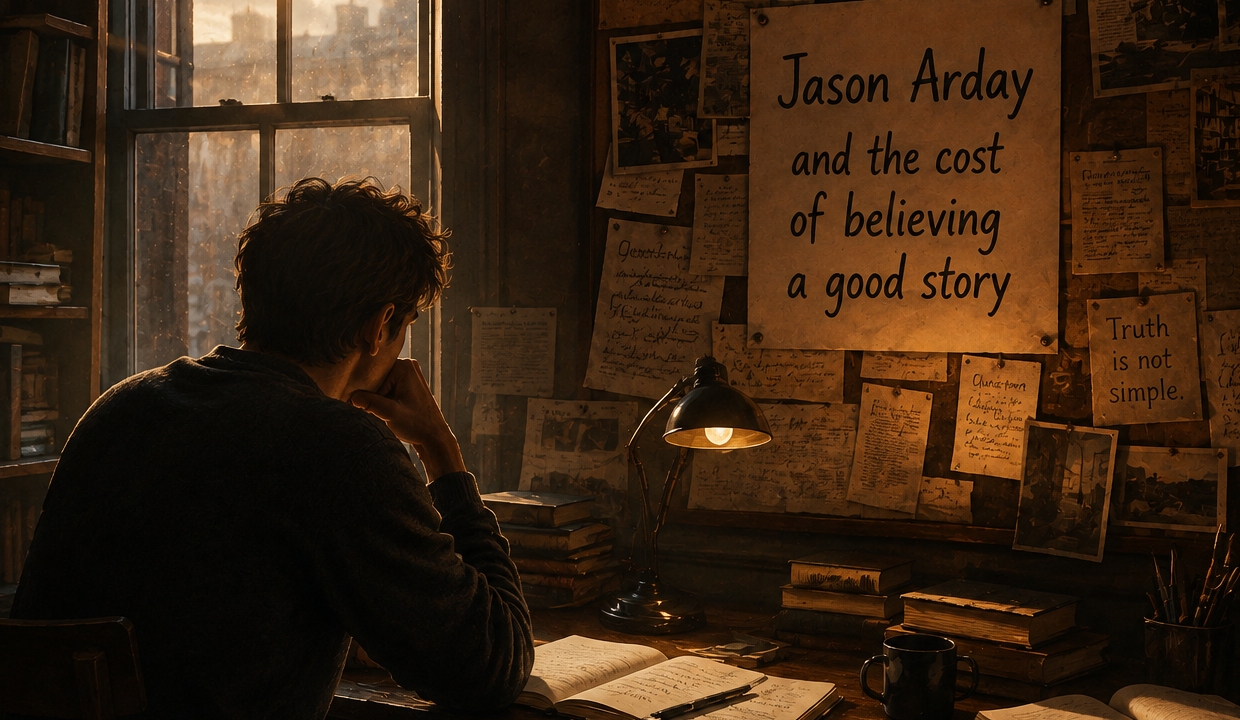
For some strange reason, my social media feeds have been serving up the Jason Arday matter quite relentlessly on my feeds for the past few weeks. For those of you who are not aware, Jason Arday was a Professor in the department of education at Cambridge University, one of the most hallowed educational institutions on the planet. In fact, he was the youngest black professor in the history of Cambridge University. But it turned out that not only had Arday falsified and plagiarised his entire educational history, his life history turned out to be too good to be true. And despite claiming to have overcome adversity, achieving some amazing things, including being unable to verbally communicate until he was 18, he took his own life when his house of cards just collapsed literally overnight.
There are two things that strike me, the first is trying to find the right adjective to describe this sorry affair. Yes, it is tragic, but if this was a Detective story, I used have used the term ‘curious’. And certainly had Arday not decided to take his own life, this story would have been comedic as well. I found it truly peculiar that someone could make such outlandish claims without being fact-checked. Especially in a world where people get fact-checked almost instantly on social media. The very claim that he ran six marathons in six days could and should have been checked, and it would have been very easy to do so in an era of pervasive digital media. His claim of being on a popular television show was immediately debunked. His claims of Autism and being non-verbal could have been checked with fellow students and primary school teachers. And all of this and more was eventually debunked, a stunning article in The Guardian of all places effectively called him a liar, which Arday certainly was. This is a man who claimed to have overcome incredible adversity such as having a brain tumour removed a couple of weeks before his viva for his doctorate leading him to relearn it all. Oh, come on. Some of his outlandish claims couldn’t be proven by CCTV or other records.
Yet, Cambridge University hired him, and the entire story is not really an indictment of Jason Arday, it is of Cambridge University and his enablers. And this is where the lesson lies, not just for institutes of excellence like Cambridge certainly was once upon a time, but public life in general.
We have let a whole class of liars and charlatans take over public life, in the process devaluing many, many things. At the same time, we have a public, and even people in positions of power so desperate to believe any story that often despite evidence to the contrary, they will double down using standard forms of defence such as racism and in India, casteism, and that global phenomenon, whataboutery.
And I am not indicting any one side, this is as true on the right as it is on the left. Human beings in general like a feel-good origin story, in politics, in sports and clearly in education. In India as well, we always find that one kid who cleared a major entrance despite studying under a streetlight even though the overwhelming majority of such children do not succeed.
It is terrible that Arday took his own life, he could have and should have been stopped earlier by any number of people, because as someone might say, ‘The Math did not Math’ in his case. And even the fantasy world that he created could easily have been debunked and he might have gotten the mental help that he clearly needed and it is truly ironic that a man who claimed he overcame incredible odds and adversity could not face up to real adversity the first time in his life that he likely faced it. The real tragedy will be that we won’t learn any lessons from this as a society. We will still let charlatans play with our emotions because who doesn’t like a good story.