India–Iran: A partnership of strategic necessity
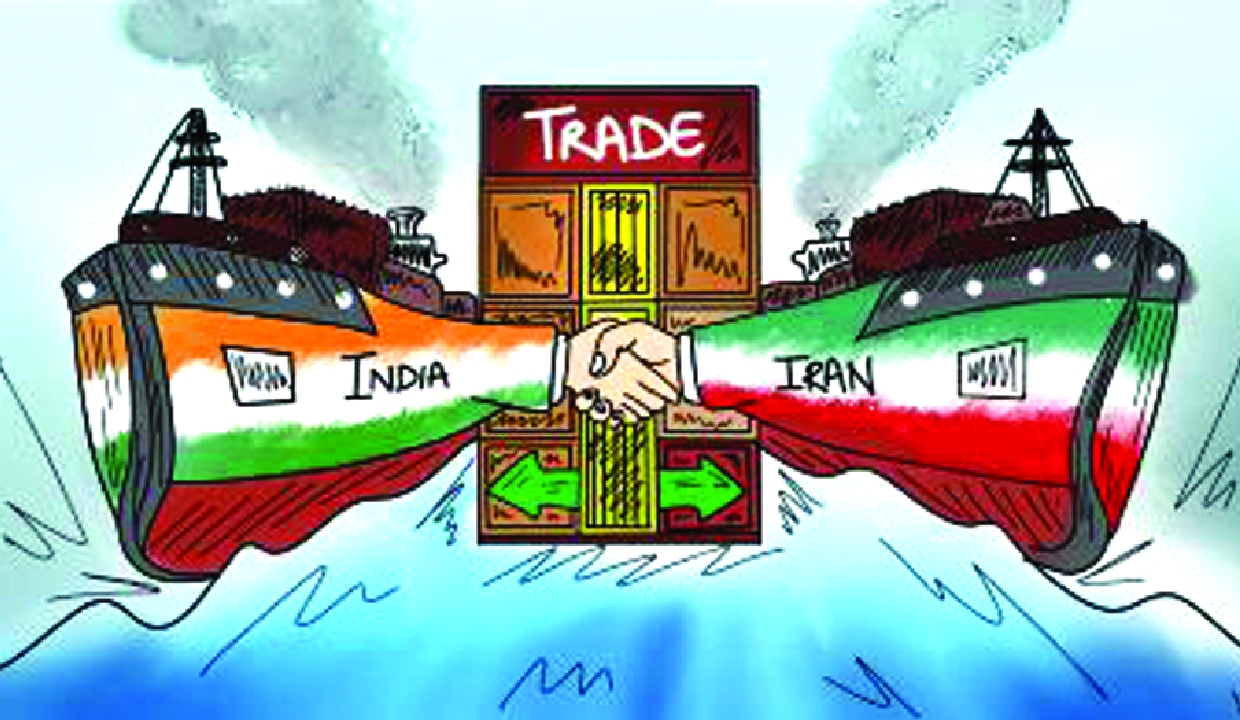
As sanctions and regional instability redraw global equations, India–Iran relations — anchored in connectivity, energy, and strategic autonomy — have evolved into a pragmatic alignment where calculated statecraft takes precedence over sentiment
India and Iran share a relationship that stretches across centuries-two of the world’s oldest and most majestic civilisations, bound not merely by trade routes but by cultural memory and strategic necessity. For years, this partnership carried a quiet resilience. It was only after 2019 that visible shifts began to emerge. India recalibrated its global engagements under mounting geopolitical pressures, but it would be naïve to assume that Iran has not forgotten the depth of past cooperation. International relations are not driven by nostalgia; they are governed by national interests, survival instincts, and calculated statecraft.
In today’s globalised economy, no country-however resource-rich-can afford isolation. Iran, despite its vast oil reserves, finds itself constrained by sanctions, strategic rivalries, and regional instability. It is within this context that India’s importance becomes not just relevant, but indispensable. The Chabahar Port stands as a powerful symbol of this interdependence. Located on Iran’s south-eastern coast, it is far more than a commercial hub; it is Iran’s economic lifeline. Under heavy sanctions imposed by Western powers, particularly the United States, Iran has struggled to maintain access to global markets. India’s investment and operational involvement in Chabahar have provided Tehran with a crucial window to the world. Beyond trade, the port facilitates connectivity to Afghanistan and Central Asia, bypassing Pakistan entirely. This not only secures India’s strategic interests but also ensures a steady stream of transit revenue for Iran.
Energy remains the lifeblood of the global economy, and Iran’s oil needs reliable buyers. India has long been one of the most trusted customers of Iranian crude. Even amid international pressure, India explored mechanisms to sustain this trade. The rupee-rial arrangement, for instance, allowed transactions to continue without reliance on the US dollar, offering Iran a critical cushion against foreign exchange constraints. Such financial ingenuity reflects not sentimentality but pragmatic diplomacy.
The International North-South Transport Corridor (INSTC) further deepens this partnership. By linking India with Russia and Europe through Iran, the corridor transforms Iran into a pivotal transit hub. In times of economic uncertainty and shifting alliances, this strategic geography becomes a source of leverage and survival for Tehran.
Equally significant is India’s role in sustaining Iran’s domestic economy during difficult times. Essential commodities such as basmati rice, tea, and sugar from India help stabilise Iranian markets. When Western pharmaceutical supplies become inaccessible, India-the “pharmacy of the world”-steps in with affordable, life-saving medicines. This humanitarian-economic dimension adds another layer to the bilateral relationship.
India’s diplomatic maturity in handling such complexities deserves attention. Under the stewardship of External Affairs Minister S. Jaishankar, India has demonstrated a rare ability to maintain balanced ties with adversarial blocs. It engages Iran while strengthening relations with Israel and the United States. This doctrine of strategic autonomy allows India to act not as a subordinate ally, but as an independent pole in global politics. Even critics like Shashi Tharoor have acknowledged the professionalism underpinning this approach.
Security concerns in the Arabian Sea and the Red Sea further reinforce the need for Indo-Iranian cooperation. Maritime attacks and regional conflicts disrupt trade routes that are vital to both nations. Ensuring the safety of shipping lanes, particularly through critical chokepoints like the Strait of Hormuz, requires coordination and dialogue. In such turbulent conditions, Iran increasingly recognises India as a stable and reliable partner-one that does not abandon its friends in times of crisis.
Speculation often fills the gaps left by secrecy in international affairs. There are whispers of discreet assistance-technical, logistical, even humanitarian-extended by India to Iran, including support for infrastructure such as water purification systems or port development. While such claims remain unverified, they reflect a broader perception: that India’s engagement with Iran is deeper than what meets the eye.
Meanwhile, Pakistan’s credibility deficit is well known, particularly in Tehran. In contrast, India’s consistent and measured approach has earned it a degree of trust that few others enjoy. There are even suggestions that, in the context of escalating tensions between Iran and the United States, Tehran sees New Delhi as a potential mediator-capable of playing a constructive role in de-escalation.
At the same time, global conflicts carry economic consequences back home. A prolonged Iran-US confrontation could significantly impact Indian corporate giants like Reliance Industries. Its Jamnagar refinery, the largest in the world, accounts for a substantial share of India’s petroleum exports. Disruptions in global supply chains, currency fluctuations, and policy interventions-such as restrictions on exports to prioritise domestic supply-could result in massive financial losses. This underscores the delicate balance India must maintain between strategic diplomacy and economic stability.
Ultimately, India-Iran relations are not a tale of emotional solidarity but of mutual necessity. Iran needs India for economic access, trade, and diplomatic balance. India, in turn, engages Iran as part of a broader geopolitical calculus-securing energy routes, countering regional adversaries, and expanding its strategic footprint.
Dharma diplomacy, as it is often described, is not about moral grandstanding. It is about calibrated restraint, principled engagement, and the ability to act with both wisdom and realism. In a world increasingly defined by conflict and fragmentation, India’s approach offers a model of balance-one that even a nation like Iran, under immense pressure, appears to be seeking.
The International North-South Transport Corridor (INSTC) further strengthens this partnership. By connecting India to Russia and Europe through Iran via a network of ships, railways, and roads, it turns Iran into a key transit hub for global trade
The writer is Professor Centre For South Asian Studies, School of International Studies & Social Sciences Pondicherry Central University; Views presented are personal.