In pursuit of a drugs-free Bharat
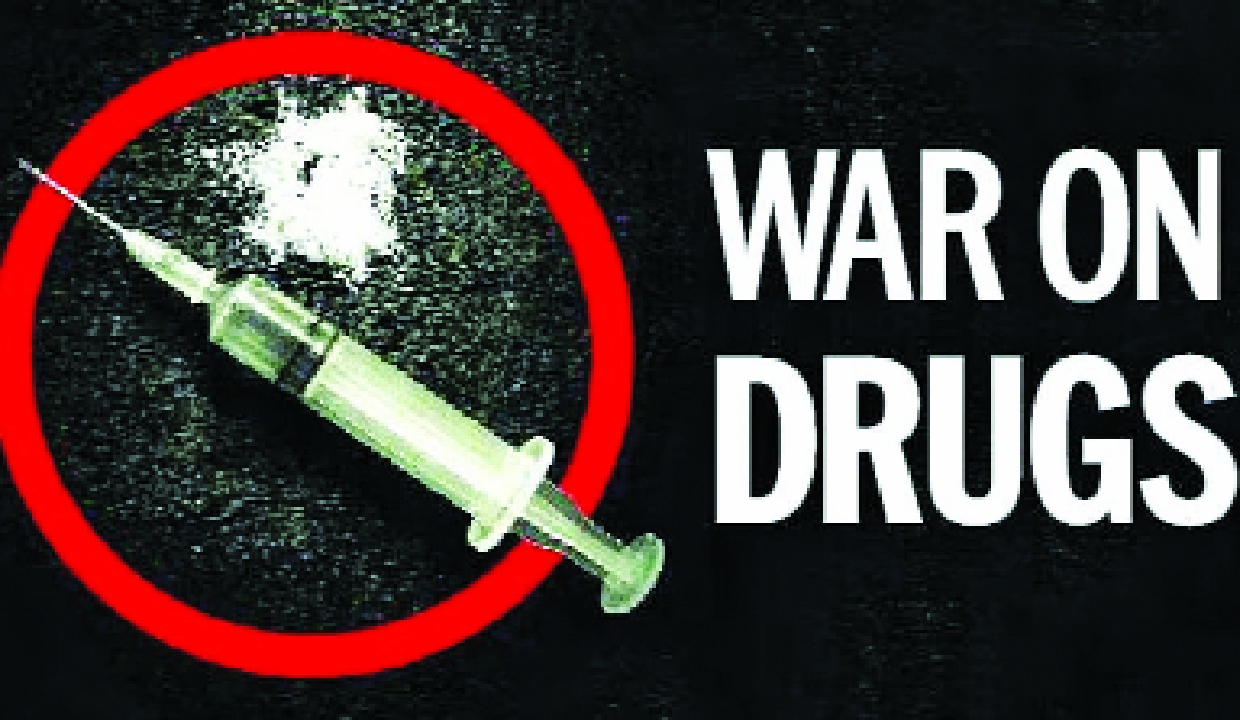
For Union Home Minister Amit Shah, governance has increasingly come to mean setting seemingly impossible national targets and then relentlessly driving the state machinery to achieve them. His approach was visible in the Modi government’s sustained rollback of Left-Wing Extremism, where the ambitious goal of a Naxal-free Bharat transformed from a political slogan into an administrative mission backed by hard deadlines, inter-agency coordination and uncompromising execution. Today, HM Amit Shah has set before the nation another sweeping objective: a completely drugs-free India by 2047.
This is not merely another welfare slogan. For HM Shah, the narcotics menace represents a direct assault on India’s demographic strength, social stability and national security. It is a threat that operates simultaneously through addiction, organised crime, terror financing and black-money networks. That is why the Modi government’s anti-drug campaign has evolved from isolated policing operations into a coordinated national security mission.
The seriousness with which HM Amit Shah views the issue became evident recently during “Operation RAGEPILL”, when Indian agencies seized Captagon worth nearly `182 crore. Captagon, a dangerous synthetic stimulant often referred to internationally as the “jihadi drug”, has been linked in global security discourse to extremist groups operating in conflict zones in parts of the Middle East.
The seizure was therefore not just another narcotics bust. It symbolised the growing convergence between narco-trafficking, terror ecosystems and transnational criminal syndicates. Government-backed studies and international assessments suggest that nearly 7 to 8 crore Indians are affected, to varying degrees, by substance abuse, with the problem increasingly visible among adolescents and young adults. Millions require intervention for dependence on opioids, cannabis derivatives and synthetic narcotics.
India’s illegal drug economy, fuelled by domestic syndicates and international trafficking routes, is estimated to run into tens of thousands of crores annually. India’s geographical proximity to the Golden Crescent and Golden Triangle — the world’s two major narcotics-producing hubs — makes the threat even more severe. A country cannot hope to harness its demographic dividend while simultaneously losing sections of its youth to addiction, criminality and narco-financed violence.
This explains why, under Prime Minister Narendra Modi and HM Amit Shah, narcotics control has been elevated into a whole-of-government mission involving the Narcotics Control Bureau, intelligence agencies, coastal security networks, border forces, state police units and financial enforcement bodies.
HM Amit Shah’s governance style follows a recognisable template: define a bold objective, build institutional coordination and relentlessly monitor execution. The same model is now visible in the anti-drug campaign. Under his supervision, India has witnessed record seizures of heroin, methamphetamine, cocaine and synthetic narcotics. Maritime trafficking routes, darknet-enabled distribution systems and cross-border supply chains have all come under intensified scrutiny. Anti-drug operations are intelligence-driven and nationally coordinated.
Equally symbolic has been the large-scale destruction of confiscated narcotics worth thousands of crores. These destruction drives are not merely procedural exercises. They are designed to send a clear political message that the Indian state will show zero tolerance towards drug mafias. The recent “Operation RAGEPILL” seizure further reinforced the global dimensions of India’s anti-drug effort. Authorities arrested a Syrian national while probing wider international trafficking links associated with the Captagon consignment. Such operations strengthen the government’s argument that India is no longer dealing merely with localised narcotics syndicates, but with sophisticated transnational networks. The Modi government recognises that narcotics trafficking is inseparable from hawala operations, black money, money laundering and terror financing.
Consequently, agencies such as the Enforcement Directorate have intensified investigations into the financial infrastructure supporting narcotics syndicates. Properties linked to traffickers have been attached, shell companies investigated and illicit funding channels dismantled. The Home Ministry’s position has been consistent: narco-money cannot be viewed in isolation. Drug proceeds often flow into organised crime, illegal arms procurement, separatist activity and extremist violence. Perhaps the most striking success story of this campaign has emerged in India’s North-Eastern region. Historically vulnerable because of its proximity to the Golden Triangle, the region had long been exploited as a transit corridor for heroin and synthetic drugs entering India. Enhanced border surveillance, intelligence-sharing and anti-smuggling operations have led to repeated interceptions of narcotics consignments and the disruption of trafficking routes.
Importantly, the anti-drug effort in the North East has also been integrated with the Modi government’s larger developmental vision for the region. Infrastructure expansion, connectivity projects and economic integration are viewed as long-term safeguards against narco-criminal ecosystems that thrive on instability and unemployment. The BJP has sought to draw a sharp contrast between the Centre’s aggressive anti-drug posture and what it describes as the softer approach of certain opposition-ruled states.
In Punjab, the drug menace has become both a social tragedy and a political flashpoint. Critics have repeatedly accused the government led by Chief Minister Bhagwant Mann and the Aam Aadmi Party of failing to decisively dismantle entrenched narcotics networks despite repeated promises. HM Amit Shah’s larger political message is unmistakable. Much like terrorism and Naxalism, the narcotics menace too can be defeated through sustained political will, institutional coordination and uncompromising enforcement. His vision of a drugs-free Bharat by 2047 is ambitious, but so too once seemed the goal of rolling back Naxal violence across vast swathes of India. By linking narcotics trafficking with terrorism, organised crime and black money, HM Amit Shah has elevated the anti-drug campaign from a social issue to a strategic national mission. The message from the Home Ministry is now unequivocal: whether it is conventional narcotics or dangerous substances like the so-called “jihadi drug” Captagon, the Indian state will pursue traffickers relentlessly — across borders, across financial systems and across political patronage networks — until the vision of a drugs-free Bharat becomes reality.
The writer is a national spokesperson of the BJP and an acclaimed author; Views presented are personal.