History’s greatest lesson: Transform yourself

The vast expanse of human history is not merely a catalogue of past events; it is a dynamic and evolving narrative of change. Across centuries, it unfolds as a sequence of moments — some similar, others strikingly different - that together shape the story of human civilisation. These moments are more than dates or isolated incidents; they reflect the actions, choices, and experiences of individuals and communities. Preserved through oral traditions, inscriptions, coins, pictographs, and written records, history consistently reveals one enduring truth: it is fundamentally a record of transformation.
This process of transformation operates at every level of human existence. Civilisations rise and decline, nations grow and adapt, cities flourish or fade, and even small communities undergo constant change. At the centre of these developments are individuals whose lives mark critical turning points. Again and again, history demonstrates that meaningful societal change often begins with personal transformation. A closer look reveals a common pattern — deep reflection, followed by realisation, and ultimately a firm resolve to change. This sequence has repeatedly led to profound moral and spiritual growth, influencing not just individuals but entire societies.
The story of Saint Valmiki illustrates this power of inner change. Once a robber who preyed on travellers, he lived without questioning the morality of his actions. However, an encounter with sages forced him to confront a difficult truth: the burden of his sins would be his alone. This realisation sparked a deep transformation within him. Renouncing his past, he evolved into a compassionate sage and went on to compose the Ramayana, a timeless epic celebrating righteousness and virtue.
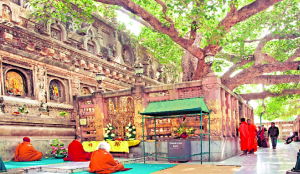
A similar journey of transformation is evident in the life of Gautam Buddha. His encounters with illness, old age, and death prompted him to reflect deeply on human suffering. This reflection led him to seek answers, ultimately discovering a path to liberation. His personal awakening became a universal message that continues to guide millions. Emperor Ashoka’s transformation after the Kalinga war further reinforces this theme. Witnessing the devastation caused by his conquest, he recognised the futility of violence and embraced peace and dharma, reshaping both his life and his empire.
Similarly, Mahatma Gandhi’s transformation began with an act of humiliation when he was thrown off a train in South Africa. That experience awakened his sense of dignity and justice, leading him to dedicate his life to India’s freedom. His personal resolve ultimately mobilised an entire nation.
These examples highlight a powerful truth: lasting change begins within. Reflection gives rise to awareness, awareness leads to determination,
and determination results in meaningful action. Through this process, individuals transcend their limitations and inspire others, creating a ripple effect that transforms society.However, such transformation is not easy. The greatest barrier often lies within — resistance to change, complacency, or lack of will. Yet, in a world filled with uncertainty, the need for inner transformation is more urgent than ever. True fulfilment can only be achieved by aligning one’s actions with higher values.Change begins with the individual. Ultimately, the responsibility for a better world rests with each of us, as even small personal changes can create far-reaching impact.
The writer is a spiritual teacher and a popular columnist ; views are personal