Dowry deaths expose India’s gender crisis
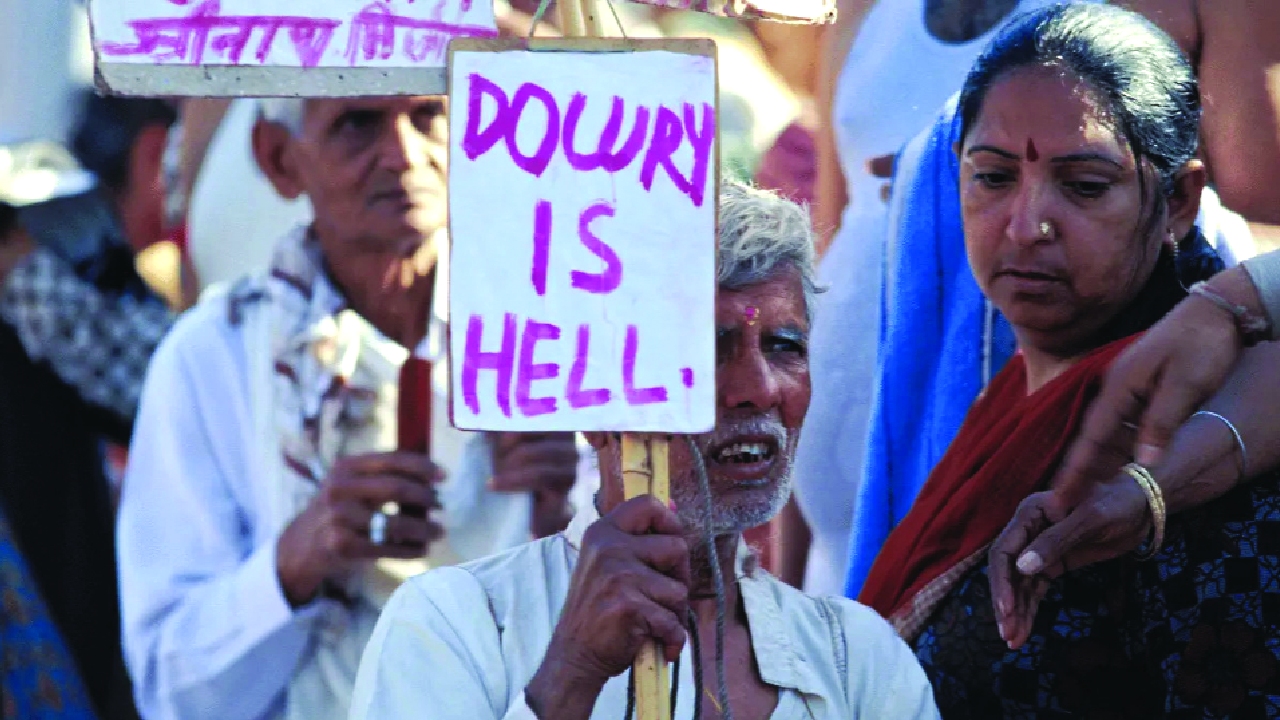
The bitter truth that many women are not safe even in their homes was underscored once again by the spate of dowry-related deaths reported in the last three months across India. On March 17, 2026, a nurse in Gurgaon was reportedly poisoned by her radiologist husband just four months after their love marriage. A month earlier, in February, a woman in Aligarh died after a hot iron was pressed against parts of her body. Her family claimed that she had been regularly assaulted for dowry. In January this year, a woman living in Pilibhit, UP, was burned alive allegedly after she and her family were not able to pay dowry. Had they registered a complaint with the police, would they have been alive?
Maybe, and then maybe not. The most recent statistics reveal that the majority of crimes against women recorded by the National Crime Records Bureau in 2023 were of cruelty by the husband or his relatives (31.4%). Domestic violence accounts for more than 30% of all crimes against women, with 65% of Indian men believing women should tolerate violence in order to keep the family together, and that women sometimes deserve to be beaten.
So why don’t women seek help from the police? According to the 2025 National Annual Report and Index on Women’s Safety (NARI) by the National Commission for Women, two-thirds of harassment incidents go unreported as social stigma and distrust of the police keep many survivors from seeking help. The report found that 75% of women distrust the police and legal redressal systems, leading to only one in three victims filing a formal complaint. In other words, for every one woman who reports violence or harassment, two others stay silent due to fear, shame or lack of faith in the system.
But when women do find the courage to file First Information Reports (FIRs), they face delays and barriers. Law enforcement officers are often either dismissive of women’s concerns or prefer “settling” matters through counselling, particularly in domestic violence cases. They often lack the capacity to effectively support women, or sometimes become perpetrators of violence against women.
When a study from the four largest cities in Madhya Pradesh found that only one per cent of women experiencing violence had reported it to the police, and that women made up a small share of the Indian police force at seven per cent, the MP Police Department decided to do something about it. They teamed up with J-PAL South Asia to study how they could improve access for women in distress.
A women’s help desk model within police stations was developed in partnership with the Madhya Pradesh Police Research and Training Department in 180 police stations. Evaluation after two years of this model showed that police stations with dedicated women’s help desks were more likely to register cases of crimes against women and domestic violence, particularly when help desks were run by women officers. Based on these findings, the MP Police Department scaled up the help desks to 950 police stations across the state.
If this intervention is adapted by other states, it may save the lives of women. Perhaps then women will feel safe enough to file complaints. The worrying fact is that patriarchy is so deeply entrenched that men can kill their wives for petty reasons, like the man from Odisha who bludgeoned his wife to death for not cooking rice with the curry she served him, or the husband from Maharashtra who killed his wife because the meal served was deemed too salty for his taste.
India slipped from 129th position to 131st out of 148 countries in the 2025 Global Gender Gap Report. With an estimated one in three women reporting domestic and sexual violence over their lifetime, whatever progress has been made in women’s empowerment has been undermined by the high rates of gender-based violence. How many more women have to die before gender equality becomes a reality?
The writer is journalist writing on development and gender; views are personal