Doping menace dents India’s global image
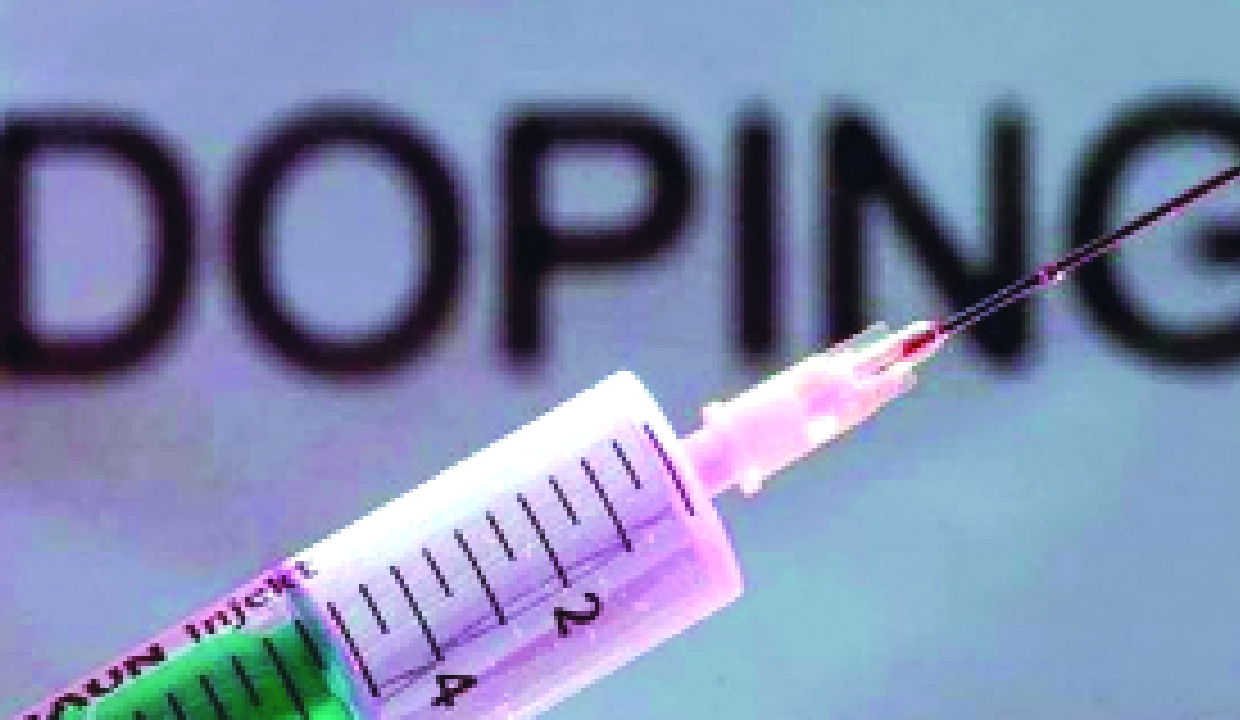
VK Vismaya, a member of the gold-winning quartet of the 4x400 metres Asian Games relay team, was suspended in April this year for two years after the National Anti-Doping Agency (NADA) tested her positive for consuming banned Performance Enhancing Drugs (PEDs). Another athlete, N Shanmuga Srinivas, was banned for four years for evading a dope test. More recently, cross-country runners Ankit and Jayesh Patil, who secured third and fifth places in the National Cross-Country Championship in Ranchi in January this year, were banned by NADA for three years for testing positive in dope tests. For admitting to doping, their period of ineligibility was reduced by one year.
Instances galore of our sportspersons testing positive in dope tests or evading tests have dented our image in the international arena, so much so that the Chair of the Athletics Integrity Unit, David Howman, categorised India as a “consistently extremely high-risk” doping nation and placed it in Category A among the nations where doping is extremely high. Other nations in this category are Russia, Belarus, Kenya, Ethiopia, Nigeria, and Ukraine. This would entail stringent dope-testing measures for all national team athletes. He lamented that the anti-doping efforts in India are “not proportionate to the doping risks.”
With 48 anti-doping rule violations, India was placed second in the world rankings in 2022. In 2023, 63 violations were recorded, with the same ranking. India topped the list of violations the following year with 71 violations and continued to stay on top with 30 violations in 2025. Such gross violations have led to our athletes being viewed with suspicion at international meets. Three of our top athletes had to face embarrassment when they were initially barred from participating in competitions at the Meeting de Limoges in France in April 2024. The decision of the organisers was based on “various controversies related to doping and athletics in India”. It is another matter that they were allowed to participate after the World Athletics Federation intervened.
While stating that India is the biggest producer of PEDs, the World Anti-Doping Agency (WADA) President, Witold Banka, during his visit to New Delhi in April this year, emphasised the need to target the supply chain of banned drugs. Towards this end, he held meetings with Union Sports Minister Mansukh Mandaviya and senior officers of NADA, the Central Bureau of Investigation (CBI), and other sports officials. Mandaviya assured Mr Banka that the Government is working on criminalising the administration or trafficking of banned substances. Consumption, possession, or administration of banned drugs is a criminal offence in some countries, such as Kenya, where an Indian athlete, Aman Mallik, is serving a three-year jail term since September last year for distributing banned drugs. He was also fined one million Kenyan shillings (approximately Rs 6.9 lakh) for the offence.
Incidentally, Sebastian Sawe, who broke the two-hour mark in the London Marathon recently, hails from Kenya, which earned infamy for doping violations. He was tested 25 times by the Anti-Doping Agency last year and came through all the tests clean. He continues to be subjected to anti-doping tests frequently.
Though Indian sportspersons are governed by the National Anti-Doping (Amendment) Act, 2025, which is based largely on the WADA Code, the consumption, distribution, and trafficking of PEDs have not been criminalised so far. The Union Sports Minister informed the WADA President that work is underway to criminalise doping, which can lead to imprisonment of up to five years and a fine of Rs 2 lakh for selling or trafficking banned substances to any athlete. The Bill is likely to become law during the monsoon session.
The involvement of coaches, trainers, and others associated with sports in administering PEDs cannot be denied. The lure of pelf, power, and jobs on clinching medals at the international level is too intense to be ignored. The risks involved in consuming banned drugs to enhance performance are worth taking for some, and not everyone gets caught. The need has been felt for more laboratories, and we may soon have two more with better staffing, apart from the lone National Dope Testing Laboratory in New Delhi.
Apart from the lure of pelf and jobs, the Arjuna Awards, the Khel Ratna Awards for achievement in sports, and the Dronacharya Award for coaches who train medal winners in the international arena are other attractions that carry with them a host of lifelong benefits. The prestigious Padma awards propel recipients to greater heights. A jail term for anti-doping violations could be a deterrent, though occasions may arise when our top sportspersons get trapped in the web. Irrespective of the stature of the sportspersons involved, stringent action alone can save us from the ignominy of being categorised as “extremely high risk” in anti-doping rule violations.
In the event of an awardee of the Arjuna Award, Khel Ratna Award, Dronacharya Award, or even the Padma awards being found guilty of violating anti-doping rules, the award should be withdrawn by the Government, thereby depriving the violators of the benefits that accrue from the award. Not only the sportspersons but also the coaches would be wary of being caught in any violation of the rules. Any athlete testing positive should not be considered for the conferment of any sports-related award for at least five years from the date of the lifting of the ban.
While we prepare to host the Commonwealth Games in 2030, we have staked our claim to host the Olympics in 2036. For the 2038 Asian Games, South Korea and Mongolia are contesting our bid to host the Games. An Indian delegation that visited the Olympic headquarters in Lausanne in July last year to stake our claim to host the Olympics in 2036 was apprised of our doping record, which could go against us. Banka had warned that “the Olympic Games, World Championships, and major sporting events are not possible without WADA, WADA’s stamp, and WADA’s compliance regulations.”
Until the Sports Ministry comes down heavily on such recalcitrant sportspersons and others associated with sports, we will continue to face the stigma of being a nation with the highest number of violations of WADA regulations.
The writer is Inspector General of Police (Retd), CRPF; Views presented are personal.