Did you know?
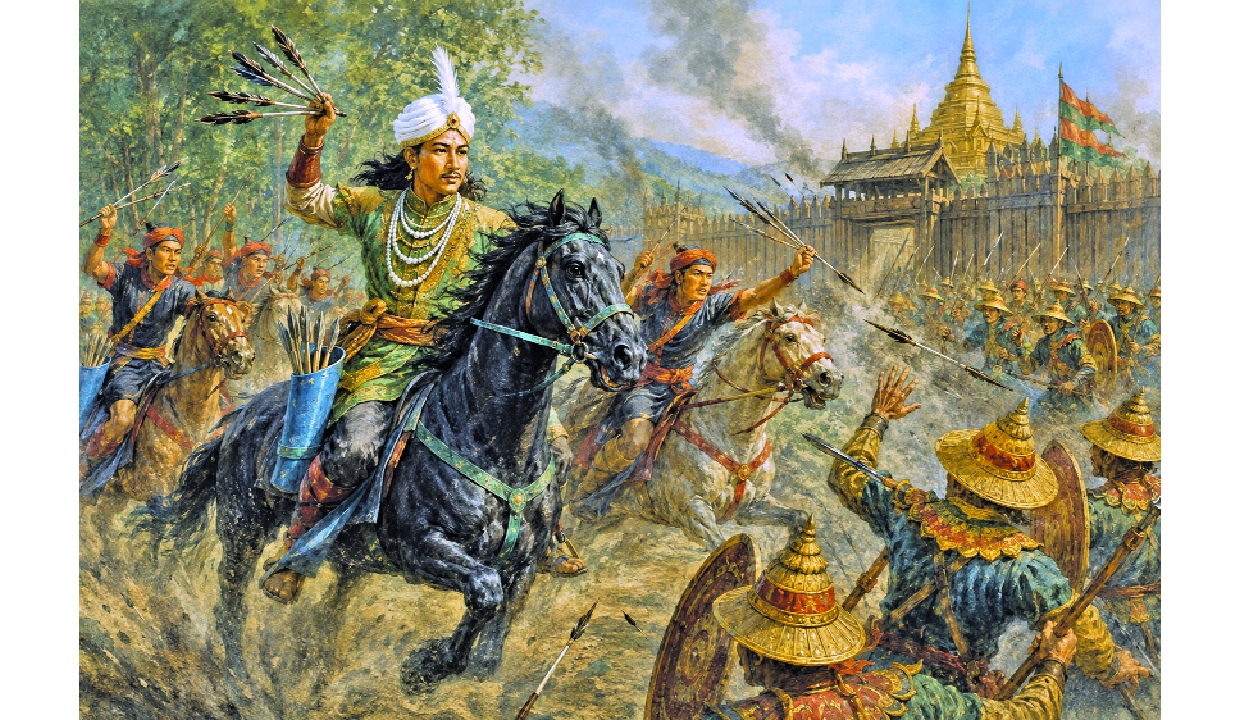
In the eighteenth century, Maharaja Gharib Niwaz (Pamheiba) turned Manipur into a formidable military power. During the Manipuri-Burmese wars (1717 to 1749), he repeatedly invaded Burma, annexed vast territories, rode deep into Ava and reached the walls of its capital. In 1738, his Meitei cavalry breached the stockade guarding the sacred Kaunghmudaw Pagoda and routed its defenders. Tradition records that the Maharaja struck the pagoda’s eastern gateway with his sword, leaving marks that became a symbol of his victory.
His secret weapon was the indigenous cavalry, mounted on agile Manipuri ponies and armed with the deadly arambai, an iron-tipped poisoned dart weapon fletched with feathers. Meitei warriors rode with high saddles, carrying quivers of arambai. They charged rapidly, hurled poisoned darts at full gallop and executed feigned retreats to unleash lethal salvos backward, instantly scattering enemy ranks.
This pony force remains crucial to Indian history as a pioneer of indigenous jungle warfare that defended India’s eastern frontier. For modern national security, it highlights the immense value of local terrain expertise, native intelligence and potential of native ponies in border areas.