Deadly duty: India’s forest guardians under siege
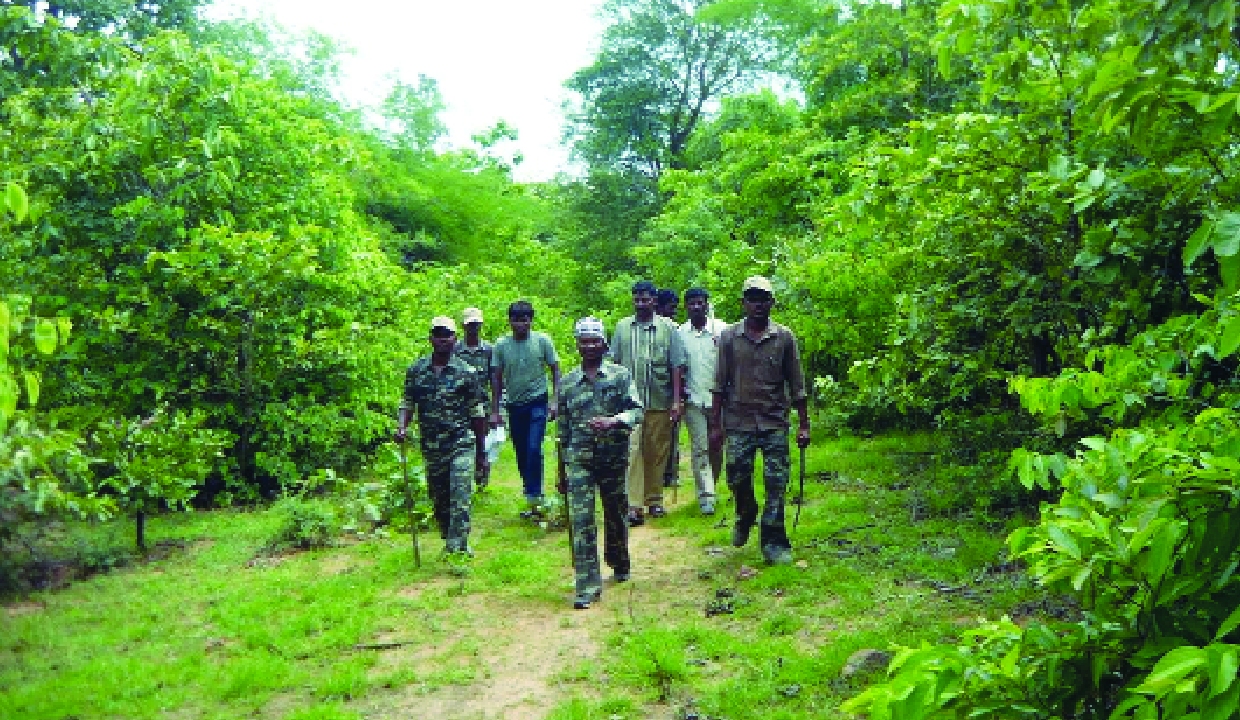
As organised criminal networks become more sophisticated and enforcement mechanisms remain weak, the crisis extends beyond the safety of forestry staff to the future of India’s forests, wildlife, water security, and environmental governance
The increasing attacks on front-line forest personnel across India point to a deepening crisis within the country’s environmental governance and forest protection framework. Field staff, including Range Forest Officers, Foresters, and isolated Beat Guards responsible for protecting forests and wildlife habitats, are facing growing violence from organised timber smugglers, illegal encroachment networks, poaching syndicates, and land mafias operating inside forested regions. The increasingly hostile conditions under which forest personnel operate came into renewed focus in May 2026 in the Puranpur Forest Range of Pilibhit district in Uttar Pradesh where, according to reports, two forest personnel narrowly escaped being run over by a tractor-trolley allegedly operated by sheesham timber smugglers, but were cornered and brutally assaulted during the enforcement operation.
Another incident in Madhya Pradesh in the recent past exposed the level of interference in enforcement operations. In Indore district’s Badgonda Forest Range, a state minister, accompanied by supporters, allegedly entered the forest office premises, threatened the on-duty personnel, and forcibly removed an earth-moving machine and tractor-trolley that had been seized for the alleged illegal breaking of forest land. According to reports, the local police station refused to register an FIR against those involved. Instead, disciplinary action was initiated against the enforcement personnel involved in the seizure operation, with the deputy ranger concerned being transferred and subjected to departmental inquiry proceedings. The controversy deepened further after the issue was raised publicly by opposition leaders. Subsequently, when the Chief Conservator of Forests reportedly rejected a revenue department report attempting to classify the land-clearing activity as a non-forest offence, he too was transferred from his post. The broader implications of the episode became evident within weeks. Less than one hundred kilometres away, in Dewas district’s Punjapura Reserve Forest, a forest beat guard was shot dead by a timber smuggler.
One finds that disputes, once considered isolated, have now transformed into coordinated and often violent confrontations, exposing the widening imbalance between poorly equipped forest personnel and highly organised criminal syndicates.
Data and field reports collected over the past five years indicate that such incidents are no longer confined to isolated pockets but are spread across diverse ecological and territorial landscapes in various Indian states. Telangana and Maharashtra have emerged as major hotspots in terms of the volume of reported incidents, followed closely by Madhya Pradesh and Rajasthan. Field accounts, departmental records, and testimonies from enforcement personnel also indicate a disturbing pattern in which local political actors are frequently seen intervening in favour of alleged offenders, while pressure groups portray enforcement personnel as being hostile to forest dwellers and tribal communities. In several instances, village gatherings, coordinated protests, and crowd mobilisation have reportedly been used to obstruct enforcement operations and shield organised offenders from legal action. Such resistance is not always spontaneous; in several sensitive forest divisions, officials claim that organised networks deliberately exploit local socio-economic grievances to weaken state intervention and create protective buffers around illegal operations. This has contributed to the emergence of what many enforcement personnel describe as “informal immunity zones”, where the writ of government becomes increasingly difficult to enforce without substantial police reinforcement.
The misuse of the Forest Rights Act (FRA) to recognise inadmissible forest rights, including management rights to Gram Sabhas, creates governance gaps. Enforcement personnel operating in these contested forest regions face escalating operational risks during anti-encroachment drives and routine forest-protection activities. In several areas, ambiguities surrounding land claims, weak verification mechanisms, administrative intimidation, and political interference severely erode the operational confidence and morale of front-line personnel.
A broader weakening of institutional enforcement capacity within the forest administration has occurred due to limited field infrastructure and chronic staff shortages. Recent data from multiple state-level reports reveal a persistent and severe vacancy crisis across front-line forest-protection cadres. In several major forested states, vacancies in operational posts such as Forest Guards, Foresters, and Range Officers range from nearly one-third to more than half of the sanctioned strength. Odisha has reported vacancies of around 41 per cent in field staff positions, Haryana nearly 54 per cent, Karnataka about 30 per cent, Telangana close to 45 per cent, Madhya Pradesh approximately 30 per cent, Chhattisgarh around 35 per cent, and Jharkhand nearly 55 per cent. Although field foresters are expected to patrol vast, rugged, and remote forest landscapes, vacant posts are often managed locally by assigning the jurisdiction of multiple forest beats or ranges to a single official, resulting in excessively long patrol hours with little operational backup.
Many states have had prolonged recruitment freezes, in some cases extending for more than a decade, followed by mega-recruitment drives aimed at rapidly filling vacancies. The situation is exploited by organised groups that often possess greater mobility, local influence, and financial resources.
Offenders often place local women and economically vulnerable groups at the forefront during confrontations, using them both as human shields and as legal buffers against enforcement action. Although forest departments across several states have begun inducting more women into front-line cadres, criminal syndicates have simultaneously modified their tactics and filed counter-cases, for example under the Scheduled Castes and Scheduled Tribes (Prevention of Atrocities) Act, to intimidate and demoralise enforcement staff. A case in Telangana drew national attention after a woman forest officer was allegedly assaulted while performing her official duties in Asifabad district during an operation against illegal activities. Realising the possibility of retaliatory legal action against enforcement personnel, the Supreme Court of India reportedly stayed the counter-proceedings and directed authorities to provide police protection to women forest officers involved in field duties.
Since forest officials regulate access to natural resources and restrict illegal extraction activities, they often face hostility from some sections of local populations as well as from political interests seeking electoral support through lenient enforcement. Even within the administrative system, forestry personnel often face criticism for strictly enforcing statutory provisions or for denying the diversion of forest land for developmental projects. It is ironic that the more rigorously foresters protect public forests and ecological territories, the more isolated they become politically and bureaucratically. In a democracy driven by electoral calculations, the job of regulating human activity to save forests and wildlife - constituencies that cannot vote - often leaves forestry personnel resented by sections of the public and neglected by the very institutions they serve.
Although various enforcement institutions have undergone substantial expansion in terms of personnel strength, infrastructure, training, and powers to counter internal security threats, the forest-protection machinery remains structurally understaffed and institutionally weak. It requires strengthening with the latest equipment, rapid-response tracking systems, communication networks, legal support teams, and fast-track courts to ensure the effective prosecution of offenders.
Restoring field morale and enforcement capability is essential if India wishes to secure its ecological frontiers. In the field, strategically combining community participation and rigorous, science-based law enforcement can safeguard not only front-line foresters and forest dwellers but also the invaluable natural heritage of the country.
The government must act to dismantle the politically convenient branding of the forestry sector as “anti-development” or “anti-people”. Forest personnel in the field are not enforcing bureaucratic control; they are risking their lives to defend forests, wildlife habitats, water security, and the ecological systems upon which millions depend. Empowering our ecological protectors can be the ultimate expression of statecraft, as it fundamentally honours the definitive geopolitical truth that ecological integrity is the bedrock of economic vitality and national survival.
The writers are former PCCFs of UP and Maharashtra; Views presented are personal.