BJP cracks West Bengal with ground-to-top strategy
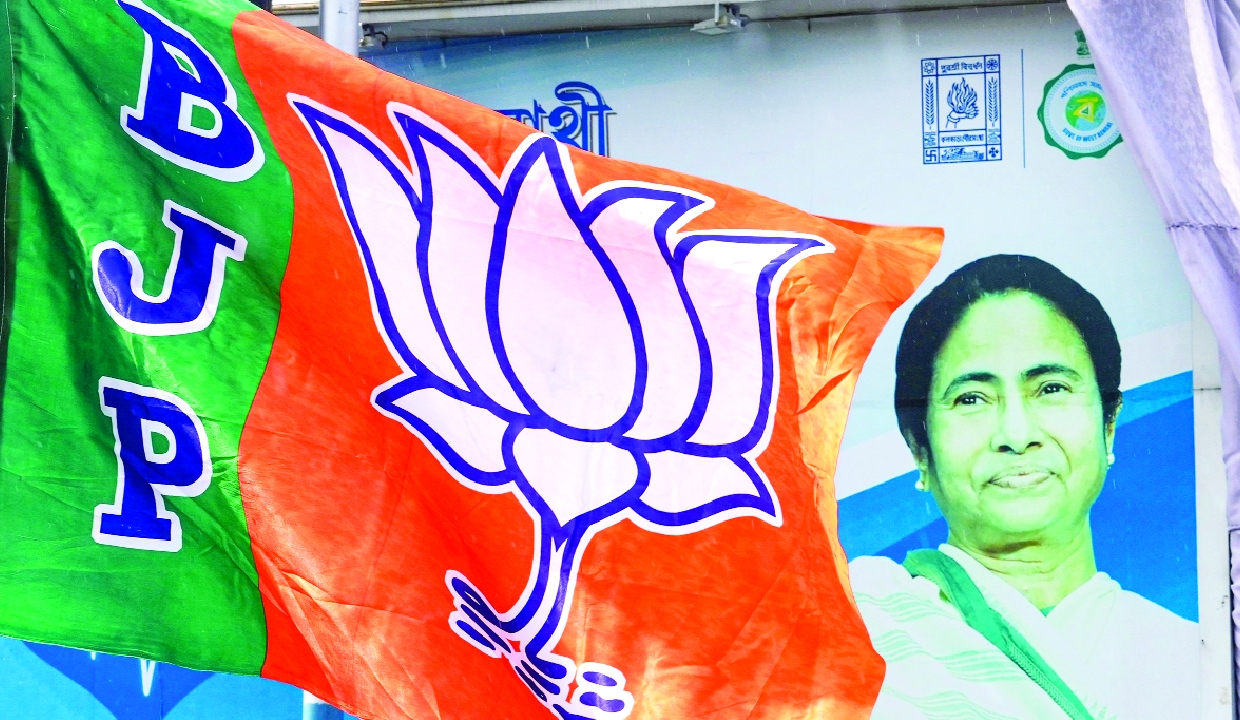
The 2026 West Bengal Assembly election results represent a seismic shift in Indian electoral politics. Bharatiya Janata Party’s (BJP) historic victory is not accidental but the outcome of a recalibrated, multi-pronged strategy that combined top-down leadership, hyper-local organisation, narrative discipline and exploitation of structural vulnerabilities.
Prime Minister Narendra Modi’s personal acceptance and aggressive campaigning were pivotal. Modi shed the outsider tag through culturally attuned outreach eating Jhalmuri at roadside stalls, boat rides on the Hooghly and defending Bengal’s fish-eating heritage against TMC barbs. He held over a dozen rallies, framing the contest as a turning point for development, jobs, women’s safety and industrial revival.
In audio messages and final-phase speeches, Modi positioned himself as Bengal’s destiny, promising to transform challenges into opportunities. This high-energy blitz, contrasting TMC’s defensive posture, resonated amid voter fatigue and helped consolidate Hindu voters while expanding into urban and southern pockets like Kolkata.
Union Home Minister Amit Shah provided the surgical edge. He camped in Bengal, dividing the state into five organisational zones in Siliguri, Balurghat, Durgapur, Kharagpur, and Hooghly and conducting late-night war-room reviews until 3 am. Shah set an initial target of 170 seats, released chargesheets on alleged TMC scams, promised to recover stolen money with interest, hammered law-and-order, women’s safety, and national security (infiltration, border fencing, and CAA implementation) issues. His presence ensured central forces neutralised the alleged TMC muscle power.
Panna Pramukhs and Shakti Kendra Machine played crucial roles. BJP has built a granular apparatus over five years in the form of the Panna Pramukh system in West Bengal; One dedicated worker per 30-60 voters, personally linked to 10-15 families for man-to-man turnout tracking.
To add to Panna Pramukhs were Shakti Kendras (Clusters of 5-7 booths) tasked with adding 15-20 verified voters each through sustained mobilisation. Booths were categorised in the form of strong, focused, and weak categories and monitored in real time via a Kolkata war room under strategists Sunil Bansal and Union Minister Bhupendra Yadav.
Functionaries were instructed to stay at every one of the 44,376 polling stations until voting ended. This micro-precision, combined with Special Intensive Revision (SIR) of electoral rolls that deleted around 60 lakh dubious entries, converted anti-incumbency into votes. Record 92.93 per cent turnout favoured BJP in marginal seats.
During campaigns, the BJP stopped criticising TMC’s welfare schemes like Lakshmir Bhandar and instead promised higher pay-outs and faster delivery. It focused relentlessly on governance failures corruption, unemployment, post-poll violence, women’s safety while maintaining Hindu consolidation without overt religious overdrive in every constituency. Some inroads were even made in Muslim-dominated seats. The party amplified local leaders fluent in Bengali and leveraged RSS-ground cadre for long-term expansion.
TMC’s traditional strength rested on three pillars: Mamata Didi’s personal brand among rural women, cash-heavy welfare and booth-level cadre intimidation backed by minority consolidation. BJP dismantled each as personal attacks were replaced by governance critique, denying Mamata the victimhood narrative. Welfare was matched or outbid, turning TMC’s strongest weapon into a comparison game.
Booth muscle was neutralised through central forces, thousands of pre-poll arrests of alleged goons, and superior BJP booth management, creating a visibly freer polling environment. SIR and high turnout exposed the fragility of TMC’s inflated voter base.
In essence, the BJP played asymmetrical electoral warfare: superior organisation, technology (real-time polling agents, BPO calls), and central leverage overwhelmed TMC’s traditional street power. What began as a 2021 learning curve became a master class in persistent, data-driven expansion.
The win validates BJP’s long-game thesis: regional fortresses fall not to sporadic campaigns but to years of cadre-building, precise targeting and timely anti-incumbency waves. For Bengal, the saffron surge ends one era of dominance. The real test for the BJP now begins in delivering development in a culturally distinct but politically charged state.