Bhishma’s love was never in doubt: Wadhwa
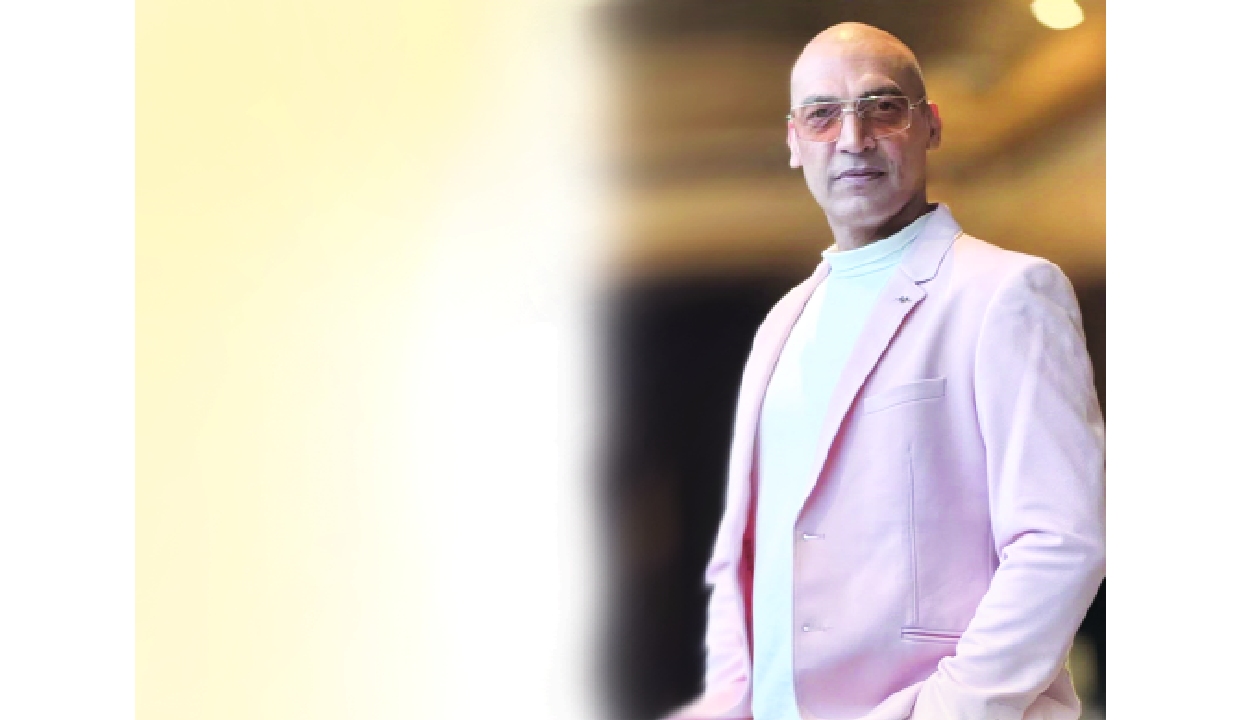
From Gadar 2’s chilling Major General to Sony SAB’s Hastinapur Ke Veer, Manish Wadhwa brings layered gravitas to every role - now embodying Bhishma Pitamah with quiet intensity and unspoken sorrow. Speaking with The Pioneer, he explores how Bhishma’s vow, though born of honour, was shaped by circumstance and how duty, when it silences empathy, can leave even the noblest guardian powerless to stop the storm.
On playing Bhishma
Bhishma loves his family deeply but rarely expresses it. As an actor, how did you portray a man whose emotions remain hidden beneath an unwavering sense of duty?
Manish Wadhwa: For me, Bhishma’s love was never in doubt - it was simply hidden beneath an unwavering commitment to duty. I expressed that through restraint: a composed body, measured voice, and controlled emotions. The challenge was to reveal the feelings in his silences, pauses, and eyes rather than in words. I wanted the audience to sense the affection, conflict, and sacrifice he carried within, even when Bhishma himself chose not to express them. That’s what makes him both powerful and deeply human.
On Bhishma's inner conflict
Bhishma foresees the growing divide between the Pandavas and Kauravas but remains bound by his vows. How did you internalise the helplessness of a leader who sees disaster approaching yet cannot prevent it?
Manish Wadhwa: The essence of Bhishma’s character is that his foresight sees everything - what is happening and how it is unfolding. These children are still wet clay, still young; they can be molded into whatever shape you want to give them. When mistakes happen, he wants to punish them and even pleads and requests Maharaja Dhritarashtra to take action. But there is partiality there regarding his own sons - Duryodhana, Dushasana, and the Kauravas. So those matters are suppressed. Meanwhile, you can call it the rivalry among the children, especially the animosity in Duryodhana'smind, which isn't really there in the Pandavas. Yet, Bhishma knows how Duryodhana treats them, and even while seeing all of this, he tries to explain things to them with affection. But as I said, because of Dhritarashtra and the others, this cannot be accomplished.
When I watch the kids performing these things, I tell them, "You are doing this so well." And the children understand all of this and perform wonderfully - you can see how brilliantly they perform. The only thing I keep telling them is: "This is just a character. Leave this character right here; take only the goodness from it and leave the rest behind. You are not this. No character is who you truly are; your own self is who you are."
On Bhishma's greatest dilemma
Do you see Bhishma's legendary vow as his greatest triumph or the very decision that ultimately led to the downfall of Hastinapur?
Manish Wadhwa: People often blame Bhishma for the Mahabharata, and to some extent, that accusation seems to stick. But when he took that vow, it was entirely driven by the circumstances of that specific moment. He is not omniscient, nor is he a deity; we cannot expect him to have foreknown everything that would eventually unfold.
Once bound by his oath, he refused to break it, though technically, he could have. But when it came to his code of honor, dignity, and truth, he chose to stand by his word. Looking back, one might feel, "What would have been lost if he had simply broken it?" Yet it always comes down to his steadfast sense of propriety and the solemn promise he had given. He tried his absolute best to fix things, to keep everyone loving and united, and to preserve the family bond. But at the same time, there were others actively misguiding the Kauravas and changing the course of their upbringing.
Ultimately, this mirrors our own lives. We often know the difference between right and wrong, but wherever we find convenience, comfort, or an easy way out, we tend to lean in that direction instead.
On breaking typecasts
After memorable performances as powerful antagonists, how do you ensure that every role remains distinct while avoiding being typecast as the eternal villain?
Manish Wadhwa: Yes, by God's grace, I have always received diverse roles throughout my career both antagonists and protagonists. My approach is to play a character simply for what it is, without labeling it negative or positive. The character begins when I leave home and ends when I return, leaving its darkness behind while I only carry away the positive insights.
Playing Major General Hamid Iqbal was a unique joy and brought many similar offers. If a role is an exact duplicate, I decline it. However, since every individual character is distinct, I make sure to mold each general with a unique personality to maintain versatility.
Ultimately, I do not overthink typecasting. My mindset simply shifts to fully inhabit whichever role I am playing. Thanks to God's grace and the audience's love, those performances have always been embraced.
On the power of voice
In an era where appearance often takes precedence, what do young actors misunderstand about the importance of voice, diction and dubbing in shaping a performance?
Manish Wadhwa: Our medium is audiovisual, meaning audio comes first and visuals follow. What matters most is absolute clarity, correct pronunciation, and proper grammar, it needs to sound completely natural rather than artificial. While looking good and building a physique is also important, audio is the core. If you watch a film without audio, the experience falls flat.
Having done voice acting and dubbing since my struggling days, I learned immensely from it. Immersing yourself in a character's pauses and nuances through a microphone is a form of practice that refines your voice. As an actor, it has been a huge advantage, helping me naturally master voice modulation and articulate lines correctly. It is an art you never stop learning.
On theatre's lasting influence
How has your theatre background helped you maintain discipline and emotional continuity on today's fragmented, technically driven film sets?
Manish Wadhwa: By God's grace, I had the fortune of starting in theatre, and I still continue to do it. On stage, you don't get retakes, and your very first note must be precise, though you are given ample rehearsal time.
In film, television, or web, you rarely get that luxury. You receive the scene in advance, but extensive rehearsals are rare. Because modern shoots are fragmented and stop-and-start - sometimes shooting scenes completely out of sequence, you have to rely on your own capability and internal graph to maintain a consistent emotional arc, supported by the director.
While digital technology allows for post-production corrections, the camera captures everything; even a wrong blink can ruin a performance. Ultimately, whether it is stage or screen, absolute discipline, mental focus, and giving your 100 per cent are non-negotiable.
And it is also true that there are people who have never done theatre, yet they do phenomenal work on screen; and on the other hand, there are people who come from a theatre background, but are unable to adapt to the medium of screen media and don't perform as well.
On looking back
Looking back on your journey, what would you apologise to your younger self for, and what would you thank him for?
Manish Wadhwa: Unpredictability applies to everything in life, including work and fame. The key is simply giving your 100%. When you put your all into a role, it reaches the audience, they embrace it, and you become known by those characters which brings immense joy rather than feeling like a burden.
While the industry often tries to typecast you based on past successes, my apology to my younger self would be that I should have paid closer attention to certain things earlier on. As for gratitude, I thank God, my parents, and the audience; I am entirely where I am today because of their blessings.