Age bars for social media: Necessity or choice
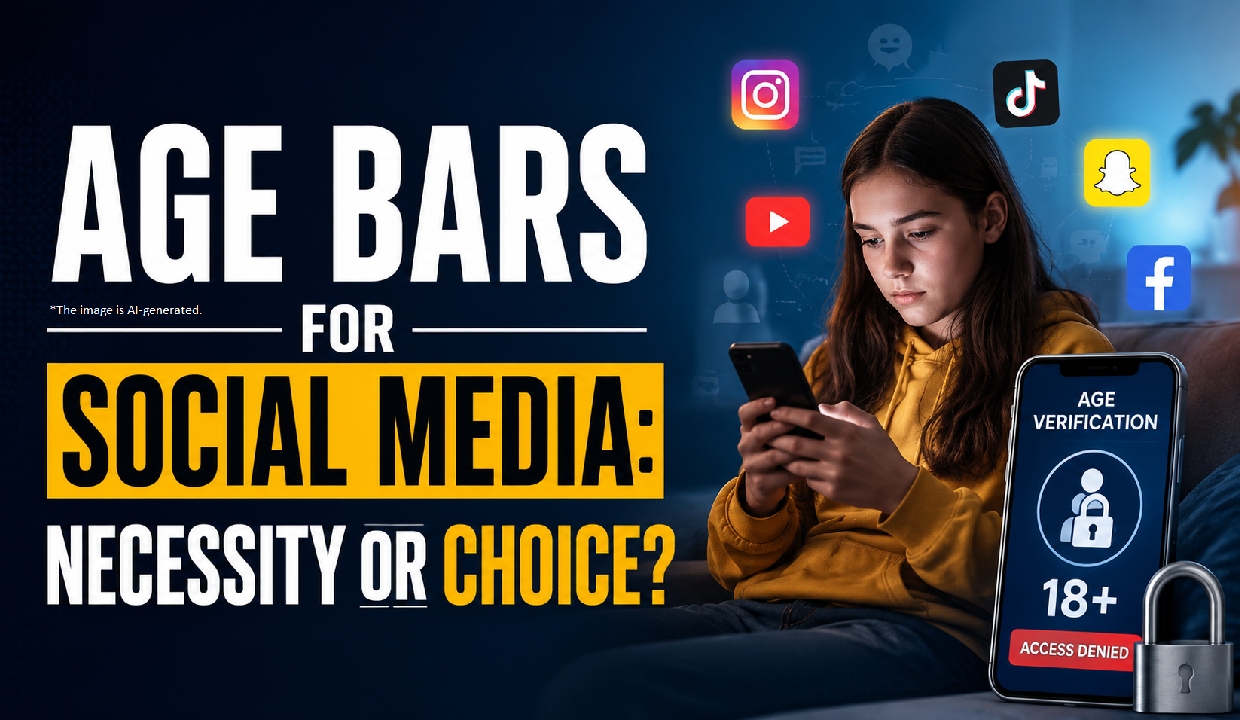
Social media for the present generation is more than a form of simple communication; it is a holistic mechanism for socialising, education, entertainment and recognition. It has transformed the way children and adolescents engage with and explore their lives, in contrast to previous generations. However, of late, there has been a public furore on the downside of the online exposure, including digital addiction, cyber-bullying, misinformation, mental health and behavioural issues at this tender age. Many countries are thereby implementing an age limit for social media use.
The minimum age for most major social media platforms today is 13 years, which is mainly to secure adherence to data protection laws like the Children’s Online Privacy Protection Act (COPPA) in the United States. But with lax enforcement, the majority of children have access to social media long before the recommended age. Age restrictions demonstrate the importance of protecting children during their developmental period. Research shows that while adolescents’ critical cognitive and emotional abilities are developing, exposure to endless content on social sites hinders their potential intellectual growth. Excessive social media use has been associated with increased anxiety levels, depression, sleep disorders, and social comparison among teenagers. In a world where information spreads rapidly without any authentication, the young users are the most affected, as they are not able to mindfully decide about its repercussions before absorbing or spreading it.
India is at an even higher risk, with one of the world’s largest populations of internet users, affordable smartphones, low-cost data, and unregulated usage. It has certainly helped in digital empowerment with more information and educational content, but has also exposed young users to cyber threats, online harassment, digital scams, and harmful content. The age restriction is also critical to safeguard society from any immature digital actions by this section of the population, which may be unintentional but can result in unprecedented adversities. Quoting a recent personal anecdote of an encounter with a young girl in her early teens, popular enough, but not to my knowledge, who creates digital content for her social media channels. She randomly requested me for a brief general interaction for a video, which seemed casual and harmless enough. When I received the video-bite through some forward messages, I discovered the clip had been edited and presented unexpectedly and unpleasantly to make it a subject of mockery, for engaging viewership. What followed were the insensitive and distressing comments on the video. It was unignorable, and therefore, I had to lodge an official cybercrime complaint to get the clip removed from all the platforms. Undoubtedly, the young generation possesses remarkable technological skills, yet lacks the sense needed to understand the serious consequences of their digital pursuits. The irresponsible content targeting people can damage social reputation, bearing serious repercussions. They also lack awareness of the importance of digital ethics, informed consent, privacy, and legal accountability. The importance of age bars on social media can therefore not be denied. The more pressing issue is how age restrictions are implemented. Robust age-verification and platform accountability, parental and teachers’ engagement, and digital literacy education are all important factors in effective regulation. Many countries, including Australia, the UAE, China, and several European countries, have mandated strict age verification methods like facial scans or ID checks instead of relying on self-declaration as an effective mechanism to enforce age limits.
What is needed, therefore, in this digital era is a comprehensive approach that includes protection, education, accountability, empowerment and wise engagement with technology.
The writer is an Assistant Professor at Sri Guru Gobind Singh College of Commerce, Delhi University; Views presented are personal.