Women, youth and India’s democratic promise
There are moments in a republic’s life when a reform is less about policy and more about self-recognition. The passage of women’s reservation in Parliament belongs to that category. It does not arrive as a sudden innovation, but as the culmination of a long, uneasy democratic hesitation that dates back to the early years of the Republic.
In 1951-52, when the first elections to the Lok Sabha were held, 489 elected representatives spoke for a population of roughly 36 crore. The architecture of representation was modest, but it carried an implicit promise that political voice would evolve alongside the nation’s demographic and social transformation. Seven decades later, that promise has been only partially fulfilled. India today has 543 elected MPs representing over 140 crore citizens. Each MP now represents, on average, nearly 25 lakh people, compared to about 7 lakh in the 1950s. The expansion of citizenship has far outpaced the expansion of representation.
This imbalance was not accidental. In 1976, through the 42nd Constitutional Amendment Act, India froze the redistribution of parliamentary seats to protect federal balance, ensuring that states which controlled population growth were not penalised politically. That logic had its own wisdom. But over time, what was meant to preserve equity has also produced a certain rigidity-one that sits uneasily with a young, expanding electorate.
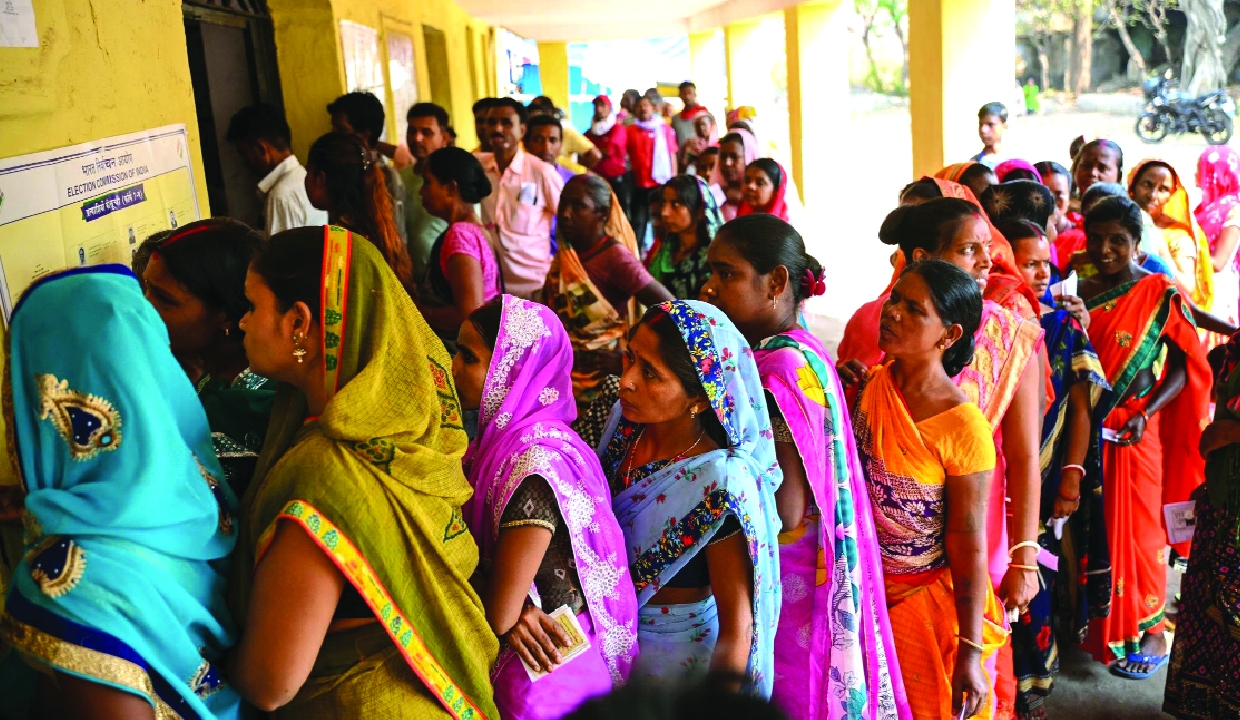
It is in this context that the women’s reservation amendment must be understood. Too often, it is reduced to a symbolic gesture or, worse, a delayed promise. But in truth, it is a structural intervention. By linking reservation to delimitation, the law recognises a deeper constitutional reality: that representation cannot be meaningfully altered without first recalibrating the units through which it operates. This is not procrastination masquerading as reform; it is sequencing.
Globally, democracies have grappled with similar questions, though with different instruments. France, for instance, chose to compel political parties to field equal numbers of men and women candidates through its parity laws. The result was gradual but incomplete progress, with women’s representation rising steadily but unevenly. Rwanda, by contrast, embedded quotas directly into its Constitution, producing one of the most dramatic transformations in gender representation, with women now constituting over 60 per cent of its legislature. India’s approach sits somewhere between these models-constitutional in its ambition, but cautious in its execution.
What distinguishes the Indian case, however, is not merely the method, but the moment. This reform arrives at a time when India is both demographically young and politically aspirational. Nearly two-thirds of its population is under the age of 35. Yet the structures through which this generation is represented have remained largely unchanged since the 1970s. The reservation of one-third of seats for women, when implemented, will not only correct a long-standing gender imbalance, it will also reshape the composition of political leadership in ways that reflect the energies of a younger India.
Critics are right to raise concerns about timing, federal balance, and inclusion. These are not trivial questions. But they are questions born of a deeper truth-that India has deferred the recalibration of representation for too long. The present moment, therefore, is less about the politics of a single Bill and more about the inevitability of adjustment.
In the end, the measure of this reform will not lie in legislative arithmetic alone. It will lie in whether India can align its democratic institutions with the scale, diversity, and youthfulness of its society. On that count, the women’s reservation amendment is not just timely; it is necessary.
The writer is a public policy expert with years of experience working across key ministries of the Government of India, including the Ministry of Women & Child Development; Views presented are personal.