Why India faces a cybercrime emergency
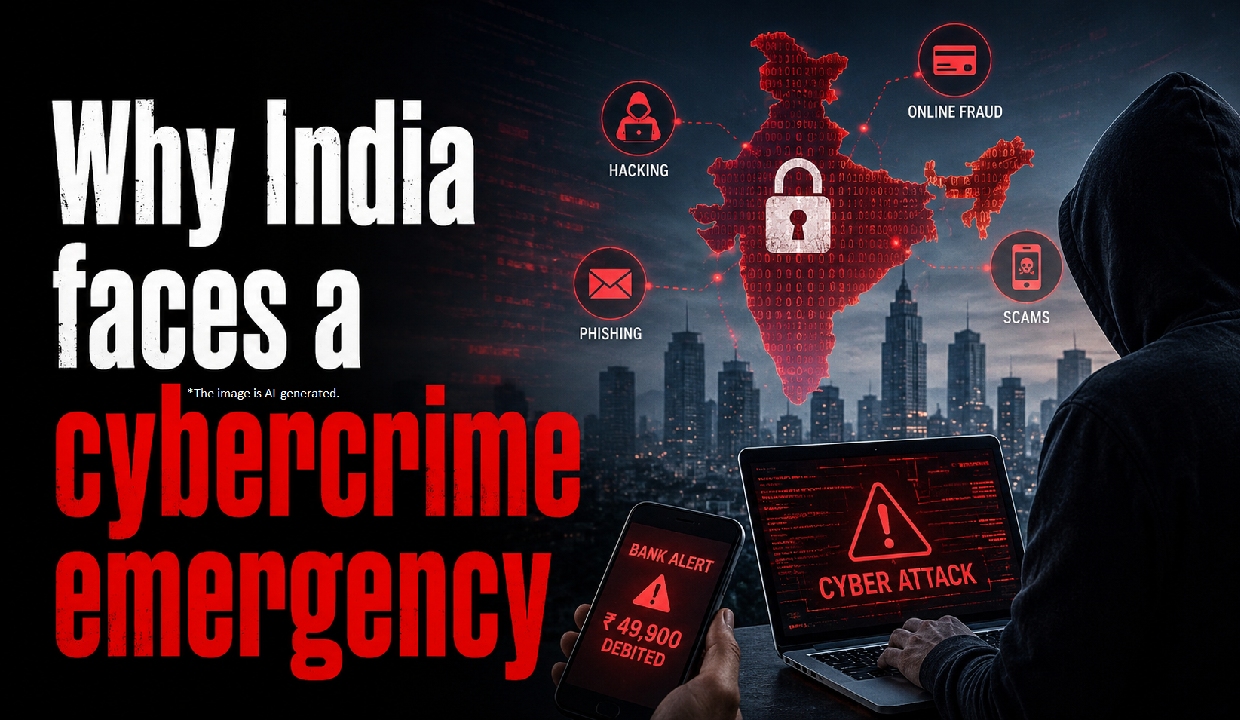
The SC’s intervention and PM Modi’s recent remarks underscore a stark reality: cybercrime has emerged as a pressing challenge of our times
For years, cybercrime in India was not taken seriously — yet another crime that could be easily dealt with. But the menace has now emerged as a multi-headed hydra that has siphoned off millions of rupees and even forced individuals to lock themselves in their own homes as prisoners — digital arrest and phishing is no longer minor crimes; they can wreck lives and the worst part it is very difficult to nab the culprits. But not anymore, that comfortable distance has collapsed.
The Prime Minister has reviewed digital-arrest scams at a PRAGATI meeting and pushed states to operationalise the e-Zero FIR system nationwide, while the Supreme Court continues to hear a suo motu case it opened after an elderly Ambala couple was swindled of over a crore rupee by fraudsters wielding forged court orders. When the executive and the judiciary independently decide the same menace deserves their direct attention, it is no longer a law-and-order footnote. It is a governance emergency.
The numbers explain the urgency. The apex court itself has described the scale of digital fraud — running into tens of thousands of crores — in language usually reserved for organised crime, not white-collar mischief. “Digital arrest” scams, where con artists impersonate police officers, CBI or ED officials, or even judges to terrify victims into transferring their life savings, have proliferated precisely because they exploit two things India has in abundance: rising digital penetration among people who weren’t raised on it, and a fragmented enforcement architecture where a fraud originating in one state, routed through a server in another, and cashed out via mule accounts in a third, falls through every jurisdictional crack. The e-Zero FIR mechanism — which converts verified financial-fraud complaints filed through the National Cybercrime Reporting Portal into instant, borderless FIRs — is sound in design but has been adopted by barely a handful of states. Universal, urgent rollout is the need of the hour.
This must be matched by genuine coordination between police, banks, telecom operators and platforms to freeze and trace money in real time, a standard operating procedure of the kind the Supreme Court has already asked the Centre to draft, and movement on international cooperation frameworks like the UN Cybercrime Convention, since most networks behind these scams operate from beyond India’s borders. But no FIR portal, however fast, repairs damage already done. The first line of defence has to be the citizen. Verifying independently, hanging up, and reporting to 1930 or cybercrime.gov.in before money moves is the only real firewall available to most people, and it costs nothing.
The PM’s intervention and the Court’s scrutiny together create unusual institutional momentum. Squandering it through slow state-level implementation or public complacency would be the real failure. Cybercrime will not be defeated by outrage alone — it will be defeated by boring, relentless follow-through: faster FIRs, tighter bank-telecom coordination, and citizens who simply refuse to be afraid.