When AI speaks in tribal languages: The promise of inclusive development
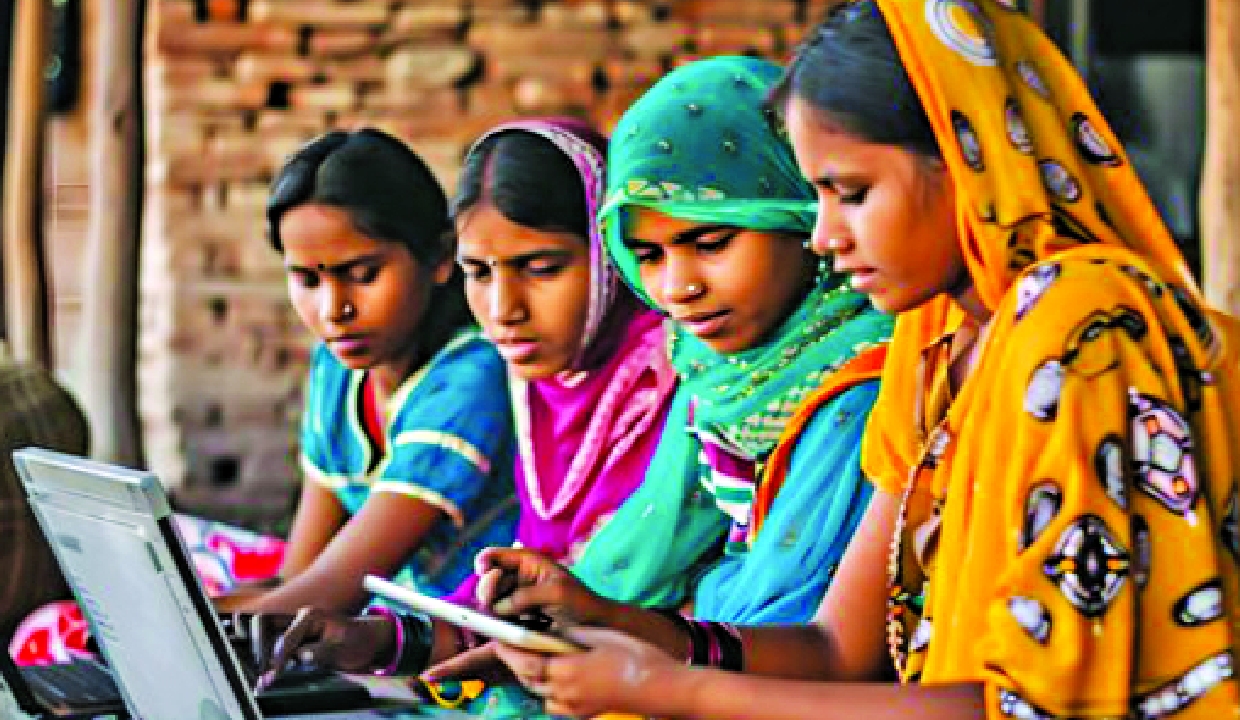
As technology bridges distances, as science delivers healing, as AI speaks in the languages of the forests and the hills, and as governance reaches the last family in the farthest village, we move closer each day to India that is not merely developed in measure, but complete in its humanity
In the forests, hills, and remote habitations that stretch across our country, a quiet yet consequential transformation is underway. Tribal communities, long awaiting their rightful place at the center of India's development story, are today emerging as active architects of the nation's progress. This is the spirit that underlies Janjatiya Garima Utsav: a national celebration of a journey towards Viksit Bharat, where progress is not a privilege of geography or circumstance, but a right belonging equally to every citizen.
The scale of the ambition
To appreciate why technology has become indispensable to tribal development, one must first appreciate the magnitude of challenge. Pradhan Mantri Janjati Adivasi Nyaya Maha Abhiyan (PM-JANMAN), Dharti Aaba Janjatiya Gram Utkarsh Abhiyan (DAJGUA), the National Sickle Cell Anaemia Elimination Mission, and related initiatives cover more than 63,000 villages across 549 districts and 2,911 blocks in 30 States and Union Territories, benefiting more than 5.5 crore tribal citizens. With special focus on Particularly Vulnerable Tribal Groups (PVTGs), these efforts aim to ensure saturation coverage of essential services such as housing, drinking water, sanitation, education, healthcare, connectivity, and livelihoods. Reaching every family across such diverse and expansive terrain demands system that are data-driven, connected, and responsive and that is precisely what we are building.
Janjatiya Garima Utsav this year is organised around four thematic weeks, that together reflect the full arc of tribal development. The opening theme, "Technology as a Development Driver," captures how digital systems, science, and innovation are helping extend governance and opportunity to some of India's remotest communities. At the heart of this vision lies a simple principle: development must reach the last mile while remaining deeply respectful of tribal languages, cultures, heritage, and traditional knowledge systems.
Technology in service of tribal dignity
The most vivid illustration of what technology can accomplish when directed with purpose is BIRSA 101 — India's first indigenous CRISPR-based gene therapy for sickle cell disease. Sickle cell disease has long posed a significant health challenge for tribal populations, and India is now answering that challenge with advance science rooted in equity and accessibility. The Ministry of Tribal Affairs has extended financial assistance to support research, clinical trial infrastructure, and technology transfer in collaboration with the Council of Scientific and Industrial Research (CSIR), CSIR-Institute of Genomics and Integrative Biology (IGIB), and Serum Institute of India Pvt. Ltd. A recent seminar at CSIR-IGIB brought together scientists, policymakers and Sickle cell warriors, reflecting both the scientific progress and the human urgency behind the efforts.
The shared goal is clear: to develop an affordable, one-time curative treatment that can reach every tribal family in need. BIRSA 101 is not merely a medical milestone. It is a declaration that India's most advanced science will serve its most deserving communities. This conviction runs deeper than a single initiative. Efforts such as the Traditional Knowledge Digital Library (TKDL) and Ayurgenomics demonstrate how modern technology can help document, validate, and preserve the rich medicinal and ecological knowledge long safeguarded by tribal communities. The same spirit of inclusion is shaping how artificial intelligence is being integrated into tribal development. At the India AI Impact Summit 2026, the Ministry presented range of AI-enabled platforms built on a simple but powerful belief: that language is not a barrier to be overcome but an identity to be celebrated. Adi Vaani, an AI-powered Translator for Tribal Languages, supports text-to-text and text-to-speech translation, OCR, and delivery of government scheme information in tribal languages, enabling citizens to engage with public services in the language they speak at home. TriBoT, a multilingual conversational AI assistant, further strengthens this effort by providing real-time guidance and grievance support to citizens in remote regions. These efforts were also discussed during a national seminar organised with the Bhagwan Birsa Munda Cell and IIT Delhi, which focused on culturally sensitive and community-centric applications of AI, including long-term preservation and strengthening of tribal languages.
Technology is also becoming a powerful instrument of cultural assertion and economic empowerment. The forthcoming TribeX platform aims to create a digital ecosystem for promoting tribal arts, languages, traditional knowledge, music, crafts, and cultural experiences. Complementing this effort, the proposed GI Potential Art and Craft Atlas of Tribal India will digitally map tribal handicrafts, forest products, and traditional art forms with Geographical Indication potential, helping strengthen branding, market access, and recognition of tribal intellectual heritage. Innovation Hubs, planned across Tribal Research Institutes in five states on a pilot basis, will go further still, combining design and product development support, GIS-based planning dashboards, and incubation infrastructure for innovation-led tribal entrepreneurs and startups.
Technology is equally transforming the way governance reaches tribal communities. Survey Setu, deployed under PM-JANMAN for PVTG household surveys, enables real-time, geo-tagged monitoring of welfare delivery across remote regions. Operating across 18 States and 1 Union Territory, the platform has already recorded 3.43 lakh household submissions with support of 8,552 surveyors. Such data-driven systems help ensure that every eligible family is identified and connected to essential services.
In parallel, the Ministry is developing an AI-enabled Forest Rights Act governance platform to streamline claim submissions, GIS-based mapping, workflow monitoring, and grievance redressal. Together, these initiatives are making governance more transparent, responsive, and accessible for tribal citizens.
Tribal communities: Drivers of Viksit Bharat
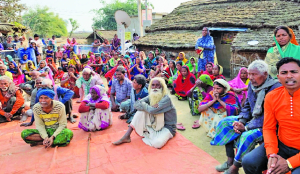
There is a moment that, captures the essence of everything we are working towards. It is not found in a policy document or a ministerial review. It is found when a tribal woman in a remote habitation, empowered by technology, by language, and by the assurance that the state is listening, engages with government services on her own terms and receives an answer with full dignity. That moment is not the end of a journey. It is the beginning of a new chapter in India's national story. Janjatiya Garima Utsav carries this message with pride. Tribal communities, with their resilience, their ecological wisdom, their artistic traditions, and their deep roots in this land, are not waiting at the threshold of Viksit Bharat. They are among its most powerful and inspiring drivers.
As technology bridges distances, as science delivers healing, as AI speaks in the languages of the forests and the hills, and as governance reaches the last family in the farthest village, we move closer each day to India that is not merely developed in measure, but complete in its humanity. That is the Viksit Bharat we are building together, inspired by the vision of the Prime Minister.
Technology is also becoming a powerful instrument of cultural assertion and economic empowerment. The forthcoming TribeX platform aims to create a digital ecosystem for promoting tribal arts, languages, traditional knowledge, music, crafts, and cultural experiences
The writer is Secretary, Ministry of Tribal Affairs; Views presented are personal.