West Asia crisis and the Modi doctrine
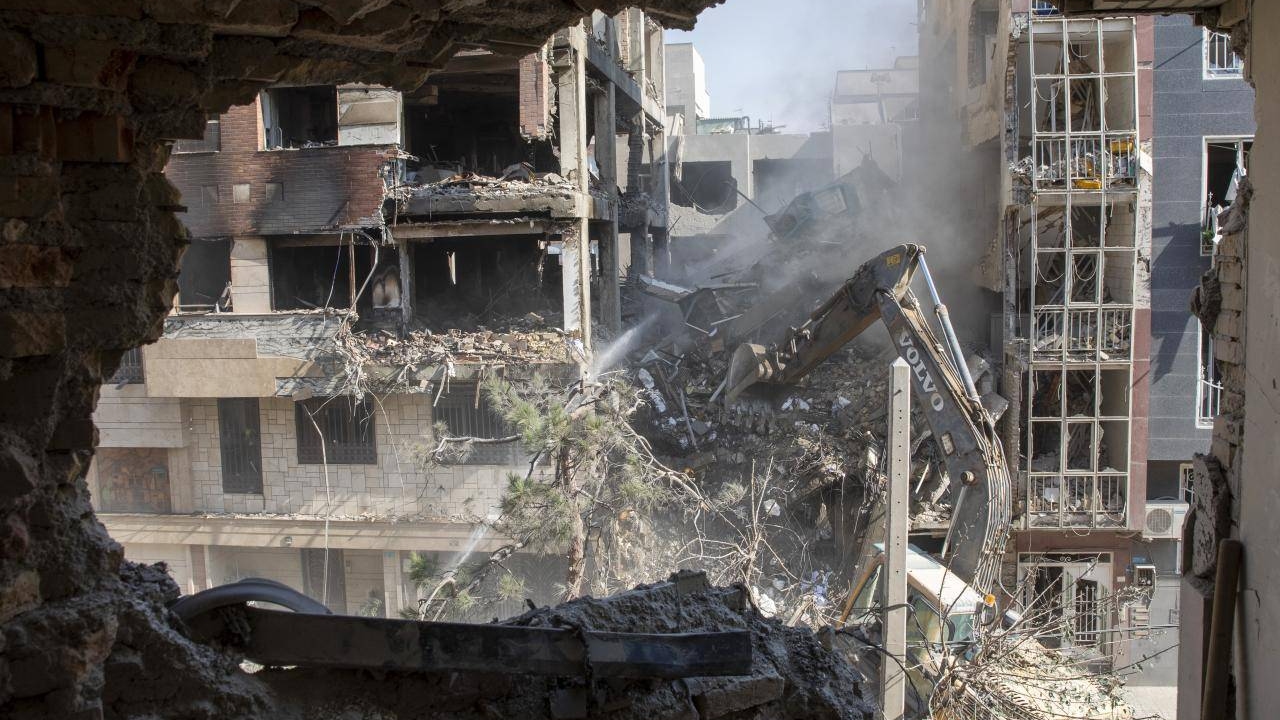
As the conflict in the Middle East continues to escalate unabated, and the US and Israel continue their ferocious campaign against Iran, the world is on tenterhooks. The broad repercussions of this raging war can be felt worldwide, from rising energy costs to the profound implications for the tourism sector. But in the midst of this latest conflagration, which has captivated global attention and headlines, India, under the leadership of Prime Minister Modi, appears to have skilfully navigated a tumultuous environment with great ease. This is a testament to our diplomatic sagacity and the art of dealing with close allies on a plethora of issues, even though our interests diverge on the current problem that is brewing.
Even though Israel and the US are acting in concert to obliterate targets in Iran and its proxies, India has skilfully demonstrated its ability to manoeuvre through this complex web and yet keep its ties intact with the Arab world. Three issues come to mind. First, the balancing act that occurred during the Gaza and Middle East conflict is a masterstroke.
Mr Modi’s visit to Israel was timed at a very crucial juncture. Both Israel and the US could not have launched a coordinated attack on Iran with his presence in the Middle East. When the Prime Minister addressed the Israeli Parliament, he reiterated the strategic partnership between the two nations and the urgent need to further bolster defence and technology ties. The devastating war commenced less than two days after his departure. Terror was condemned in the harshest terms, but India successfully articulated a clear message to Israel: it has deep-rooted economic interests in Iran (the Chabahar Port), and India will not forsake them in light of the current situation. Concurrently, gone are the days when India had to tread a fine line to establish deeper ties with Israel. The message is loud and strident: our national interest comes first.
Second, despite a belligerent Iran that is hell-bent on striking any vulnerable targets in the Middle East, India opened direct talks with Iran to allow the passage of its oil tankers. This again is a manifestation of how intelligent diplomacy works. We have proven to the world that we embrace, empathise and cooperate with Israel, but that does not diminish the nature of our ties with the Middle East.
The cooperation between the two nations has evolved tremendously pursuant to the attacks, especially in terms of intelligence sharing. Despite the fact that India has condoned the assassination of Ali Khamenei, our national interest in securing our energy needs has prevailed effortlessly in a very precarious security scenario.
Third, America seems to be urging India to purchase Russian oil, which it was vehemently opposing prior to the war. This is to contain surging oil prices. Yes, deep-rooted concerns remain in ongoing trade negotiations that reference environmental and labour standards, but history is a witness that these standards have always been employed to gain an upper hand in trade negotiations. Ever since the General Agreement on Tariffs and Trade (GATT) in 1948 until the establishment of the World Trade Organisation (WTO) in 1995, Article XX has been invoked under the guise of genuine concern, but the core reason has been protectionism. Throughout modern history, this has been the bone of contention between the developed and developing world, and India will eventually manage to surmount this challenge and sign a successful deal in the coming months. America is too engaged in the Middle East right now to pay close attention to a deal that will be mutually beneficial to both nations. After all, in Trump’s own words, Mr Modi is a very tough negotiator.
So, if anything, the recent unfolding of events has only proved that the Indian economy is slated to outpace the rest of the world. Meanwhile, China’s economic interests have been threatened by the recent bombing campaign on Iran’s Kharg Island. Its air defence systems have proven to be weak. Operation Sindhoor, the abduction of the Venezuelan President, and the attack on Iran point illuminatingly to this indisputable fact. Furthermore, Pakistan’s reluctance to join Saudi Arabia in the war proves that the so-called Islamic NATO is just baloney-a Catch-22 situation. If it joins the war, it will be implicitly endorsing Israel, and if it does not, the Islamic NATO becomes a laughing stock.
India has demonstrated that when interests align, it will constructively engage with all stakeholders, and when they do not, it will follow its national interest. The linear unfolding of events has conveyed a very powerful diplomatic message to the world: we watch quietly and act with purpose when necessary, in the interest of our country. Furthermore, the precision with which we react and activate our diplomatic channels will astonish India’s mightiest adversaries.
The writer is a national security analyst; views are personal
Leave a Comment
Comments (1)
Well captured. India is certainly a winner in this entire coflict as the writer points out.