US tariffs: India’s Russian oil dilemma
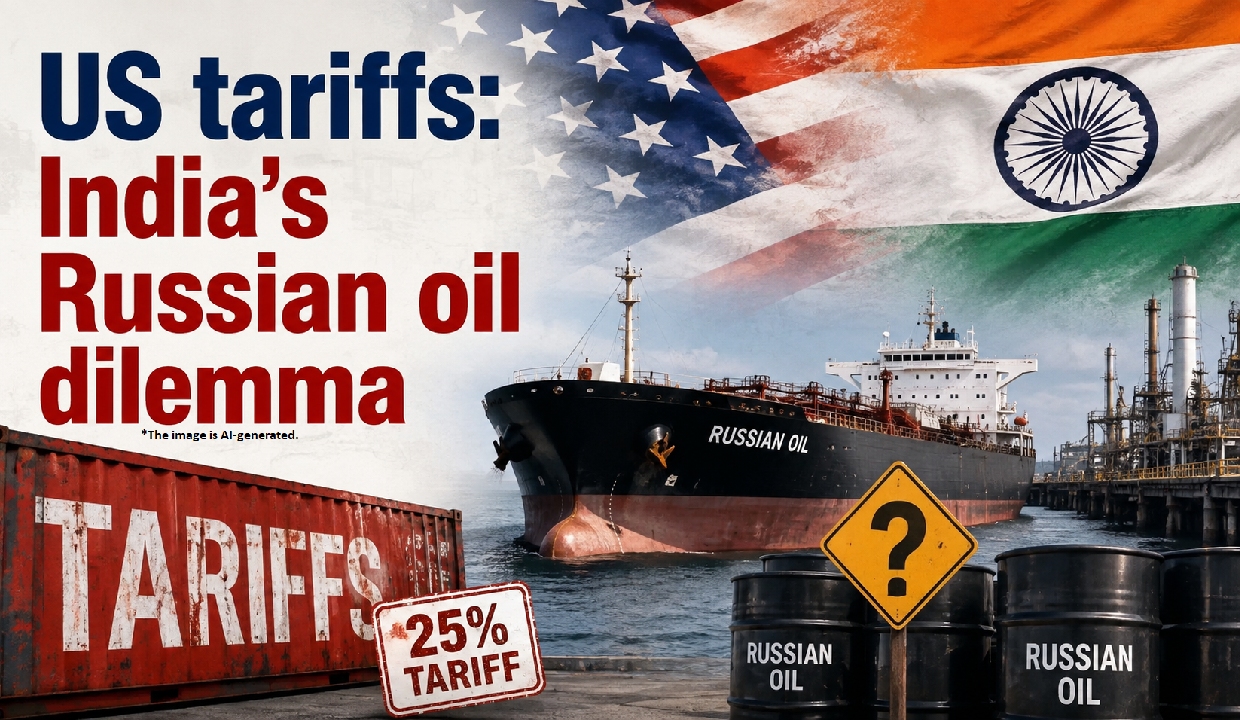
The challenge for India is no longer simply about managing tariffs, but balancing cheap Russian crude, energy costs and the broader India-US trade relationship
The US Congress has done what the courts undid. This week, the US House passed the Lindsey O Graham Sanctioning Russia and Iran Act of 2026 by 262-159, following the Senate’s 86-11 vote in August - sending to Donald Trump’s desk a law authorising tariffs of up to 100 per cent on the five largest buyers of Russian oil and gas. India tops that list, alongside China, Azerbaijan, Hungary and Slovakia. For New Delhi, a wound barely healed has been reopened.
This is not a repeat of 2025’s overreach. The Supreme Court struck down Trump’s IEEPA-based “reciprocal” tariffs in February, ruling that only Congress can levy duties - which is precisely why this bill matters more. It is a statute, not an executive whim, and far harder to litigate away. Yet its bite is deliberately calibrated: an early draft proposed a blanket 500 per cent on any Russian energy buyer; what survived is discretionary, waivable by the President, with the “top five” list revisited every 180 days.
Graham, who championed it for over a year, did not live to see it pass - he died in July, and the bill now carries his name. The stakes for India are real. It imports nearly 90 per cent of its crude, and Russia now supplies over half of that - a record share, reached after a year of tariff pressure, not despite it. India spent $40.8 billion on Russian crude in FY26, chasing discounts that have saved precious foreign exchange. Yet the US remains India’s largest export market: $42.8 billion in goods between April and August alone, still growing. A comprehensive bilateral trade deal remains unsigned, with Commerce Minister Piyush Goyal holding out for tariff parity with Vietnam and Bangladesh.
Can this be negotiated? Almost certainly. Washington has traded away this exact threat before: in February, a near-identical 25 per cent Russia-linked penalty was lifted after a Modi-Trump understanding, only for Russian imports to climb back to record levels once the pressure eased. Trade analysts expect Trump to sign it, then hold the authority in reserve as leverage for future talks, not fire it immediately.
Neither India nor China is likely to walk away from discounted Russian barrels simply because Washington has raised the ceiling. Russian oil matters to India’s import bill, not to its energy security. Hardeep Singh Puri has repeatedly noted that Gulf producers, the US, Brazil and Guyana can absorb a shift — India ran on negligible Russian crude before 2022 and adapted once already. The dependency today is economic convenience, not necessity.
India’s wisest course is calibrated, not capitulatory: treat the bill’s own waiver clause as the anchor for finally closing the trade agreement, trading a genuine, verifiable diversification path — more US crude and LPG, more Gulf and Latin American barrels — for durable preferential access, rather than symbolic pledges that unravel within months.
Alongside this, New Delhi must keep building strategic reserves and a wider supplier base, so that Washington’s leverage shrinks with time regardless of how this round ends. Quiet diplomacy, not public defiance or premature surrender, will serve India best.