Unearthing Kerala’s carved legacy: A tribute to sacred woodcraft
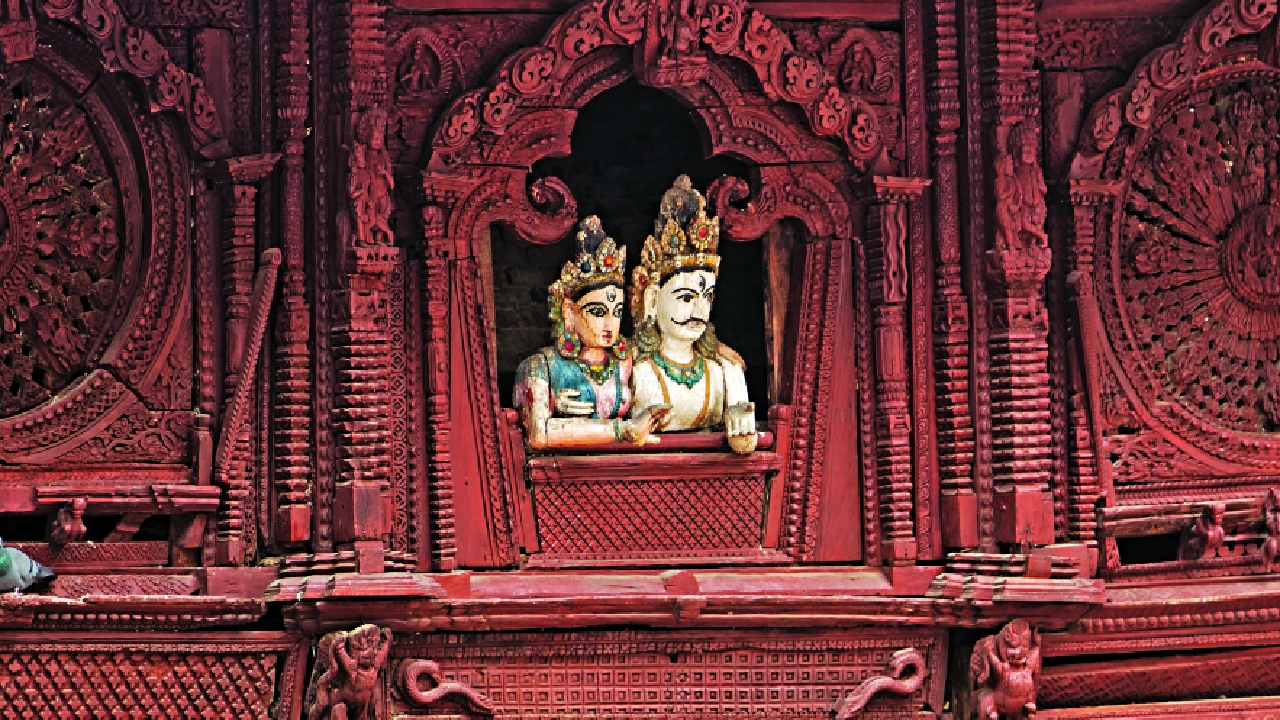
I must, at the outset, concede that I am no art historian. Yes, I am a student of history but not particularly well placed to write a critical review on wooden sculptures in Kerala temples. My workplace experience fortunately exposed me to the marvels of Indian sculpture. A stint as Director General of the National Museum, New Delhi, gave me a wonderful opportunity to learn about Indian architectural masterpieces. It also gave me a chance to witness these artefacts in different museums across India and the world and compare them across time and space. I could not stop myself from embarking on the delightful task of going through the two recent publications on Kerala sculptures by Professor Preeta Nayar and attempting a review. Painstakingly composed, they caught my attention immediately. These two books have been curated imaginatively and explained interestingly, even for a casual reader of this genre. The research done is meticulous. The temple architecture of Kerala is quite distinct from the ‘Dravidian’ and the ‘Nagara’ style. The Kerala temple architectural features manifest the integration of cultural elements from both within and without. It also has its own indigenous features, quite pronounced, for example, a modest structure with a subdued gopuram, lively in style, that merges elegantly with climate-friendly patterns of domestic dwellings, elevating it to a divine status. Timber is the main construction material, with striking wooden artistry as a dominant feature. Sculptural art of Kerala has a tradition of more than a millennium. The two main elements of the sculptural wealth come from the Vaishnava and Shaiva traditions. The lyrical quality of twists and turns in forms, the musical harmony in proportions, the natural artistry in moulding shapes, and the precision in carving anecdotes in finite spaces greatly manifest in the craftsmanship of the godly hands of the woodcarvers of Kerala. They effortlessly impart a gigantic feel to miniature forms and transform expressions of fierce ferocity into subtle aesthetic delight.
The art of Kerala is one of the richest and most exuberant. It is with some hesitation that I venture some reasons for it. Temples in Kerala adhere to a series of strict and closed-door ritualistic traditions with many layers of limitations. These traditions, under normal circumstances, do not permit access to sculptural niches for the purpose of iconographic investigation.
It is against this background that the relevance of the two important publications, “Vaishnava Sculptures of Kerala: An Iconographic Study” and “Carved Wonders in Wood: Rare Sculptures of Kerala,” authored by Professor Preeta Nayar of the Department of Archaeology, University of Kerala, should be viewed. The book on Vaishnava sculptures of Kerala is methodically organised into eight chapters. It begins with the origin and development of Vaishnavism, and traces the historical roots and evolution of this tradition in the state. The next theme covers the cultural perspective and provides a contextual backdrop by examining the social dynamics that influenced the region’s art and architecture. The author thereafter delves into the architectural features of the Hindu temples in Kerala. The various forms of ‘Vishnu’ are examined in detail, represented as they are in the sculptural art of the state. The ‘Dashavatara of Vishnu’ illustrates the ten principal avataras, highlighting their iconographic significance.
This is followed by a lucid analysis of minor avataras of Vishnu, focusing on lesser-known incarnations and their representations. Then there are the composite and associate deities of Vishnu, discussed extensively as per delightful visual representations. The book on Vaishnava sculptures of Kerala provides a comprehensive evaluation of the sculptural forms and their iconographic relevance. It is an in-depth scientific study of Vaishnava sculptures in stone and wood. Informative iconographic descriptions of different forms of Vaishnava sculptures starting with sthanaka (standing), asana (sitting) and shayana (reclining) forms of Vishnu, his major and minor avataras, are all presented aesthetically. It deals with sculptural depictions of many anecdotes (for example, Krishnalila) affiliated with these forms. The work examines the explanations given for these forms in ancient iconographic texts like Vishnudharmottara and evaluates the salient features while indicating the degree of fidelity observed between the texts (shastras) and the images (prayogas).
Morphological features of the icons, like the number of different deities, the attributed symbols they hold and their schematic arrangement, are incisively analysed and classified. The findings in the book sub-regionalise important forms in different geographical areas of the state. It categorises over 97 basic forms of Vaishnava sculptures, with 120 sub-forms and over 200 other varieties. The study compares these forms with those from northern and other parts of South India, attempting a broader classification and understanding of regional variations.
The visuals and descriptions enhance the understanding of the intricate details and variations within the Vaishnava sculptures of Kerala.
This publication is a pivotal contribution to the understanding of Kerala’s rich sculptural heritage. By intertwining the historical, cultural and iconographic perspective, the book offers a 360-degree framework to appreciate the intricate relationships between the art and architecture of Kerala temples through iconography.
Now I come to the second work of Professor Preeta Nayar, the ‘Carved Wonders in Wood: Rare Sculptures of Kerala’. This too is a beautifully brought-out volume in colour. It takes the readers on a journey through the magnificence of Kerala’s wood carving heritage. It commences with a brief description of the unique architecture of Kerala temples and illustrations of its various architectural components. The rest of the text is a rare treat on the splendour of the ‘least seen and least known’ atypical sculptural forms, depicting 66 themes of Hindu mythology, carefully selected from a multitude of wooden sculptures that richly adorn the sculptural niches of 76 ancient Hindu temples across the state.
The sculptures are described with emphasis on their iconography after narrating the story associated with their respective forms. This is followed by images of specific niches where those sculptures are positioned in the temples, the names of those temples and their location in the state. The contents are supported with 186 original colour photographs, most of them in larger format. The work contains rare forms of cosmic Vishwadeva, Kinnara Shiva, Rakshoghnamurti. Sculptures depicting themes like Vishnu in Yoganidra and the origin of Madhu and Kaitabha, Bhima carrying his family on his shoulder to the Hidimba forest, Kalki in a termitarium, Aghasuravadha, Ashtavakra, rare sculptures with philosophical dimensions like Vighna, and some denoting localised themes like six-breasted Pidari and many other rare images.
Both these publications, significant in their own way, come with references to literature and a glossary of technical terms which make them user-friendly. These two books add immensely to our understanding of the local Kerala tradition in the Indian context. Undoubtedly, it will prove to be an important source of reference for archaeologists, Indologists and art historians.
The writer is a former Secretary, Ministry of Culture, Government of India and an Advisor at Bharat Ki Soch Foundation; views are personal