The Painter's Eye
Every single time he loaded his brush, he stopped. He would just stare at the actual tomb, measuring the light and the distance in his head before letting the bristles anywhere near the canvas. It makes you wonder how anyone even trains their eyes to see like that
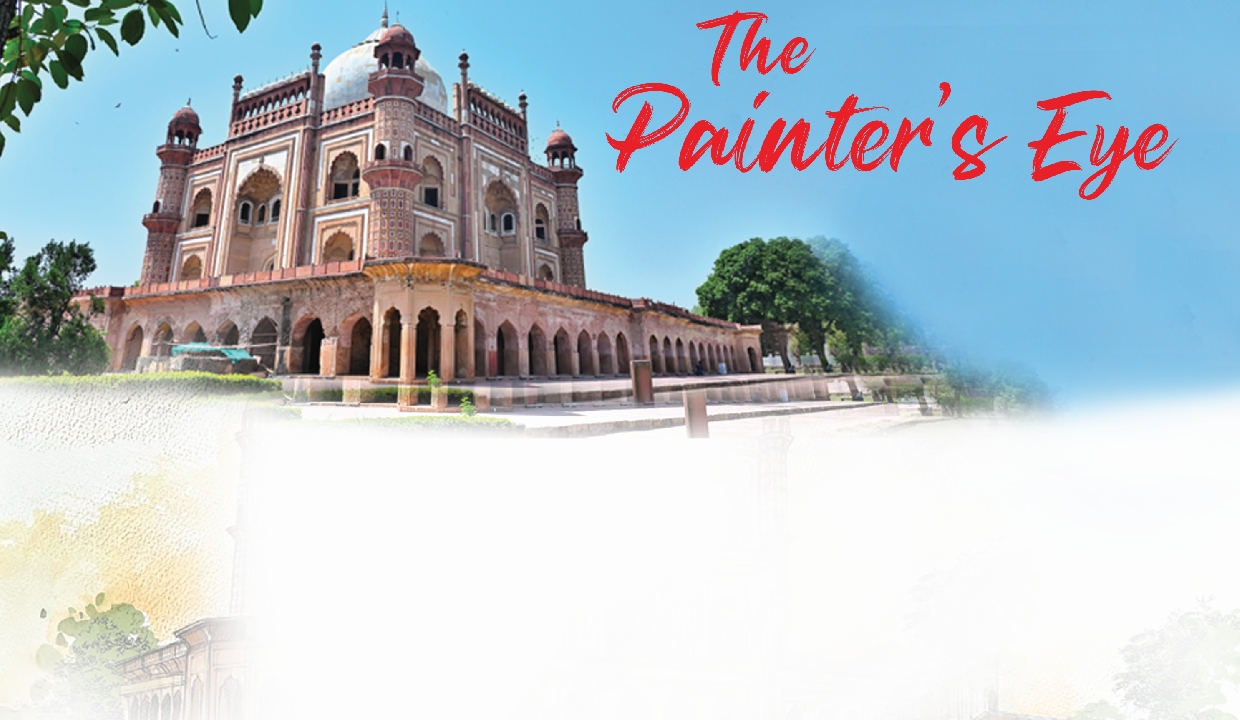
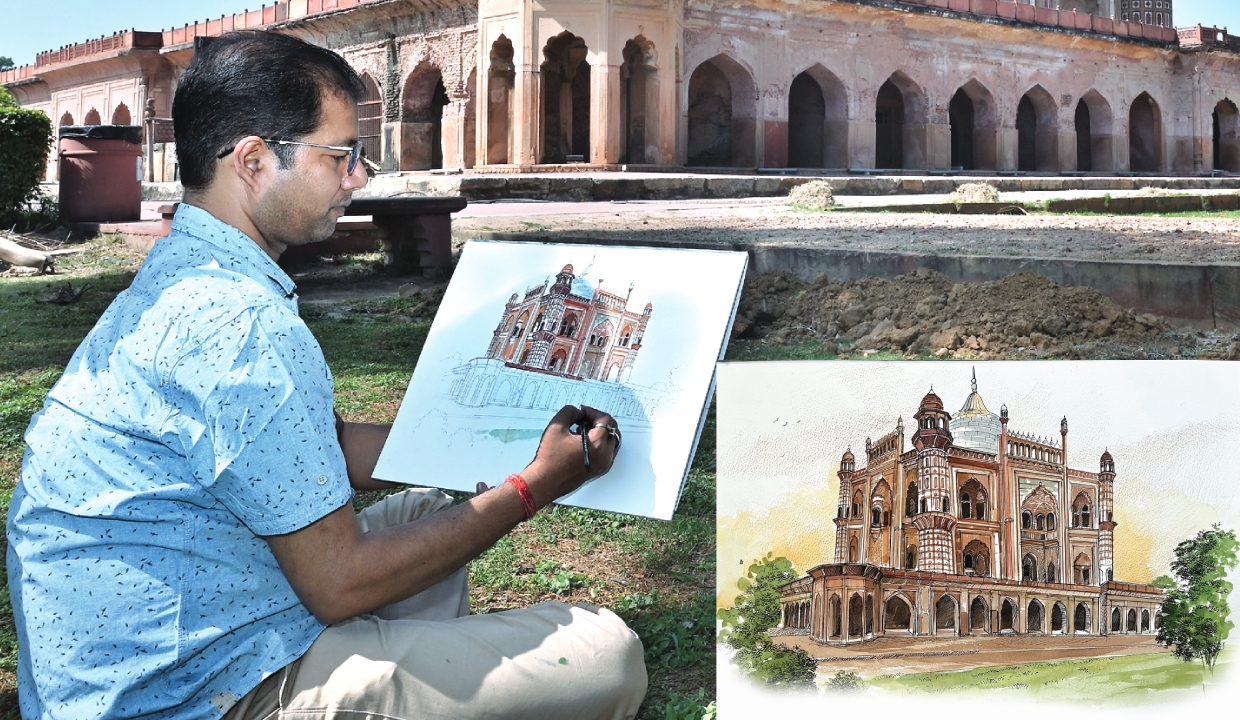
Stones carry the silence of centuries, holding onto stories that wait patiently for a quiet observer. Looking at the physical world through a painter’s eyes shifts reality entirely. A casual glance misses the bruised purple tucked inside a morning shadow or the sharp edge of early light. Most walkers hurry past without a second thought, missing the exact details that make a space alive. Edgar Degas captured this dynamic perfectly when he noted that art involves making others see what is hidden in plain sight. I met artist Soumen Dutta while the capital was still half asleep, standing outside Delhi’s Safdarjung Tomb waiting for the dawn to hit the massive beige walls so the process of creation could begin.
Dutta operates with a deep, steady patience. For over five hours, I watched him move his brush across the canvas, translating heavy stone into vivid color. The secret of the mausoleum lies entirely in its numbers, he told me, pointing toward the central dome. The original architects relied on the Navagraha and its nine elements to build a space designed to trick the human mind. The surrounding gardens and fountains present a perfectly mirrored layout from every possible angle, instantly swallowing a visitor’s sense of direction at the main gate. Human vision relies heavily on a three-point perspective, making the imposing walls look slightly tilted to the naked eye. Yet, tracing the geometry taking shape in his painting, Dutta proved the actual walls and intricate jali patterns remain completely, mathematically straight.
The monument felt more alive as the sun climbed higher. Peacocks began calling from the upper domes. Squirrels scattered across the paths, ladybugs moved quietly through the grass, and dragonflies drifted near the canvas. Dutta smiled and ducked out of the way of a low-flying pigeon. He pointed out that the architecture actually breathes with the nature surrounding it. He insisted that seeing the tomb properly takes a full day. By nine o’clock, the harsh morning sun washes out all the depth and shadows. But catch it right before dusk, and the clash between the bright green lawns and the rough brown stone changes the entire scene.
Seeing this process happen live feels like watching someone anchor history to a page. Dutta has spent the last twenty-five years archiving India’s historical buildings. He started doing this back in 2002, and since then, everything from the ghats of Varanasi to the dry deserts of Rajasthan has found its way onto his canvas. Mixing a new shade of paint, he talked about Jaisalmer Fort, about how that massive structure actually mirrors the physical map of India, and the way he said it made you feel like he had been carrying that thought around for years, waiting for the right moment to let it out. He remembered sitting down to draw a fort in Alwar years ago when the walls were crumbling and ruined. Conservation is the whole point of this work. He kept his eyes fixed on the tomb while explaining that his paintings track how the culture physically shifts. He even matches old 1980s photographs of Varanasi given to him by his teacher, with his own 2022 artwork. He does it to leave a concrete record behind for his son and whoever comes next.
The noise of morning traffic finally began to bleed through the quiet gardens. Delhi is changing incredibly fast right outside those walls. Old heritage bungalows are being flattened for sterile concrete blocks, and those once-quiet neighbourhoods are just getting buried under the endless noise of the new city. Dutta has always said that without old Mughal buildings like this one, the capital would lose itt. Following the legacy of eighteenth-century British painters William and Thomas Daniell, he spends his days sketching the grand columns of Gole Market or the forgotten gates of Fatehpuri Mosque just to hold onto that fading identity.
But his main focus today was the massive structure right in front of us. Watching him map out Safdarjung was a lesson in pure concentration. He did not just copy the building. He dissected it. He started with faint, precise lines to lock in the impossible symmetry of the dome and the four surrounding fountains. Then came the layers of colour. He spent ages just mixing the paint, trying to find the precise shade of beige and off-white to match the weathered stone. Every single time he loaded his brush, he stopped. He would just stare at the actual tomb, measuring the light and the distance in his head before letting the bristles anywhere near the canvas. It makes you wonder how anyone even trains their eyes to see like that.
He was capturing the exact view from the entrance. In his painting, you could see the narrow archway framing the courtyard, leading your eye straight to the giant central structure. He painted the harsh shadows the sun was throwing across the delicate jali work and the bright highlights where the morning light hit the highest balconies. He worked carefully around the edges, making sure the green of the gardens pushed hard against the dirt pathways.
By the time the sun had fully come up, the artwork was nearly there, and what it caught was something quite specific, that feeling of walking into the tomb where you see only a fragment of it first, just a sliver, before the whole thing suddenly opens out into that vast, perfectly balanced space. Six hours had passed by like nothing at all. Art defines the inner self and shows love through the sheer effort of paying attention. By painting every stone, garden, and dome, Artist Soumen Dutta is building a permanent memory of history and keeping it safe from the heavy hands of time. But as the modern world continues to build over its past and close off ancient gates, who will be left to notice the stories the stones are still trying to tell?
To mark World Heritage Day, watch artist Soumen Dutta capture Safdarjung Tomb’s quiet history long before the city stirs.