The New Geopolitical Reality in Bangladesh
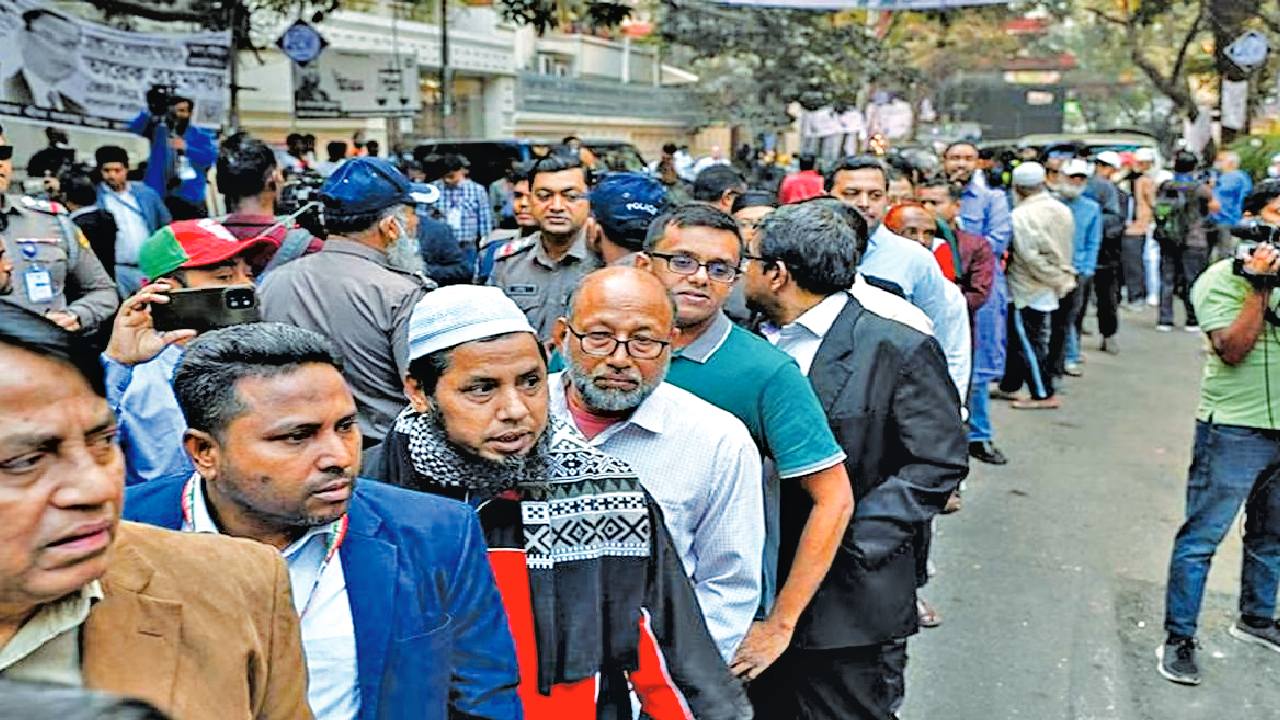
The political landscape of South Asia shifted significantly with the recent victory of the Bangladesh Nationalist Party (BNP), an event that resonates far beyond the halls of power in Dhaka. For India, particularly for the states along the eastern frontier like Assam, a change in the Bangladeshi administration is never merely a foreign affair; it is a domestic security and economic consideration. As the dust settles on a decisive mandate, it is essential to move past the immediate headlines and analyse what this transition means for regional stability, internal security, and the delicate diplomatic balance between New Delhi and Dhaka.
From a law enforcement and border management perspective, the most critical takeaway from the election is the clarity of the result. For those charged with maintaining the integrity of India’s 4,096-kilometre border with Bangladesh, political ambiguity is a primary threat. Uncertainty across the border often manifests as administrative paralysis, which in turn creates a vacuum exploitable by non-state actors. In this regard, the BNP’s clear mandate provides a stabilising foundation. While the ideological leanings of the new government may differ from its predecessor, a functioning, decisive administration in Dhaka is always preferable to a fractured one. In Assam, where we share a sensitive 260-kilometre stretch of the boundary, this clarity reduces the immediate risk of prolonged civil unrest spilling over the border.
In the lead-up to and aftermath of the elections, much was made of the potential rise of the Jamaat-e-Islami (JEI). There were concerns that JEI’s influence in border constituencies near Assam and West Bengal would signal a radical shift in the border ecosystem. However, a professional analysis of the data suggests that while JEI maintained a localised presence, the predicted “national wave” of ideological extremism did not materialise. The mandate was a conventional political shift rather than a fundamentalist takeover.
Similarly, the much-touted influence of Muhammad Yunus and the “Gen Z” student-led mobilisations, while vibrant on social media and in urban centres, failed to dismantle the traditional organisational strength of established political networks. For India’s security establishment, this indicates that the transition is rooted in traditional political arithmetic. The lesson here is one of proportion: while localised radicalism requires quiet vigilance, it should not be mistaken for a national transformation of the Bangladeshi state.
The “Pakistan factor” remains a perennial concern in Indo-Bangla relations. It is no secret that elements within Islamabad viewed this election as an opportunity to regain a foothold in Dhaka, hoping to leverage anti-India rhetoric to drive a wedge between the two neighbours.
However, these expectations appear to be grounded more in hope than in reality. The structural interdependence between India and Bangladesh is now too deeply entrenched to be discarded for ideological whims. From power exchanges and transit rights to massive trade volumes, the economic survival of Bangladesh is inextricably linked to India. Any leadership in Dhaka, regardless of its rhetoric, must contend with the geographic reality that India surrounds it on three sides.
While the long-term outlook remains stable, the immediate “transitional period” presents specific challenges. Historically, when a new government takes office, there is a window of administrative flux. This is the period when smuggling syndicates, narcotics traffickers, and counterfeit currency networks test the new boundaries.
Assam must remain particularly alert in riverine stretches where physical fencing is impossible. Security policy during this phase must be driven by professional preparedness rather than political noise. Strengthening the “human fence” — the community engagement with border residents - is as vital as technological surveillance. These residents are the first line of intelligence, and their trust is India’s greatest asset in preventing illegal migration and cross-border crime.
Beyond security, the election has significant implications for India’s textile industry. Bangladesh is a global titan in apparel, more so now with Trump’s zero per cent tariff concession to Bangladesh. A stable BNP government, focused on revitalising investor confidence, could intensify competition for Indian exporters. Rather than adopting a purely protectionist stance, India should view this as an impetus to improve logistics and integrate regional value chains. The North East, in particular, stands to gain by becoming a transit and processing hub for this trade, turning a competitive threat into a collaborative opportunity.
The ‘Hasina Factor’ and the Dilemma of Asylum
A central, complicating thread in this new bilateral chapter is the presence of former Prime Minister Sheikh Hasina in India. Her sheltering in New Delhi represents one of the most delicate diplomatic tightropes India has had to walk in decades.
The Moral and Strategic Obligation:
For India, providing refuge to Hasina was an act of loyalty to a long-term ally who presided over a “golden age” of Indo-Bangla relations. Turning her away in her moment of crisis would have sent a chilling message to other regional partners about India’s reliability as a friend.
The Friction Point with the New Dispensation:
However, for the BNP and its supporters, Hasina’s presence in India is a source of significant friction. To the new government, she represents a past they are keen to prosecute. The demand for her extradition is likely to become a recurring populist refrain in Dhaka. If India holds her indefinitely, it risks being perceived by the Bangladeshi public as “protecting a fugitive,” which could fuel the very anti-India sentiment New Delhi seeks to avoid.
The Extradition Trap:
India and Bangladesh have an extradition treaty, but it contains clauses regarding “political offenses.” Navigating a formal extradition request will be a legal and diplomatic nightmare. To hand her over would be a betrayal of a guest; to refuse would be a snub to a new sovereign government.
The Path of ‘Quiet Presence’:
The likely strategy for New Delhi will be one of “strategic silence.” By keeping Hasina in a secure, non-public capacity, India aims to let the domestic heat in Bangladesh simmer down. The goal is to de-couple the “Hasina issue” from functional state-to-state cooperation on trade and security.
Geography is permanent; governments are temporary. The India-Bangladesh relationship has matured into an institutionalised partnership that can survive a change in leadership. While the BNP’s victory and the sheltering of Sheikh Hasina introduce new variables of friction, the underlying architecture of connectivity and mutual economic interest remains robust. For India, the mantra must be pragmatic engagement: stay vigilant on the borders, stay firm on security, but remain open to a new era of diplomacy that acknowledges the mandate of the Bangladeshi people.
2026 Election Results at a Glance
Party / Alliance Seats Won Status
Bangladesh Nationalist Party (BNP) 209-212 Formed Government
Jamaat-e-Islami & Allies 77 Official Opposition
National Citizen Party (NCP) 5 Minor Party
Awami League - Banned from contesting
FROM GEN-Z UPRISING TO ELECTIONS: Timeline of Key Events (2024-2026)
August 5, 2024: Prime Minister Sheikh Hasina resigned and fled to India following weeks of student-led protests.
August 8, 2024: Muhammad Yunus was sworn in as Chief Adviser of a neutral interim government to oversee state reforms and prepare for new elections.
October 2024: The Constitution Reform Commission (CRC) was formed to draft institutional changes, including term limits for the Prime Minister.
January 2025: The CRC submitted its final report, outlining the “July National Charter” for democratic reform.
February 2025: Student activists from the uprising formally launched the National Citizen Party (NCP).
May 10, 2025: The interim government officially banned the Awami League and its affiliates under anti-terrorism laws, barring them from participating in the upcoming polls.
August 5, 2025: On the first anniversary of the uprising, Chief Adviser Yunus announced the election would be held in February 2026.
December 11, 2025: The official election schedule was broadcast, confirming the date for the national vote and a concurrent referendum.
February 12, 2026: Election Day. Bangladeshis voted for 299 parliamentary seats and participated in a National Referendum to approve the reform package.
February 13-14, 2026: Results. The Election Commission announced a landslide victory for the Bangladesh Nationalist Party (BNP), led by Tarique Rahman.
The author is a former DGP of Assam and presently the General Secretary of the Think tank Society to Harmonise Aspirations for Responsible Engagement — (SHARE) ; views are personal