The Jihadist mindset relentlessly haunts India with internal support
The arrest of Ahmad Lone by the Delhi Police on March 29 is not merely another routine success in counter-terror operations. According to media reports, his intended targets included Delhi Kalkaji Temple and the bustling Connaught Place-symbols of both faith and urban life in the national capital. Acting under instructions from handlers based in Pakistan, Lone was allegedly engaged in recruiting Indian Muslim youth for the Lashkar-e-Taiba.
Only a few days earlier, security agencies had apprehended twelve suspects linked to ISIS and al-Qaeda in a coordinated operation across multiple states. Among them were individuals from ordinary professions-a bike-taxi driver, a restaurant employee, and even a laser-marking technician. Their presence in such networks underscores a sobering reality: radicalisation today does not wear a uniform; it often operates covertly, beneath the surface of normal life.
This is not an isolated incident. In November last year, a devastating explosion in a moving vehicle in Delhi caused significant casualties, carried out by Dr. Umar Un Nabi. Investigations led to the recovery of over 3,000 kilograms of explosives, weapons, and bomb-making equipment from Faridabad.
Several other doctors from Faridabad's Al-Falah University were detained. These terrorists were not impoverished and illiterate but belonged to a highly educated and privileged segment of Indian society-challenging the common narrative that poverty and lack of opportunities drive beleaguered Muslims to radicalism.
Around the same time, Gujarat Police arrested Dr. Ahmed Mohiuddin Syed and his associates for allegedly attempting to produce ricin-a lethal toxin-with the intent of contaminating food and water supplies. These sordid incidents reveal a method, a pattern, and above all, a mindset. So, none - poor, rich, unlettered, or highly qualified - are immune to the influence of the toxicity of Jihad - which has a theological underpinning.
The temptation in public discourse is to interpret these developments through the lens of recent political narratives. Some claim that such terror acts are violent responses to perceived anti-Muslim policies by the Modi Government. However, this oversimplified and politically convenient perspective ignores the complexity of a phenomenon that has persisted for centuries. Such opportunistic thinking and time-serving analysis prevent civil society from finding meaningful solutions to this long-standing issue.
In fact, subcontinent Muslims' rancour against Hindus has a long history, extending beyond the birth of Bharatiya Jana Sangh or the Bharatiya Janata Party. A segment of Muslims had grievances
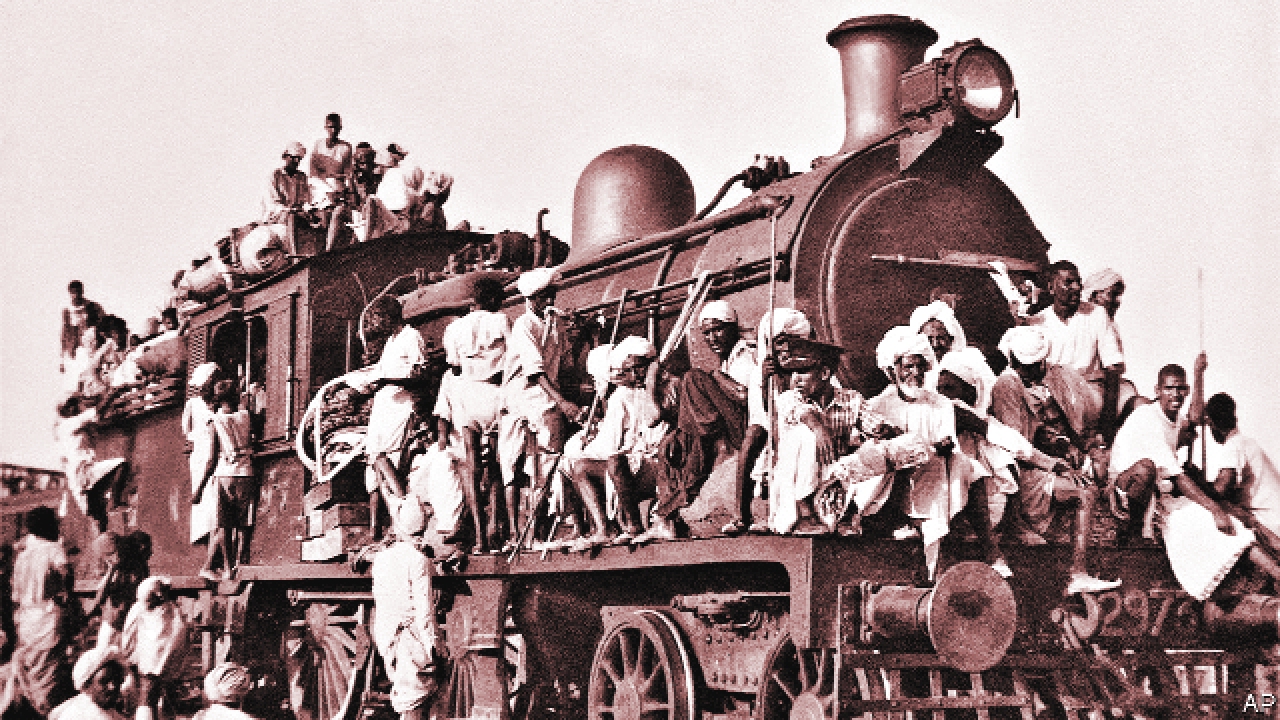
with Congress in pre-partition India when it was led by Mahatma Gandhi, Pandit Nehru, and Sardar Patel. Leveraging that Muslim resentment, the British created Pakistan by partitioning away one-third of India. And the jihadists' war against residual India began right after independence.
A brief recall of the events of September 1947 in Delhi helps us understand this ongoing vicious phenomenon. Contemporary accounts suggest that what unfolded in the capital was far more than spontaneous rioting. V. P. Menon, who served as Secretary to the Government of India in the Ministry of the States, observed, "the capital buzzed with rumours of a deep-laid, long-prepared Muslim conspiracy to overthrow the new Government of free India and to seize the capital." This was not paranoia; it was an assessment grounded in intelligence inputs and subsequent discoveries.
J.B. Kripalani, then President of the Congress, provides even more revealing testimony. He wrote: "Searches of Muslim houses by the police had revealed dumps of bombs, arms and ammunition… Sten-guns, Bren guns, mortars and wireless transmitters were seized." Kripalani also noted that in several instances, "arms were recovered from mosques and adjoining localities".
The makeup of the police force further complicated the situation. As Kripalani noted, "the bulk of the police force was Muslim… a number of them in their uniforms and with arms had deserted." Delhi, in those days, was not just a city in chaos; it was a capital under siege, confronting the threat of internal subversion.
This detail is crucial. It indicates that the violence was not entirely spontaneous; it had elements of preparation and coordination - a mindset that continues to rock India to this day.
It is also a harsh but undeniable truth that most of those who demanded Partition and tirelessly worked for the creation of Pakistan neither left India nor did the supporting political class-including communists-a creed ironically near extinct in the land of their dreams-but still shaping narratives in the country they had worked hard to break.
Had such divisive elements left India, the residual separatism and religious radicalism might have faded, or evolved-like in Indonesia or Malaysia-into a more culturally rooted, civilisationally aligned form. Instead, that process was stalled. The Marx-Macaulay mindset, in the name of 'secularism', blunted any natural assimilation.
The result is stark: for some, democracy has not become a vehicle of reform and empowerment, but merely a tool to consolidate religious identity in a toxic form. Dr. B. R. Ambedkar once cautioned in a different context, "The Muslims have no interest in politics as such. Their predominant interest is religion… Muslim politics is essentially clerical and recognises only one difference, namely, that existing between Hindus and Muslims."
For over a millennium, the Indian subcontinent has witnessed waves of incursions shaped by a doctrinal zeal that often fused faith with conquest. From Muhammad bin Qasim's invasion to the campaigns of Mahmud of Ghazni, Muhammad Ghori, Babur, Aurangzeb, and Ahmad Shah Abdali, historical records recount episodes of violence, iconoclasm, and coercion. Afghanistan, once a centre of Hindu-Buddhist civilisation, underwent a profound transformation.
The Partition of India in 1947, executed explicitly on religious lines, and the later exodus of Kashmiri Hindus, stand as stark reminders that history is not merely a chronicle of the past-it is a force that shapes the present. Concepts such as 'Ghazwa-e-Hind,' though not universally accepted, continue to find resonance in radical circles. It is this ideological substratum that provides continuity between past and present manifestations of extremism.
These historical episodes are not invoked to inflame passions, but to illuminate patterns. The parallels with contemporary developments are instructive. Today's networks-whether linked to Lashkar-e-Taiba, ISIS, or al-Qaeda-operate within a globalised ecosystem, drawing upon narratives that transcend national boundaries. The individuals involved may differ in profession and education, but the ideological thread that connects them remains consistent.
The tendency to dismiss historical references as irrelevant does little to advance understanding. On the contrary, it risks repeating past mistakes. The events of 1947, as documented by contemporaries like Kripalani and Menon, remind us that the line between disorder and organised subversion can be perilously thin.
The arrest of Ahmad Lone is thus both a warning and a reminder. It underscores the persistence of threats, but also the capacity of the state to respond. Whether India can navigate this terrain successfully will depend on its willingness to engage with its history honestly, to confront ideological extremism without equivocation, and to reaffirm the principles that bind its diverse society together.
History does not repeat itself in identical form, but it often rhymes. To ignore its echoes is to invite its consequences.
The writer is an eminent columnist, former Chairman of the Indian Institute of Mass Communication (IIMC), and the author of ‘Tryst with Ayodhya: Decolonisation of India’ and ‘Narrative ka Mayajaal’ ; views are personal