The Iran model of warfighting: Should India adopt It?
US Vice President JD Vance has left Pakistan with his team after the failure of talks with the Iranian delegation led by Iranian Foreign Minister Araghchi and Speaker Mohammed Bagher Ghalibaf. Negotiations are continuing through Pakistan, even as operations remain suspended, and the world hopes for the early and assured restoration of maritime traffic through the Strait of Hormuz.
However, analyses of the extended military operations have started appearing in the media. Ordinarily, third-party conflicts are best suited to study by military professionals, as they can be undertaken dispassionately. Further, Iran’s success in holding off the mighty US-Israel combine is certainly worthy of attention.
Unfortunately, most analyses have been somewhat simplistic and have tended to link desired outcomes in the Indian scenario with recommendations cherry-picked from the Iranian experience, but without context. This has led to a flawed narrative gaining ground-that drones and missiles can replace expensive fighters, and that if Iran can take on a superpower, then that is the path India must follow.
This narrative is based on certain notions whose correctness is questionable. These are, firstly, that a drone/missile-based approach is more cost-effective than one based on fighters; secondly, that drones and missiles will be effective in creating the required effects at the military/operational level; and lastly, that they can generate the strategic impact needed to achieve the desired political outcome.
However, direct transplantation to the Indian scenario may not work. It begins with the difference in the notion of victory. For Iran, faced with a vastly superior grouping of adversaries, matching them was never an option. It therefore adopted an ultra-defensive strategy of resilience based on force protection and counter-attacks using drones and missiles.
It invested heavily in subterranean storage, reportedly going as deep as 500 m. This was key to its success, as it ensured survival and enabled retaliation. This infrastructure did not come cheap. Estimates for tunnels at 50 m depth in Tehran range from $150-188 million for a 5 km stretch. Deeper tunnels in remote mountains would cost more. Most estimates suggest 30 or more such ‘cities’, while some even mention ‘hundreds’. Were India to adopt a similar posture, the investment required would be at least two to three times higher. The notion of drones and missiles offering a cost advantage therefore, falls flat. Secondly, US forces in the Gulf region are based at a limited number of locations and within specified areas of shared bases, as per relevant intergovernmental agreements. These factors severely constrained the US ability to disperse assets or move them frequently, and offered Iran a set of fixed, discrete, well-defined targets. Launching missiles and drones in large numbers against such targets provides a reasonable chance of success. However, Pakistan would be able to disperse rapidly across its territory. China presents an even greater challenge and already possesses extensive subterranean protective infrastructure, along with a dense air defence ecosystem. Creating the same operational impact with drones and missiles would therefore be far more difficult for India than it was for Iran.
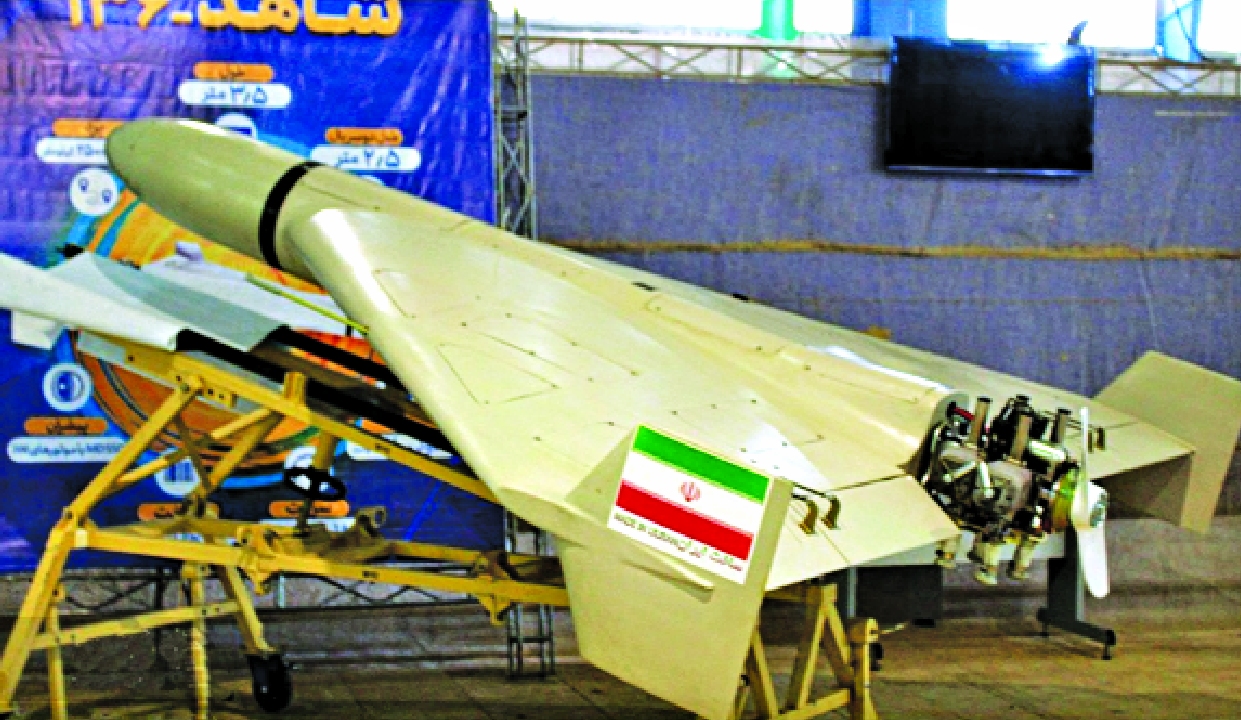
Thirdly, Iran operated under a unique set of conditions: a superpower adversary with a maximalist notion of victory (regime change); a hardline, faith-based polity for which direct conflict with the US and Israel was seen as an opportunity rather than a threat; a dominant position with respect to a major choke point; and numerous significant economic and strategic targets within range. It adopted a counter-value targeting approach, including against neutral third-party maritime traffic, effectively closing the Strait of Hormuz and delivering a major economic shock globally. Amplified by social media-and contrasted with perceived US overconfidence and questionable legality-this created a strategic impact disproportionate to the actual military effects. It is difficult to identify any parallel between such a setting and the Indian context. Kamikaze drones and missiles also cannot perform reconnaissance (ISR), visual interception, signalling, air policing, or be switched ‘wave to wave’ between domains (land to sea), or between roles within the same sortie, with extended range through refuelling. The economics also favour reusable platforms (such as fighters or UCAVs) over single-use systems like kamikaze drones or missiles. There is a reason why reusable launch systems, such as those pioneered by SpaceX, are widely pursued. Furthermore, Iran’s approach effectively ceded control of its sovereign airspace to the US and Israel, allowing their air forces to conduct largely unrestricted operations. If India were to adopt a similar approach, it could result in the decimation of its land and sea offensive capabilities, severely undermining deterrence.
In sum, the cost argument does not hold, as a successful ultra-defensive posture requires substantial investment in protective infrastructure. The operational effects achieved by Iran cannot be reliably replicated in the Indian context. Finally, the strategic impact of those effects cannot be achieved by India due to fundamentally different targeting philosophies, domestic political considerations, and relative power equations with its adversaries.
That said, drones and missiles do have a significant role to play. They enable scale, expand the threat spectrum, and can overwhelm adversaries. They can shape the battlefield and support more precise and heavier ordnance delivery by reusable platforms, whether manned or unmanned. The Indian Air Force anticipated this and supported several start-ups in developing indigenous swarm capabilities under its Mehar Baba initiative (2019-2021). It also has multiple ongoing programmes for both kamikaze drones and missiles.
The optimal approach lies in a nuanced mix of capabilities, rather than simplistic doctrines that could commit the country to an ultra-defensive strategy with little prospect of victory and a limited ability to avoid defeat.
The writer, Air Commodore Gaurav M Tripathi, VSM retired from the Indian Air Force in 2025; Views presented are personal.
Leave a Comment
Comments (1)
The author has deep understanding and insight into the defence stratigies..quite evident.. !!