The environmental fallout of the US-Iran war
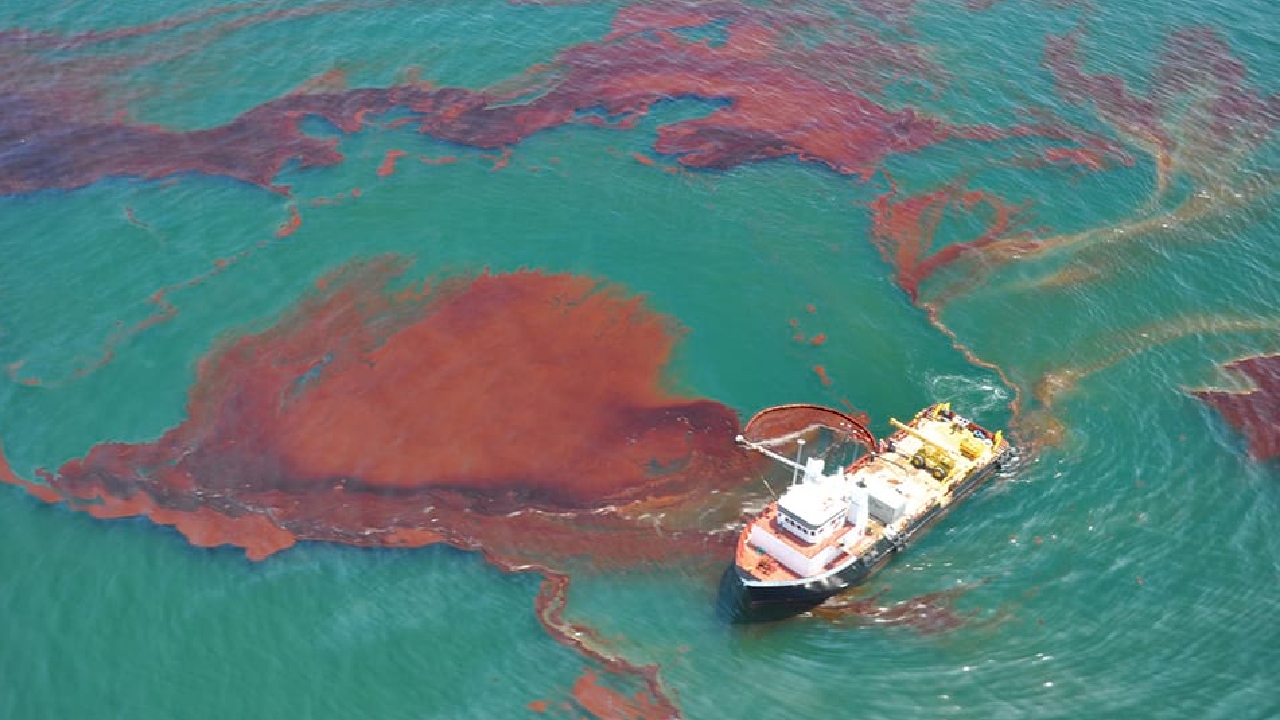
The US-Israel-Iran conflict is triggering a slow-moving environmental catastrophe across the Persian Gulf and beyond. With an estimated 21 billion litres of crude oil stranded aboard tankers in the Strait of Hormuz, and a sunken Iranian warship leaking fuel near Sri Lanka’s coast, the world may be approaching a marine disaster that no ceasefire can quickly undo.Much of the global attention since the outbreak of hostilities has focused on oil prices and geopolitical escalation. Far less attention has been paid to the parallel crisis unfolding beneath the surface of the sea - an environmental emergency that could outlast the war itself by decades. For India, a maritime nation whose energy security, fisheries and coastal livelihoods depend heavily on the stability of the Indian Ocean and Gulf waters, the implications are immediate and significant.
Black skies over Tehran
Some of the most striking images of the conflict have been of Tehran’s skies turning dark after Israeli strikes on major oil storage facilities at Karaj, Shahran, Aghdasiyeh and the Tehran refinery. Fires at these installations sent vast plumes of toxic smoke into the atmosphere above a densely populated city of nearly ten million people.
When rain followed shortly afterwards, reports indicated that it carried soot and chemical residues. The science behind this phenomenon is well understood. Burning crude oil releases sulphur dioxide and nitrogen oxides that react with atmospheric moisture to produce sulphuric and nitric acids. The resulting acid rain can contaminate soil, damage crops and pollute groundwater.
Tehran’s geography compounds the problem. Surrounded by the Alborz mountains, the city often experiences temperature inversions that trap polluted air close to the ground. Fine soot particles from burning hydrocarbons can penetrate deep into the lungs and bloodstream, posing serious health risks, particularly for children, the elderly and those with respiratory illnesses.History provides sobering reminders. The oil fires set during the 1991 Gulf War and the burning of Iraq’s Qayyarah oil fields during the ISIS conflict left long-lasting environmental damage. Similar consequences may follow if large-scale oil infrastructure continues to be targeted.
The strait of Hormuz: A gathering ecological risk
If the destruction of oil facilities poses a serious atmospheric hazard, the situation at sea may be even more dangerous. The Strait of Hormuz remains the world’s most critical maritime energy corridor, through which roughly one-fifth of globally traded oil normally passes each day.
Since hostilities escalated, shipping activity in the strait has been severely disrupted, leaving numerous tankers stranded or waiting in the Persian Gulf. Collectively, these vessels are estimated to be carrying tens of billions of litres of crude oil. The ecological risks are considerable. The Persian Gulf is one of the world’s most environmentally fragile seas. Its shallow waters, high temperatures and limited natural circulation mean that oil spills can persist for long periods. Coral reefs, mangrove forests and seagrass beds in the region support marine biodiversity and fisheries that sustain millions of people across the Indian Ocean rim.
Even a single major accident could have devastating consequences. Naval mines, missile strikes or collisions involving large tankers could produce spills on a scale rarely seen in maritime history. The presence of poorly insured “shadow fleet” vessels operating under flags of convenience further complicates the question of liability and environmental clean-up should such an accident occur.
A wreck near India’s maritime neighbourhood
The environmental reach of the conflict has already extended into the Indian Ocean region. In early March, the Iranian frigate IRIS Dena sank off the southern coast of Sri Lanka following combat action at sea. The vessel went down rapidly, reportedly killing dozens of crew members.
Satellite imagery soon detected an oil slick spreading from the wreck site. Within days, patches of oil began washing ashore along parts of Sri Lanka’s southern coastline, affecting fishing communities near Galle and Hikkaduwa, where livelihoods depend heavily on coastal fisheries. The incident occurred during the sea turtle nesting season, when coastal ecosystems are particularly vulnerable. Although Sri Lankan authorities succeeded in clearing much of the surface slick, the larger threat may lie underwater. Sunken vessels can release trapped fuel slowly for months or even years, creating persistent environmental contamination that is far harder to monitor or contain.
India’s maritime environmental response
In confronting such challenges, the Indian Coast Guard remains India’s principal maritime environmental responder. Under the National Oil Spill Disaster Contingency Plan, it serves as the central authority responsible for coordinating oil spill response in Indian waters.
Over the past decade, India has strengthened its pollution response capability through specialised vessels, aircraft surveillance and dedicated response centres located along the coast. The induction of modern pollution control vessels equipped with oil recovery and containment systems has significantly enhanced operational readiness.
The Coast Guard also conducts regular national exercises and international cooperation programmes aimed at improving preparedness for marine pollution incidents. These capabilities are particularly important given the increasing environmental risks in the wider Indian Ocean region.
The way ahead
The unfolding environmental crisis requires urgent international attention even as the conflict continues. Preventing a catastrophic spill in the Strait of Hormuz must be an immediate priority. Maritime authorities should work towards ensuring safe passage for stranded tankers and reducing the risks posed by mines or attacks in crowded shipping lanes.
Independent environmental monitoring is also essential. Satellite surveillance and coordinated reporting mechanisms can help detect spills early and guide response operations.
The wreck of IRIS Dena likewise deserves detailed technical assessment before seasonal monsoon currents disperse contamination across wider areas of the Indian Ocean. Regional cooperation will be critical in addressing such incidents. Finally, the deliberate destruction of oil infrastructure and environmentally sensitive facilities during armed conflict must receive greater scrutiny under international law. Environmental damage caused during war does not respect political boundaries and can affect entire regions for decades.
A sea that remembers
Wars eventually end, but their environmental consequences often linger far longer. Petroleum residues from earlier Gulf conflicts still remain in parts of the region’s coastal sediments decades later.
For India, whose maritime interests stretch across the Indian Ocean, the stakes are clear. Protecting marine ecosystems is not merely an environmental concern but a strategic necessity tied to food security, economic stability and regional cooperation. The challenge for the international community is to ensure that when this conflict finally subsides, the seas that connect Asia, the Gulf and the wider world are not left irreparably damaged.
The author is a retired Additional Director General of the Indian Coast Guard; views are personal