The denial mode: The elephant in the room
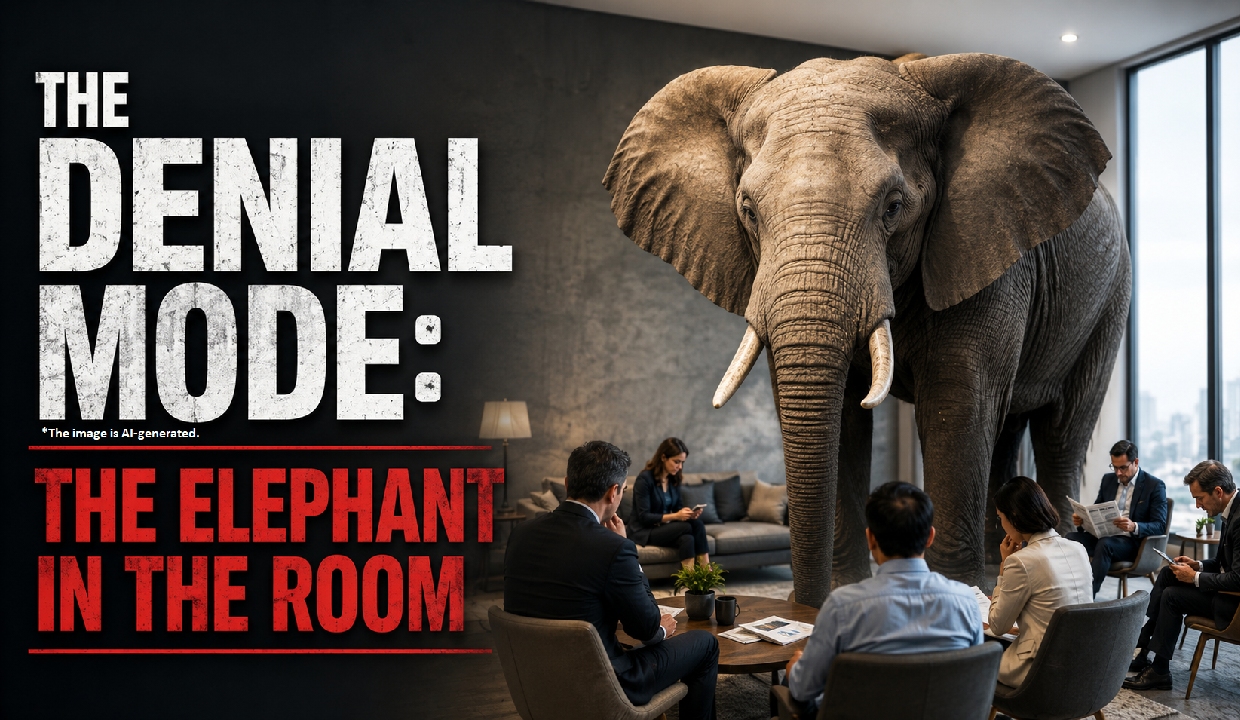
There is a strange phenomenon inside organisations: everyone knows there is a problem, but nobody wants to talk about it.
Senior leaders know it. Employees know it. HR knows it. Sometimes, even the owners know it. Yet the issue remains untouched because confronting it may be uncomfortable, inconvenient or risky.
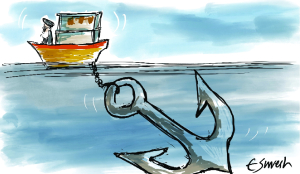
That is the “elephant in the room” - something too large to ignore, yet too uncomfortable to confront. And sometimes, organisations do not fail because they could not see the problem. They fail because they saw it and did not act in time.
Kodak is a powerful example. The company, established in 1880-81, became synonymous with photography. Kodak was not unaware of digital photography. Its engineer, Steven Sasson, developed one of the world’s first digital cameras. The problem was not that Kodak could not see the future. The problem was that it struggled to move away from the film business that had made it successful. The very success that built the organisation became an obstacle to change. By 2012, Kodak had filed for bankruptcy.
Nokia tells a similar story. Once the global leader in mobile phones, it struggled to respond quickly enough as smartphones transformed the industry. Internal decision-making challenges and its ageing operating system made the transition increasingly difficult. Eventually, its handset business was sold to Microsoft.
The lesson from both companies is uncomfortable: yesterday’s success can become tomorrow’s blind spot.
Longevity is not a guarantee of future success. An organisation can survive for decades - or even more than a century - and still become vulnerable or fail to grow if leadership fails to recognise when change is necessary.
The same problem exists within organisations at every level. A weak leader is tolerated because, “He has been with us for many years.” A poor performer is protected because, “He handles sensitive transactions for the owners.”
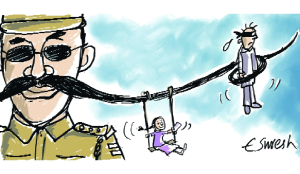
A toxic manager is ignored because, “He is close to the owners.” A declining business is defended because, “It has worked brilliantly in the past.” And sometimes, the performers who raise uncomfortable questions are targeted politically and become the problem - because it is easier to silence the messenger than confront the message. Every time an organisation chooses silence, the elephant gets bigger.
A changing business model challenged early can be transformed. Challenged only after revenues collapse, transformation becomes survival. This is where leadership — and ownership - matters.
The responsibility of an owner is not simply to maintain harmony. It is to create an environment where uncomfortable truths can be spoken without fear.
Owners must ask the questions nobody wants to answer. HR must have the courage to tell the CEO when the culture is deteriorating. Leaders must learn to accept criticism without immediately labelling the person giving it as “negative”, “difficult”, “not aligned with the company’s goals or the leadership team”, or “not a team player”.
And employees must feel safe enough to say: “Something is not working.” That sentence, spoken at the right time, can save an organisation.
Because organisations rarely collapse overnight.
Leadership is not about avoiding difficult conversations. Leadership is about having the courage to have the right difficult conversation before it becomes a crisis.
The writer is a senior corporate HR leader, writer and people strategist; Views presented are personal.