The children of 1947 remember the day home was lost forever
Dispersed across the nation, the last few of a generation recall August 14 as the day when they were told that their home was no longer theirs. Too young to understand the full implications, they left their homes with the hope that they would return soon. Each one now carries memories of what followed, as India commemorates the Partition Horrors Remembrance Day on Friday.
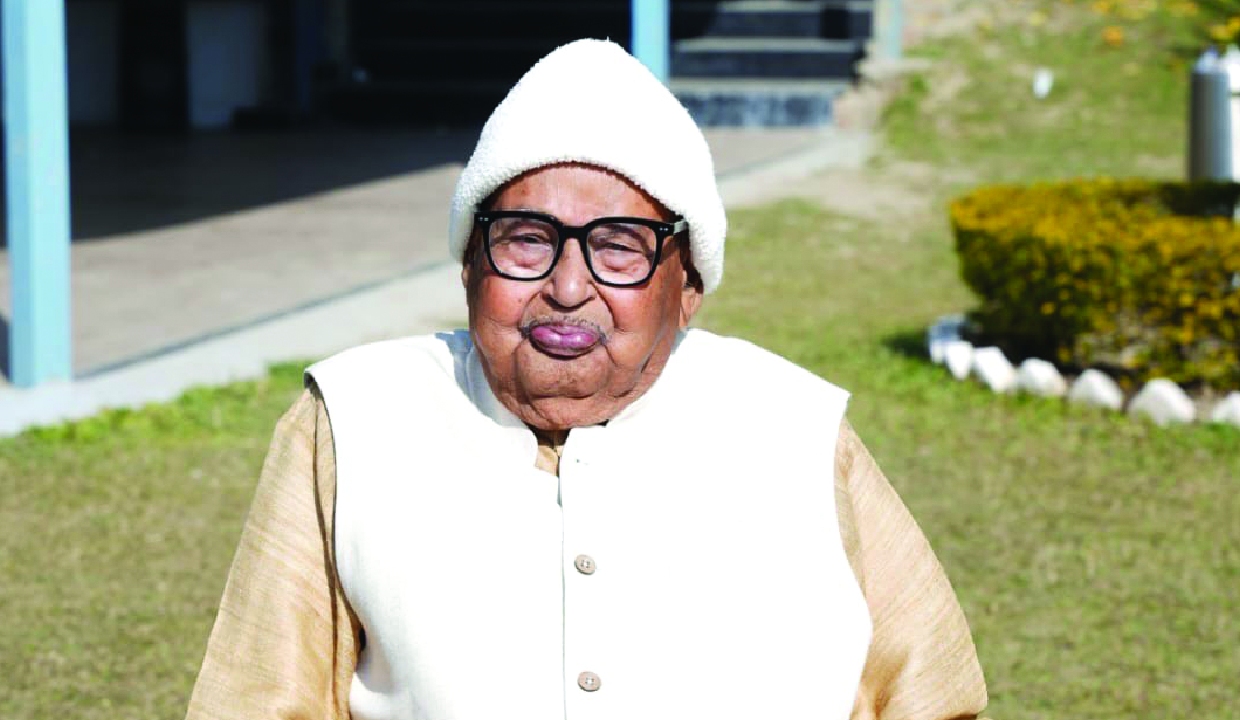
For Bansi Lal Chopra, a retired senior Government official who is nearing 90, some part of him is still 12, standing in a village in Gujarat district of present-day Pakistan, listening to a radio crackle with news that would end his childhood. Violence erupted.
The nights that followed blur into a single unbearable memory for Chopra, the night his family finally left. They travelled under military escort, packed into a truck bound for Amritsar. He does not remember the road so much as what lined it. Bodies, all the way to Lahore.
Amritsar was only a pause. A month with relatives, and then the slow, aching realisation that there was no home left to return to.
The Chopra family boarded a train for Delhi, a journey that took a full week in those chaotic days. What awaited them was not relief but refugee camps and a new kind of struggle. The struggle to simply begin again.
For flourishing businessman Jasbir Pal Singh, memories carry a different texture, though the fear runs just as deep. He was eight, living comfortably in Peshawar, where his father was principal of Khalsa School and Hindus and Sikhs were a small minority among their Muslim neighbours.
Rioting and violence commenced. It was his father’s Muslim friends who ultimately saved them. Those quiet bonds helped the family slip out of Peshawar and reach Dehradun. But safety brought its own battles. Jasbir knew only Urdu and Gurumukhi, languages that meant nothing in a Dehradun classroom. He struggled, alone with an alphabet that refused to make sense. And then he topped his class.
For Tilak Raj Madan, the story of partition is not something he learned from history books. It is a story he heard from his father, Laxmi Chand, in the form of loriyan (bedtime stories and memories) that were passed down to him when he was young.
Those stories began in a refugee tent near Kalkaji Mandir in south Delhi, where the family had arrived after losing almost everything in the Partition of India in 1947.
What may have sounded like a story before sleep was, in reality, the painful truth of a family uprooted from its home, separated from loved ones and forced to begin life again from nothing.
The Madan family originally belonged to Shorkot, Khanewal, in the Jhang-Migyana district, now in Pakistan. Before the partition, theirs was a settled and respectable life. Tilak Raj’s father, Laxmi Chand, was engaged in the cotton business and also ran a popular sweet shop. The announcement of partition transformed that certainty into fear and displacement. Almost overnight, a place that had been home for generations became a place from which the family was forced to flee.
Laxmi Chand left with his three brothers and three sisters, along with his wife, Krishnawanti. There was no time to gather everything they owned or to make plans for a new life. They had to leave behind their home, businesses, possessions, memories and the community that had shaped their lives.
They did not leave because they wanted to start afresh. They left because they had no choice. “We had everything in our village,” Tilak Raj remembers with emotion his father told him the story of partition.
Among the deepest wounds carried by the family was the separation from one of their sisters, who remained behind in Pakistan during the migration. For those who crossed the border, the journey to India meant leaving behind not only property but people. Some separations lasted years. Some lasted forever.
Reaching India did not mean the suffering was over. The family arrived in Delhi as refugees and spent their early years around the Kalkaji Mandir area, living in a refugee camp. Seven members of the family, including their mother and three sisters, endured difficult conditions. They lived in tents and struggled for food and the basic necessities of life.
As Tilak Raj grew older, around the age of 15, the family slowly began rebuilding its livelihood. Eventually, they entered the catering and sweets business in the Nehru Place area to carry the legacy of his father. There were no shortcuts. There was only hard work.