Taking the university to the village: Lessons from Unnat Bharat Abhiyan
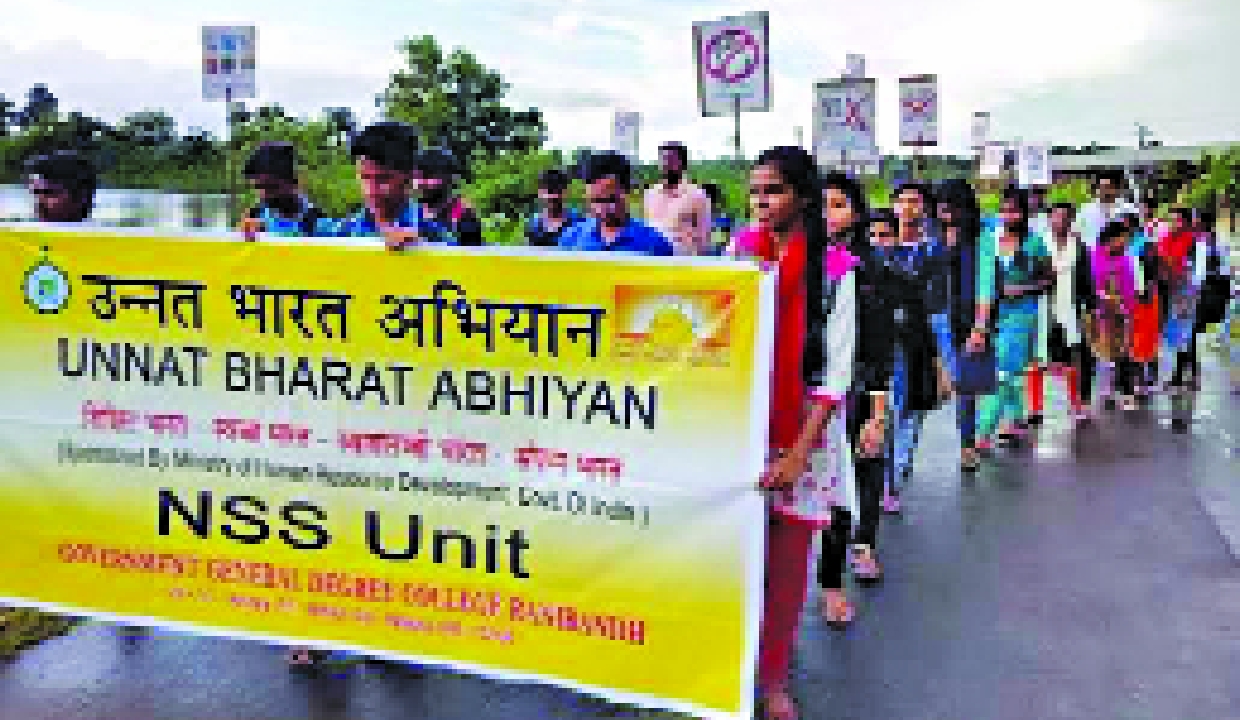
Indian higher education has long carried an unspoken assumption that knowledge flows in one direction: from the university outward to society, through its graduates, its research papers and its public lectures. The Unnat Bharat Abhiyan, launched by the Ministry of Education, challenges that assumption. It asks universities to walk into villages, listen before they teach, and treat rural India not as a subject of study but as a partner in problem solving. Having steered this programme at Jamia Hamdard through much of my tenure as Vice Chancellor, I have come to see it as one of the more quietly transformative ideas in our higher education landscape.
The premise of Unnat Bharat Abhiyan is simple.
Every participating institution adopts a cluster of villages and commits its faculty and students to understanding local problems on the ground, whether these concern sanitation, livelihoods, health awareness or basic infrastructure. Solutions are then designed using the institution’s own academic and technical strengths.
At Jamia Hamdard, this meant our engineering, pharmacy, medical and legal faculties working together in villages such as Saidul Azaib on the outskirts of Delhi, addressing problems that ranged from waste management to public hygiene, often through small, replicable interventions rather than grand announcements.
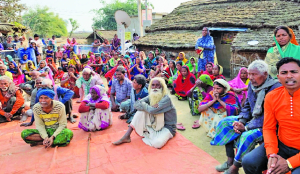
One project that stays with me involved a village chaupal that had become a site of neglect. Our Computer Science and Engineering department, working with student volunteers, repainted the community space using bacteria-resistant materials, installed smart waste bins and distributed hygiene kits to residents. It was not a large project by budgetary standards. But it demonstrated something important: that a university’s technical expertise, however specialised, can be redirected toward the ordinary and urgent needs of the communities living in its shadow.
Similar efforts followed in the years after, including collaborations between our law students and rural residents through youth parliament initiatives that introduced constitutional literacy at the grassroots.
What makes this model valuable is not the scale of any single project but the discipline it imposes on institutions. Faculty members accustomed to laboratories and lecture halls are compelled to sit in a village chaupal and listen to concerns that rarely appear in a syllabus.
Students, many of them from urban backgrounds, encounter a version of India that their coursework does not always prepare them for. This exposure has an educational value that is difficult to measure through conventional academic metrics, yet it is precisely the kind of grounding the National Education Policy 2020 envisions when it speaks of experiential learning and social responsibility as core components of a university education.
There is also a quieter institutional benefit. Programmes of this kind force universities to move beyond ranking exercises and accreditation cycles, important as those are, and ask a more basic question: what has this institution actually done for the community around it. Jamia Hamdard’s own founding ethos, rooted in Hakeem Abdul Hameed Sahab’s vision of service alongside scholarship, made this an easy fit. But I would argue that every institution, regardless of its founding history, stands to benefit from being asked this question regularly.
None of this is to suggest that Unnat Bharat Abhiyan is without its limitations. Faculty participation often depends on the enthusiasm of a small number of coordinators rather than being embedded into institutional incentive structures. Funding for sustained, multi-year village engagement remains modest compared to research grants.
And the danger of projects becoming one-time events, a hygiene kit distributed here, a rally organised there, rather than sustained partnerships, is real and needs continuous correction. If the programme is to deepen rather than merely persist, universities will need to treat rural engagement with the same seriousness they bring to research output and placement statistics.
Still, five years of watching this programme grow at Jamia Hamdard has convinced me that its underlying idea deserves wider institutional commitment. As India’s universities compete for global rankings and research visibility, it is worth remembering that a university’s first and most immediate community is often the one just beyond its gates.
Unnat Bharat Abhiyan offers a modest but genuine correction to that oversight. It is a reminder that higher education institutions are not islands of expertise but participants in the life of the country they serve, and that some of the most meaningful learning happens not in the classroom but in the village chaupal.
The author served as Vice Chancellor of Jamia Hamdard, New Delhi, from 2021 to 2026; Views presented are personal.