UP’s silent healthcare decentralisation revolution
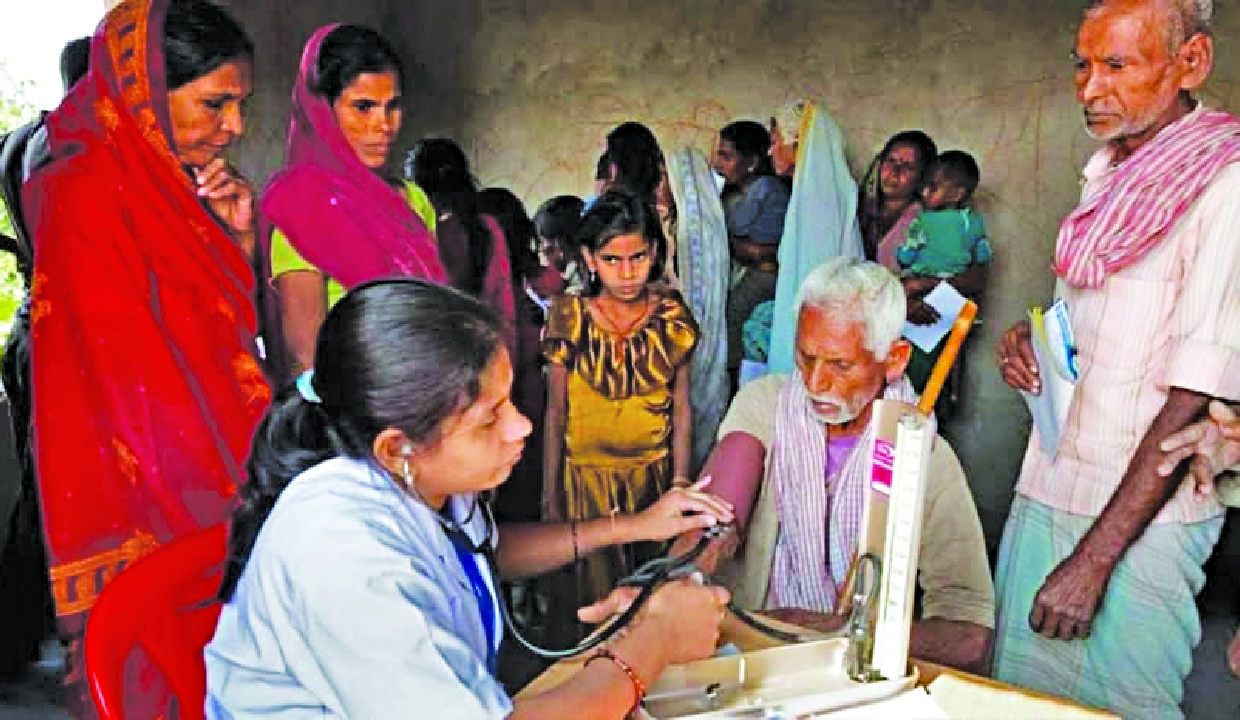
The story of Uttar Pradesh's healthcare system is much more than the story of hospitals and medical colleges. It is the story of a state that spent decades with advanced medical care concentrated in a handful of cities, and then witnessed one of the biggest transformations in its public healthcare system. For years, quality healthcare in Uttar Pradesh largely meant travelling to Lucknow. Today, that reality is changing. The biggest achievement is not the number of medical colleges built. The real achievement is that advanced healthcare is gradually reaching people where they live.
If we trace this journey from the British era to the present day, the biggest transformation was not the construction of a single institution. It was the decentralisation of healthcare. Modern medical education in Uttar Pradesh began during British rule with the establishment of King George Medical College in Lucknow. After Independence, there was an expectation that the healthcare infrastructure would gradually spread across the state. That, however, did not happen. Lucknow continued to remain the centre of the state's medical ecosystem. Congress governments moved beyond Lucknow, but only to a limited extent. Medical colleges were established in cities such as Kanpur, Allahabad, Meerut, Jhansi and Gorakhpur, yet the overall healthcare model remained unchanged. Advanced treatment remained concentrated in Lucknow, while large parts of Uttar Pradesh continued to depend on the capital for specialised medical care. In effect, the system expanded geographically, but it was never truly decentralised. However, when it came to building centres for advanced treatment, Lucknow remained the obvious choice.
The Samajwadi Party and Bahujan Samaj Party governments largely maintained the same centralised healthcare model. While a few medical colleges were added and the Dr Ram Manohar Lohia Institute of Medical Sciences was established during the Mulayam Singh Yadav government, it, too, was located in Lucknow. Advanced medical care continued to be concentrated in Lucknow, and for millions of people across Uttar Pradesh, a serious illness still meant travelling to the state capital. In effect, there was some expansion in medical education, but there was no meaningful decentralisation of healthcare.
The healthcare system continued to revolve around a few major cities. Most people in Uttar Pradesh understood one simple reality. A routine illness could be treated at the district hospital. But if the disease became serious, the family would eventually have to leave for Lucknow.
The biggest weakness of Uttar Pradesh's healthcare system was not only the shortage of doctors. The larger problem was that advanced medical care remained geographically out of reach for millions of people. The story begins to change after 2017. For Yogi Adityanath, healthcare was never just another government department. His understanding came from years of public life in eastern Uttar Pradesh. He saw parents travelling from one hospital to another with almost no hope. Those experiences shaped his understanding that Uttar Pradesh needed much more than better law and order. It needed a healthcare system where modern treatment was available closer to ordinary citizens. Perhaps that is why, after becoming Chief Minister, he looked at healthcare differently. The objective was not merely to build hospitals. The objective was to make advanced healthcare accessible. That became the foundation of healthcare decentralisation in Uttar Pradesh.
The government adopted a simple but ambitious vision. Every district should gradually have access to quality medical education and modern healthcare infrastructure. People should not be forced to travel to the capital for every serious illness. Advanced treatment had to move closer to where people actually lived. The vision soon began taking shape across the state. Medical colleges were approved, constructed or expanded across districts that had never seen such institutions before. The objective was not simply to add new buildings to the government's records. Every new medical college was expected to become the backbone of healthcare for its surrounding region.
Today, almost every district in Uttar Pradesh either has a medical college or one is under construction. District hospitals that once struggled with limited resources are gradually being upgraded to include teaching hospitals, modern operating theatres, dialysis units, intensive care facilities, blood banks, advanced laboratories, and specialist doctors. The transformation, however, did not stop with medical colleges. Dialysis services expanded across the state. Trauma care facilities have increased significantly. Cardiology, neurology, urology, and several other super-speciality services gradually became available beyond traditional urban centres. Modern CT scan facilities, MRI machines, Cath labs and other advanced medical equipment have reached hospitals that had previously referred almost every serious patient to Lucknow.
As a result, many patients who once had no option but to travel hundreds of kilometres can now receive treatment much closer to home. Higher medical education also witnessed rapid expansion. AIIMS Gorakhpur emerged as a major healthcare institution for eastern Uttar Pradesh. AIIMS Raebareli strengthened access to advanced treatment for central Uttar Pradesh. Super speciality blocks were added to several government medical colleges, while postgraduate medical education expanded steadily with new MD, MS and speciality programmes. Today, Uttar Pradesh has one of the largest public healthcare and medical education networks in India. The number of medical colleges has increased significantly. MBBS and postgraduate seats have expanded. Every year, the state is producing far more doctors than it did a decade ago. The character of Uttar Pradesh's healthcare system has changed. There was a time when serious illness almost automatically meant travelling to Lucknow.
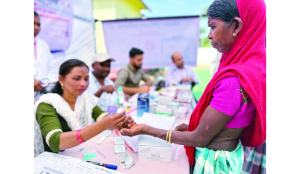
Today, for millions of people, quality treatment is available much closer to home. That is the real transformation. The greatest achievement of Uttar Pradesh's healthcare system is not merely the rise in the number of medical colleges. The greater achievement is that hope has moved beyond the boundaries of Lucknow and reached districts that had waited for decades. When a low-income family no longer has to travel hundreds of kilometres with a critically ill patient, a hospital becomes much more than a building. It becomes a symbol of trust between the state and its people. That, more than anything else, is the true meaning of healthcare decentralisation. That is Uttar Pradesh's silent revolution.
Arvind Mohan Singh is a socio-political analyst, columnist, and digital strategist; Views presented are personal.
Leave a Comment
Comments (4)
Well very pointed out reality of New Uttar Pradesh
👏👏👏
You are absolutely right; medical facilities under previous governments were in a very poor state. As a result, many people lost their lives because they could not access timely medical care—some even breathed their last while traveling from one city to another. However, under the current government, these facilities have become available; we now have medical colleges in our own cities, and the government is providing various other amenities to the underprivileged.
सुंदर लेख