Sifting the wheat from the chaff
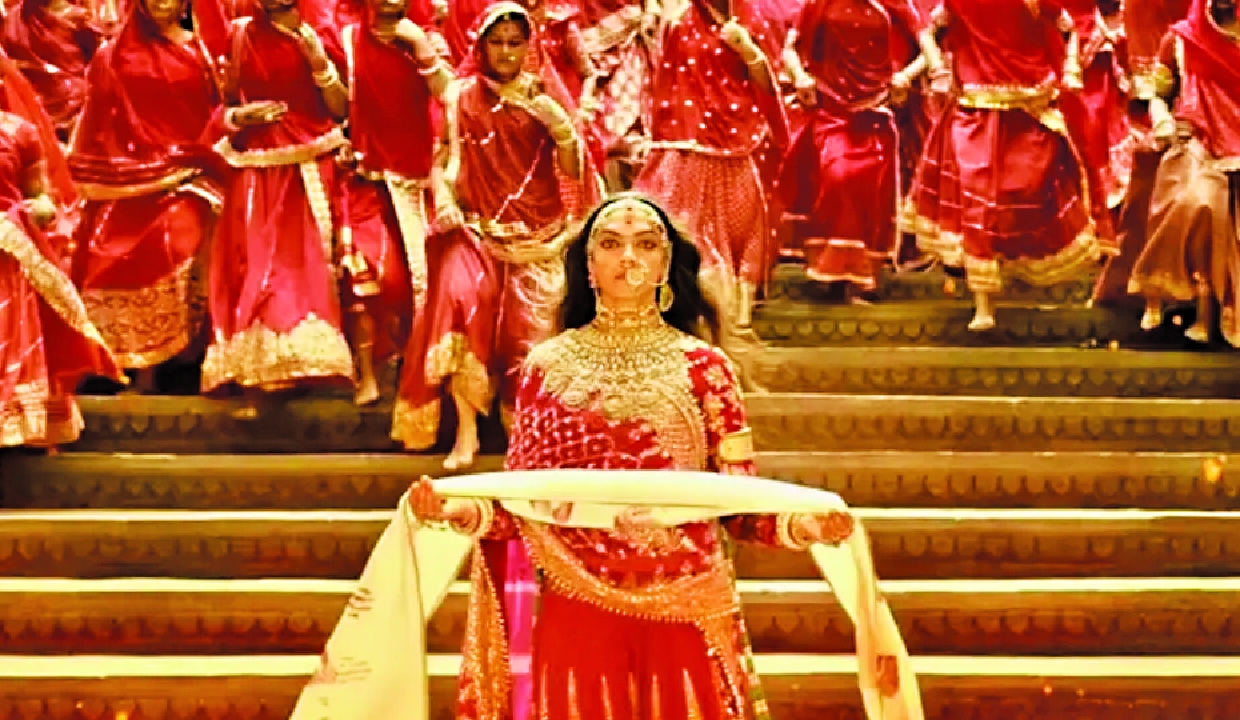
The debate over Jauhar in Padmaavat has exposed an uncomfortable tendency in contemporary discourse: judging the past entirely through the moral vocabulary of the present. There is nothing wrong with questioning whether a modern film can inadvertently romanticise a practice that constitutional morality rightly rejects today
There are really two separate questions in the controversy over an actor’s comments on the Jauhar sequence in Padmaavat — what Jauhar meant in its historical context, and what message a modern film depicting it may convey to a contemporary audience.
The latter is a perfectly legitimate subject for debate. But the former cannot be reconstructed entirely through the moral vocabulary of the present.
The fundamental problem with drawing a direct parallel between Jauhar and rape survivors is that it conflates two profoundly different circumstances. Rape is an act of sexual violence forcibly inflicted upon a woman. Jauhar, in the historical context in which it is remembered, was understood as a collective act undertaken by women facing the imminent prospect of capture, sexual violence, enslavement and dishonour following defeat. That does not require us to endorse Jauhar today. It requires us to understand what the act meant to those who undertook it. And this distinction matters.
To say that Jauhar should not be practised today is uncontroversial. Nor should practices such as sati be romanticised or encouraged. Modern constitutional morality, individual liberty and the sanctity of life rightly reject such practices. But rejecting a historical practice in the present is different from denying the historical and cultural ideas that gave rise to it. In fact, there is a much larger principle here — one that applies to every faith and every civilisation.
The entire edifice of religious and cultural belief rests, in varying degrees, upon scriptures, epics, mythologies, oral traditions, poetry and literature. These bodies of work cannot be read as literal, contemporary instruction manuals. Their stories, symbols, metaphors and moral frameworks have been interpreted across centuries, often differently by different generations.
We do not ordinarily insist that every episode in a religious epic must be reproduced literally in modern life merely because it appears in a sacred or revered text. We understand that there is a distinction between the literal act, the historical or mythical narrative, and the philosophical or spiritual idea that generations have derived from it. That same intellectual generosity ought to extend to history.
The Rajput conception of honour, sacrifice and choosing death over dishonour is part of a historical ethos that communities have developed and internalised over centuries. We may disagree profoundly with particular manifestations of those values today, just as modern society has rejected many practices once considered legitimate. But reducing such traditions entirely to their literal physical acts, and then judging the entire cultural imagination behind them exclusively through a contemporary lens, risks stripping history of the very context required to understand it.
Otherwise, we create an extraordinary double standard — we grant mythology the benefit of metaphor, symbolism and historical context when it belongs to our own traditions, while demanding literalism from the history and literature of others.
The actor is entirely entitled to ask whether the Padmaavat sequence, when viewed today, could inadvertently suggest to a survivor of sexual violence that death is preferable to survival.
That is a legitimate contemporary feminist question. Indeed, she has clarified that her objection was to what she believed the scene could communicate to rape survivors, rather than an assertion that the women who performed Jauhar were cowards. But that contemporary question should not become a substitute for historical understanding.
A society progresses not by erasing the moral frameworks of its past, nor by pretending that yesterday’s values must remain today’s values, but by understanding why those values existed and then consciously evolving beyond them. This is why the debate is not really about being “woke” or “anti-woke”. That framing is itself intellectually lazy. Progress is predicated on learning, questioning and evolving. But learning requires context. If history is selectively excavated merely to stitch together a presumptively progressive contemporary position, we are no longer learning from history; we are weaponising it.
There is another side to this debate that deserves equal emphasis. The anger of the Rajput community at what it perceives as an insensitive or historically reductive characterisation is understandable. But legitimate disagreement loses its moral force when it turns into personal abuse, threats, misogyny, or allusions to a person’s marriage, religion or private life. Such conduct does not defend history; it diminishes the very community invoking that history.
If there is one lesson that the Rajput historical imagination ought to carry alongside its celebrated valour and fearlessness, it is also civility, dignity, restraint and large-heartedness. One can fiercely defend one’s history without becoming uncivil. One can reject a modern interpretation without threatening the person making it. One can condemn Jauhar as a practice today without pretending that the women who undertook it can be understood without reference to the world in which they lived.
And one can defend the historical meaning of Jauhar without suggesting that a woman who survives rape has somehow lost her honour or her right to live. That, perhaps, is the nuance missing from both extremes of this debate. History deserves context. Faith deserves interpretation. Survivors deserve dignity. Communities deserve respect. And the present deserves the freedom to evolve without falsifying the past.
One can fiercely defend one’s history without becoming uncivil. One can reject a modern interpretation without threatening the person making it. One can condemn Jauhar as a practice today without pretending that the women who undertook it can be understood without reference to the world in which they lived
The writer is a former Lieutenant Governor of the Andaman and Nicobar Islands and Puducherry, and a military veteran; Views presented are personal.