Quo Vadis, Indian Economy?
For a country to achieve long-term stability and sustainable prosperity of an equitable nature, it is necessary for its economy to be managed soundly. Experience in other countries has shown that if a country opts for a system driven by the market alone, the danger of monopolies emerging and the concentration of wealth causing income inequalities, labour unrest and exploitation of consumers cannot be avoided. Driven by an uncontrolled profit motive, the economy may grow, but at the cost of ignoring social costs and possible market volatility causing alarming economic swings.
On the other hand, an economy entirely centrally managed can prove to be inefficient, lacking the ability to encourage innovation to flourish and limiting the space for consumer choice. Also, in the absence of direction provided by the market forces of supply and demand, the political leadership and the administration may fail to assess the needs of the country properly, leading to a situation of surpluses and deficits of important goods and services. In addition, the authorities concerned will tend to ignore the vox populi, with corruption and incompetence becoming the order of the day. What is more, such a polity can be indifferent to, if not intolerant of, the importance of the role of the media in ensuring that
government policies resonate with the expectations of the people, leading to dissatisfaction and unrest.
It was the desire to find the golden mean between the two alternative forms of governance that led to the adoption, by India, of a mixed economy, which allowed for free market forces to operate without hindrance while, at the same time, ensuring that safety nets were available for
those negatively impacted by growth and development.
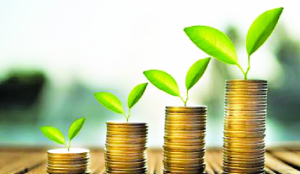
The Indian economy has quadrupled since 2000 and is the fifth-largest in the world. It is characterised by rapid growth, presenting a rich and promising mixture of public and private enterprise and has a dominant service sector driven by domestic consumption. The country’s large population has a substantial young segment, with a strong presence in the IT sector, offering the significant advantage of a fit and active workforce and a consumer market capable of innovation and entrepreneurship. India also enjoys the image of being a global leader in pharmaceuticals and is often referred to as the pharmacy of the world.
In the future, the pattern and quality of the growth of the Indian economy will depend upon its ability to overcome emerging challenges such as cryptocurrencies and Artificial Intelligence (AI). Cryptocurrency, such as bitcoin, brings with it poor capability, high volatility, and a significant environmental impact. Working out solutions to address its limitations and pave the way for wider adoption is underway. So far as AI is concerned, the main fear is job displacement in low-skill sectors, the digital exclusion of rural areas and excessive reliance on foreign technology. A focus on upskilling the workforce, improving digital infrastructure, fostering domestic AI development, and creating supportive governance frameworks will pave the way for greater innovation and inclusive growth in the future.
The flipside, however, presents many issues, such as persistent poverty and disturbing inequality. The infrastructure of the country has a long way to go before it can compare to international standards. In many sectors, outdated and obsolete technology continues to be used. Low capital formation, underemployment and unemployment, particularly in the informal sector, remain challenges to be addressed.
According to experts, some of the steps to be taken will be to build on the strengths of the economy and rectify the weaknesses, putting in place a regime of comprehensive land, labour and farm reforms and falling in line with internationally accepted norms of good governance. Other measures will also need to be employed, such as making the public sector undertakings leaner by shedding fat and, wherever possible, disinvesting, creating space for the private sector to enter, and promoting an ambience that fosters ease of doing business. Bridging the skill gap by investing heavily in education and vocational training, aligning workforce skills with industry requirements, focusing on generating employment, particularly in the formal sector, boosting exports, emphasising the development of rural areas to ensure balanced development, and controlling public debt will also be important steps.
The dream of a $5 trillion economy is as much a reality as it is a challenge. Initiatives such as the ‘Make in India’ policy and the recently introduced uniform tax system will help in realising the estimate made by the IMF that the milestone can be reached in the next decade, with India becoming the third-largest economy in the world by 2028.
However, apart from those mentioned earlier, many steps will need to be taken. Issues relating to the uneven distribution of wealth and incomes, addressing regional disparities and improving the quality of life of the people simultaneously with rapid growth and sustainable development will be some of them.
The debt-to-equity ratio of a country is a significant indicator of financial health and the ability to repay debts. While the ratio is about 230 per centfor Japan and 124 per cent for the USA, compared to the global average of 94 per cent for major countries, that of India is about 80 per cent, compared to the global average for emerging markets of 74 per cent. The number may seem high but is considered manageable on account of mitigating factors such as robust growth, largely domestic debt composition and ongoing fiscal consolidation efforts.
Going forward, it is also necessary to examine whether GDP growth is the best way of measuring India’s economic health. While it undoubtedly reflects the total value of goods and services, there are what some experts consider superior alternatives, such as the Human Development Index (HDI), the Genuine Progress Indicator (GPI), and Green GDP, which provide a more holistic view as they include factors like human well-being, social costs and environmental sustainability-elements GDP overlooks. GDP has other weaknesses, such as its inability to account for income inequality, non-monetary transactions and quality-of-life indicators, such as leisure and happiness. What is more, an increase in it can reflect the impact of events such as natural disasters, which increase expenditure without improving overall well-being.
It is felt in some quarters that real GDP is, as a matter of fact, the best measure for India to gain a clear picture of long-term trends. It also adjusts for inflation, and real GDP per capita can be used to understand average economic output per person.
All such measures only have the limited value of acting as barometers of India’s economic health.
They help make course corrections in the journey towards the promised land of happiness and prosperity-the utopia she hopes to reach. However, it is the people actually enjoying what has been promised which, in the final analysis, is the real test of success.
The author is a retired Secretary, Government of India and former Chief Secretary, Andhra Pradesh; views are personal