Defence Budget: Reshaping India’s defence priorities
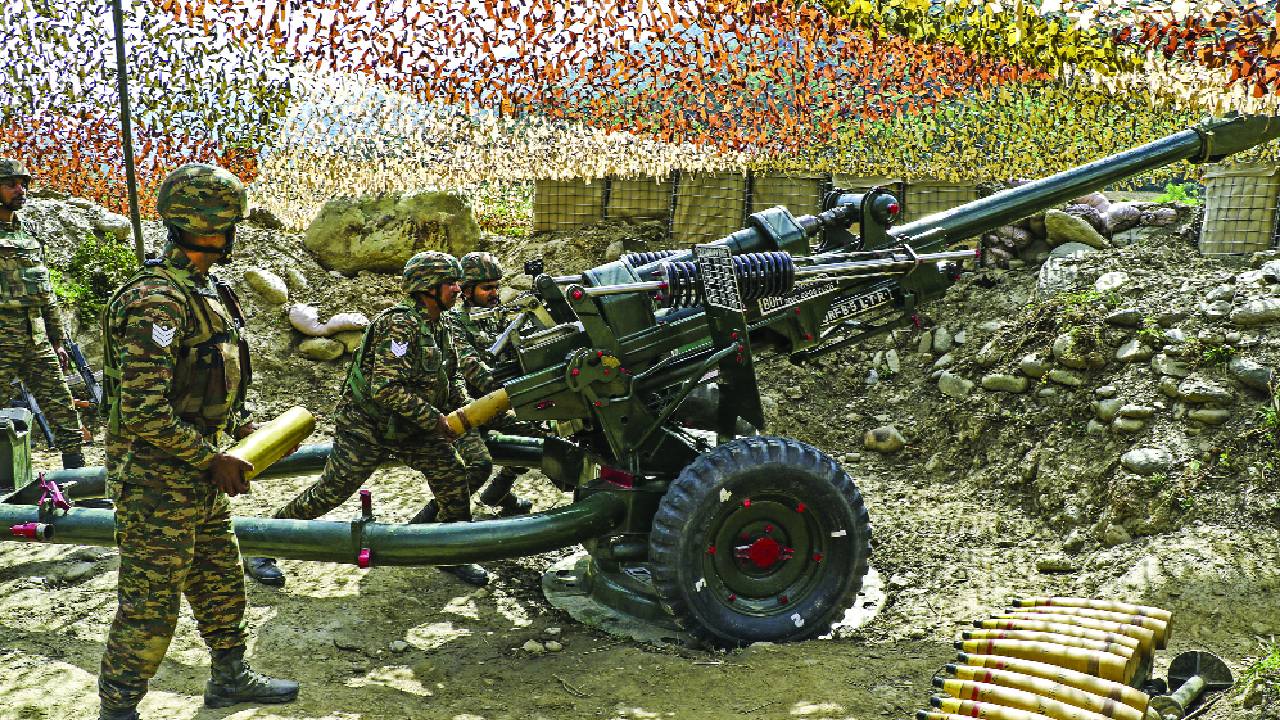
Wars do not begin with the first shot; they begin with years of neglected preparedness. When Operation Sindoor unfolded in May 2025, India demonstrated political resolve and operational precision. What it also revealed, less comfortably, were challenges in certain areas. The Union Budget 2026-27, presented on February 1, is the first opportunity for the government to respond institutionally to those lessons. With a record defence allocation of `7.85 lakh crore, it seeks to do exactly that.
The 15 per cent increase over last year’s allocation of `6.81 lakh crore marks the largest year-on-year jump in a decade. More importantly, it signals a shift in strategic prioritisation. Defence now accounts for roughly 14.6 per cent of total central government expenditure and about 2 per cent of GDP, reversing a steady decline that had raised concerns within the strategic community. Defence Minister Rajnath Singh has described the allocation as restoring balance between security, development, and self-reliance. The question is whether the numbers match the ambition.
A Budget shaped by conflict
Operation Sindoor — India’s precision military action against terrorist infrastructure in Pakistan and Pakistan-occupied Jammu and Kashmir — cast a long shadow over this budget. The operation underlined the importance of real-time intelligence, rapid targeting cycles, secure communications, and credible deterrence across domains. Emergency procurement undertaken in its aftermath exposed both the armed forces’ operational agility and the fragility of existing stocks and systems.
It is therefore unsurprising that the most significant feature of Budget 2026 is the sharp increase in capital expenditure. An allocation of `2.19 lakh crore — nearly 22 per cent higher than last year — has been provided for modernisation. Of this, around `1.85 lakh crore is earmarked specifically for capital acquisition, reflecting an attempt to rebuild hard combat capability rather than merely sustain the status quo. Major allocations for aircraft and aero-engines, naval platforms, and a wide category of “other equipment” indicate a conscious move away from single-platform obsession towards a more diversified capability mix. This is consistent with contemporary warfare trends, where effectiveness increasingly depends on integration across air, land, sea, space, and cyber domains.
Modernisation vs maintenance
Revenue expenditure, amounting to about `3.65 lakh crore, will continue to meet the armed forces’ operational requirements—ammunition, fuel, maintenance, and personnel costs. Defence pensions alone account for approximately `1.71 lakh crore, or over one-fifth of the total defence allocation. When combined with salaries and allowances, personnel-related expenditure consumes nearly half the budget.
This structural imbalance remains the single biggest constraint on rapid modernisation. Even as capital allocations rise, the pace of capability accretion is moderated by commitments that are politically sensitive but strategically inflexible. Without long-term reform, every future defence budget will continue to wrestle with the same dilemma.
Technology and the changing character of war
Senior military leadership has been unequivocal in its assessment that India must adapt to the new character of warfare. Chief of Defence Staff General Anil Chauhan has emphasised the shift from network-centric to data-centric operations, while Army Chief General Upendra Dwivedi has declared 2026 the “Year of Networking and Data Centricity.”
Drones, counter-drone systems, artificial intelligence, secure data networks, and integrated air defence are no longer force multipliers — they are force essentials. The contemplation of new organisational structures, including specialised missile or drone formations, reflects lessons drawn not only from Operation Sindoor but also from conflicts in Ukraine, West Asia, and the Indo-Pacific. In modern war, the side that sees first, decides faster, and strikes precisely usually prevails. In this context, the allocation of `29,100 crore to the Defence Research and Development Organisation, with a strong bias towards capital expenditure, is significant. The continued emphasis on indigenous development under the Atmanirbhar Bharat framework is strategically sound, though success will depend on timelines, quality control, and the armed forces’ willingness to induct domestically developed systems at scale.
Maritime and coastal security
Maritime security has also gained renewed attention. While the Indian Coast Guard’s budget is accounted for separately from the core defence allocation, its expansion aligns with India’s growing recognition of the maritime domain as a key arena of strategic competition. Coastal security, maritime domain awareness, and presence across the Indian Ocean Region are no longer secondary concerns; they are integral to national security in an era of grey-zone threats and great-power rivalry.
Persistent gaps and uncomfortable comparisons
Despite its scale, the budget has drawn scepticism from analysts who argue that 2 per cent of GDP remains inadequate for a country facing a two-front challenge. Parliamentary committees and strategic experts have long recommended defence spending closer to 3 per cent of GDP, particularly if modernisation is to keep pace with emerging threats.
Comparisons with adversaries are sobering. China continues to expand its military capabilities with sustained real-term increases, while Pakistan allocates a higher percentage of its GDP to defence despite severe economic stress. Inflation and currency depreciation further erode the real purchasing power of India’s nominal increase, particularly for imported platforms and subsystems.
Capability gaps persist. The Indian Air Force continues to operate significantly below its authorised fighter squadron strength. Submarine numbers remain inadequate for credible sea denial, and helicopter and training aircraft fleets require urgent renewal. These are not deficiencies that one generous budget can resolve; they require consistent investment over multiple budget cycles.
A Necessary, Not Transformative, Step
The Union Budget 2026-27 is best understood as a necessary correction rather than a decisive transformation. It acknowledges that national security has costs that cannot be deferred indefinitely. It provides the armed forces with greater fiscal headroom to address immediate gaps exposed by Operation Sindoor and to accelerate stalled modernisation programmes.
Yet money alone does not buy preparedness. Outcomes will depend on procurement efficiency, decision-making speed, technological absorption, and institutional adaptability. The armed forces’ transition towards data-driven warfare will test not just budgets, but doctrine, training, and leadership culture.
The Real Test
Budgets are statements of intent; wars are tests of consequence. The true measure of this record allocation will not be found in expenditure statements or parliamentary debates, but in whether India’s armed forces emerge more networked, more resilient, and more capable of imposing costs on adversaries across the conflict spectrum. Operation Sindoor reminded India that deterrence is credible only when backed by readiness. The 2026 defence budget moves the needle in the right direction. Whether it moves it far enough — and fast enough — will determine if the next crisis finds India merely resolute, or truly prepared.
The author is a retired Additional Director General of the Indian Coast Guard; views are personal