Experiential learning reshaping villages
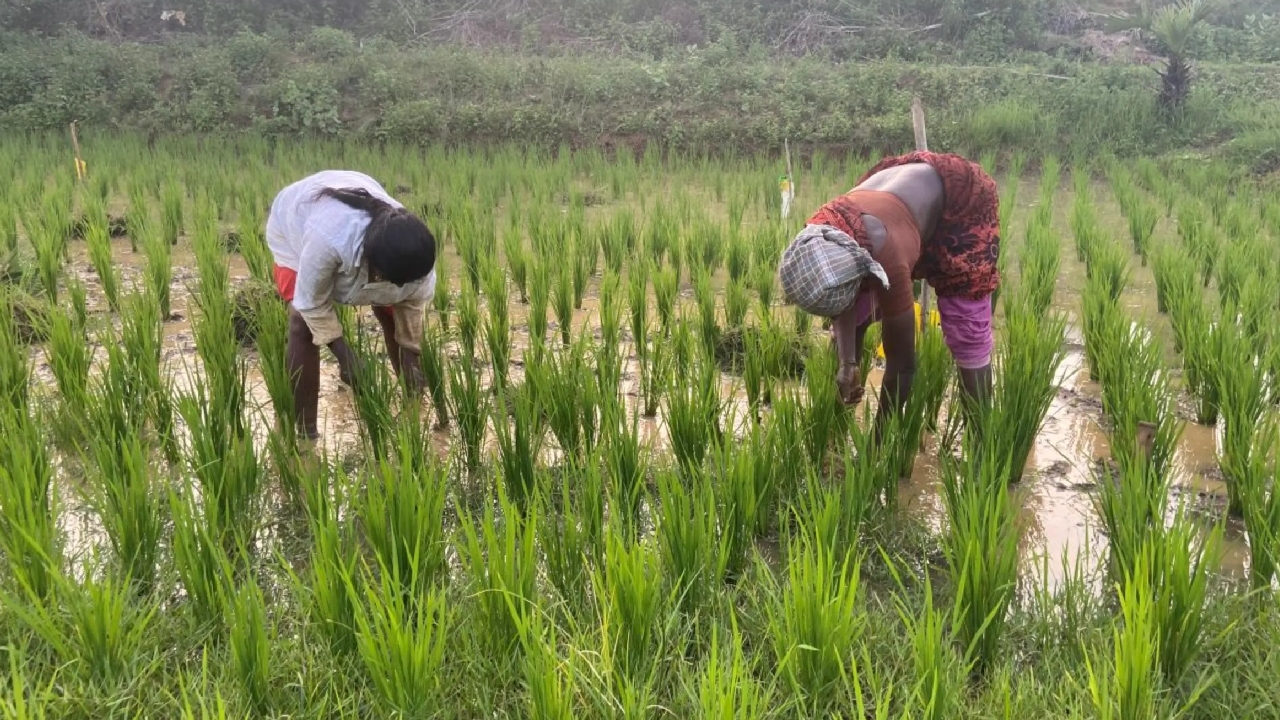
India is marching towards becoming the skill and innovation capital of the globe, thereby enabling our nation to achieve self-reliant and inclusive growth. India remembers and realises the powerful and vibrant mantra of Bharat Ratna and former Prime Minister of India, Shri Atal Bihari Vajpayee: “I have a vision of India: an India free of hunger and fear, an India free of illiteracy and want.”
The launch of the National Education Policy 2020, Viksit Bharat Shiksha Adhishthan, Recognition for Prior Learning (RPL), and the Skill Mission are slowly, strongly, steadily, and swiftly transforming the youth of India to achieve the highest excellence. The spectrum of students’ hackathons is making a paradigm shift among the youth to explore experiential learning and frugal innovations for a variety of problem ideas existing in our nation. Indian education systems integrated with community-based learning such as RuTAG, Unnat Bharat Abhiyan and MY Bharat are addressing several challenges in both rural and urban communities across the nation. These form the epicentres for the growth of local communities across PAN India. The Government of India, especially the Ministry of Education, Ministry of Youth Affairs and Sports, Ministry of Micro, Small and Medium Enterprises, and the Department of Scientific and Industrial Research, has initiated several schemes which meet the objectives of transforming rural and urban areas into a Smart India.
The best and classical examples of community-based learning and innovation are the initiatives by the Office of the Principal Scientific Officer, Government of India, Ministry of Education, and Ministry of Youth Affairs and Sports such as RuTAG (Rural Technology Action Group), Unnat Bharat Abhiyan and MY Bharat (Mera Yuva Bharat).
India acknowledges the vision and vibrant mantra of the Hon’ble Prime Minister of India, Shri Narendra Modi - “Gram Swaraj” and “Aatmanirbhar Village”, thereby empowering rural villages to function as hubs and centres leading to making villages strong and self-reliant.
RuTAG realises this vision by strengthening rural communities through science and technology intervention systems. It connects academic institutions, Self-Help Groups, Non-Government Organisations (NGOs), the Government of India, local societies, innovators, analytical people, start-ups, incubators, and accelerators on a single platform. It has primary thematic areas such as bridging emerging technology gaps, thereby developing prototype, sustainable and scalable solutions; implementing technologies to address various issues in rural societies; and capacity building to meet national and regional priorities. The key areas of national and regional importance under this programme are agriculture, handicrafts and pottery, animal husbandry, post-harvest management, clean energy, and water purification.
The RuTAG centres are spread across PAN India such as IIT Guwahati, SKUAST-Kashmir, IIT Delhi, IIT Bombay, IIT Roorkee, ICAR-NAARM Hyderabad, and IIT Madras, which work closely in partnership with local communities, government, and industries. It also facilitates and promotes rural entrepreneurship across different segments.
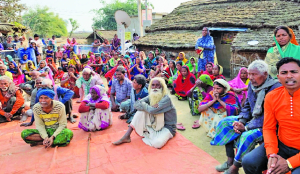
Unnat Bharat Abhiyan (UBA), an initiative of the Ministry of Education, Government of India in collaboration with the Indian Institute of Technology (IIT) Delhi, aims to transform rural villages into technologically advanced and developed regions. It helps academic institutions connect with local district administrations and gram panchayats, enabling students and faculty members to undertake grassroots field research while empowering marginal farmers, artisans and Women Self-Help Groups.
UBA realises Mahatma Gandhi’s vision of self-sufficient “village republics” by utilising public infrastructure and locally available resources and promoting sustainable, eco-friendly digital technologies for rural communities.
The programme also enables higher educational institutions to adopt nearby village clusters and implement sustainable and advanced technologies addressing local needs. Its key focus areas include sustainable agriculture, water resource management, renewable energy, weather monitoring, healthcare, sanitation and digital infrastructure, while also supporting the livelihood and upliftment of rural artisans.
UBA holistically enhances the growth of rural villages and communities through an in-depth knowledge base and harnessing the potential of digital transformation technologies like the Internet of Things (IoT) and Unmanned Aerial Vehicles for the benefit of communities and societies. UBA forms an icon of India by providing simple, easy-to-use and advanced technologies for the growth of villages and creating enormous employment opportunities for the youth of India. It also encourages and motivates academic institutions to participate in Gram Sabha programmes conducted by the local administration.
The Dayalbagh Educational Institute (Deemed University), Dayalbagh, Agra has designed and developed a MOOC online course on “Community Engagement and Social Responsibility”, which is recognised by Unnat Bharat Abhiyan and available on the SWAYAM / NPTEL platform for young minds and learners. The course enables youth and learners across different streams to fetch two credits, which consist of one credit for theory and one credit for fieldwork. The theory covers ethics and best practices of community engagement. It is mandatory for learners to perform fieldwork for 30 hours either in rural or urban areas by connecting with gram panchayats and Non-Government Organisations (NGOs) respectively to earn one credit. Students can connect with NSS and NCC of their respective institutions, thereby performing community-based fieldwork and providing hand-holding support for illiterates, orphanages, elderly citizens, and Self-Help Groups, among others. UBA also addresses issues of environment and climate resilience through technology-driven systems.
The implementation of UBA by higher educational institutions is a mandatory requirement and mandate of the All India Council for Technical Education (AICTE), Ministry of Education, Government of India, for extension approval of all undergraduate programmes.
Mera Yuva Bharat is an academic experiential learning platform that empowers youth through practical framework models. It gives enriching real-world experience by engaging them with local communities through district administrations across PAN India. It not only connects the dots between theoretical knowledge and practical execution but also gives enormous importance to an in-depth understanding and knowledge of society and community. This helps young students develop curiosity-based learning and problem-solving skills. Additionally, it provides hands-on exposure for learners. It develops holistic personality enhancement, thereby leading to thoughtful leaders of the nation. The programme is eligible for undergraduate students across different streams like engineering, science and technology, education, arts, commerce, social science, and many more. The activities have academic credits added to the Academic Bank of Credits, thereby earning academic scores for their regular graduation programme. It leverages the skills of youth to build a vibrant India leading to achieving the Amrit Kaal and Viksit Bharat@2047.
The Government of India initiatives such as RuTAG, Unnat Bharat Abhiyan and MY Bharat are the need of the hour for the youth and make them socially responsible to drive and transform rural and local communities through various impactful activities, thereby transforming India into a New Vibrant Bharat.Additionally, India has emerged as a universally responsible nation to guide global communities as a Vishwa Guru, Vishwa Sewak, Vishwa Suraksha, Vishwa Rakshak and Vishwa Mitra.
T Senthil Siva Subramanian, is Head of, Institute-Industry Interface Program, Hindustan College of Science and Technology, Mathura and N Manikandan, Postdoctoral Fellow, Indian Institute of Technology, Delhi ; views are personal