Nepal’s youthquake: Dawn or dust?
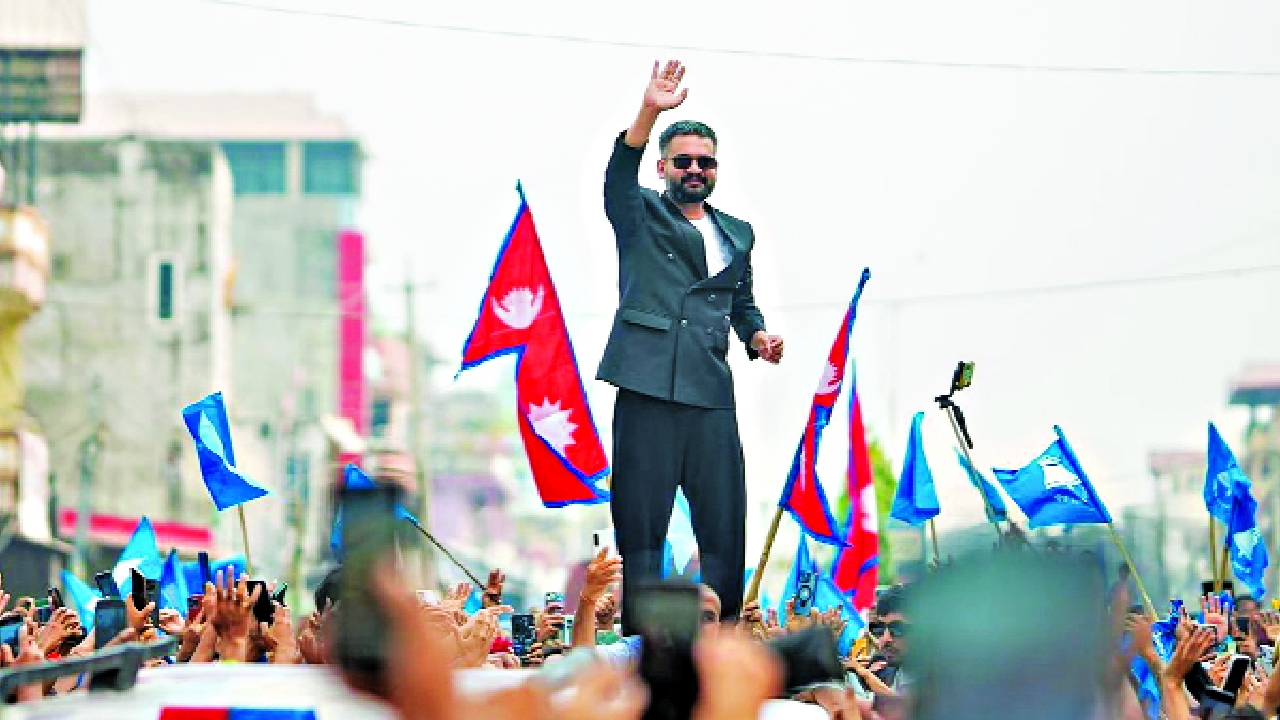
For decades, the story of Nepali politics was written in the same tired ink: the same familiar faces, the same broken promises, and a debilitating churn of coalition governments. Power has circulated within a limited political elite, creating a growing disconnect between political leadership and public expectations.
But on 5 March 2026, the voters of the Himalayan nation didn’t just cast their ballots; they began to write a completely new chapter. The general elections have delivered a decisive verdict, and its echoes will be felt far beyond the valleys of Kathmandu.
The sweeping victory of the political newbie Rastriya Swatantra Party (RSP) and the meteoric rise of its leader, Balen Shah, signal nothing less than a generational coup d’état. At just 35, Shah, a former rapper and social media phenomenon, has done the unthinkable: he defeated the indomitable K. P. Sharma Oli, a titan of the old guard, in his own constituency.
The tremors were felt long before March. The election was the inevitable climax of the September 2025 Generation-Z protests, a digital-age uprising that quickly engulfed the nation in a wildfire of rage against nepotism, corruption, and systemic decay. They forced then PM Oli out and paved the way for an interim government, proving that the streets could dictate the agenda for the halls of power.
The RSP’s success is a direct pipeline from those protests to Parliament. They captured the very aspiration of a Nepal that is young, connected, and fiercely impatient. Their campaign was a masterclass in modern political contest, fought not with the rusty weapons of dynastic patronage, but with the sharp tools of social media, digital outreach, and a promise of radical transparency. The party received strong support in urban areas, particularly in the Kathmandu Valley, and among young voters. It is clear that the expectations of a rapidly changing urban society are increasingly different from those represented by traditional political structures.
This verdict delivers a stinging rebuke to the traditional parties like the Nepali Congress, NCP, and the UML that have treated the nation as their personal fiefdom for far too long. It also signals a challenge to the identity-based politics that has long shaped Nepal’s political landscape, particularly in the Madhesh-Tarai region. For years, regional parties mobilised voters around ethnic grievances. But this election suggests a shift: a growing section of voters, especially the youth, are prioritising governance, transparency, employment, and development over narrow identity politics. But when the euphoria fades, the hard reality of governing sets in. Can a party of novices, born from protest, transform into a vehicle of progress? The challenges are staggering: a remittance-dependent economy, chronic unemployment, a failed party system, and a bureaucracy built to resist reform.
In Nepal, remittance inflows have surged to record levels, reaching Rs 201.22 billion in a single month and growing 39.1 per cent in the first half of the current fiscal year, yet this windfall masks deeper structural failures. The economy remains heavily dependent on money sent home by migrant workers, now accounting for more than 25 per cent of GDP, while domestic job creation stagnates. Nearly five lakh youth enter the labour market annually, but only about 10 per cent find formal employment. Unemployment among young people exceeds 20 per cent, forcing thousands to seek work abroad-over 200,000 left in just the first quarter of this fiscal year. Meanwhile, industry contributes barely 12.8 per cent to GDP, reflecting limited industrial development and a narrow economic base. If the new government fails to take concrete steps to address these problems, public enthusiasm could quickly turn into disappointment. Political stability remains elusive. In the last eighteen years, Nepal has seen nearly fourteen governments. Coalition infighting, ideological clashes, and leadership rivalries have long crippled governance.
Even though the RSP has gained strong public support, the new leadership will face tough resistance from traditional power elites who have deep roots in the army and civil administration. Managing the complexities of governance will be a serious test. The party must now prove itself as a responsible governing force.
Nepal’s new leadership must navigate treacherous geopolitical rapids, balancing deep ties with India against China’s gravitational pull, while a growing American presence adds complexity.
India remains Nepal’s most consequential neighbour, accounting for nearly two-thirds of trade and the sole fuel supply. But New Delhi has adopted “managed pragmatism”, focusing on hydropower and connectivity rather than demanding exclusive dominance.
Prime Minister Narendra Modi’s congratulations were more than diplomatic courtesy; they were recognition of a new, unpredictable variable in a critical neighbour. For India, a stable Kathmandu is non-negotiable, but stability is no longer guaranteed by cosy ties with a familiar few.
India-Nepal cooperation has deepened across multiple fronts. In connectivity, projects like the Jayanagar-Kurtha Railway and the proposed Raxaul-Kathmandu line, alongside Integrated Check Posts, have improved cross-border trade. Energy partnership has emerged as a cornerstone-with Indian firms developing major hydropower projects (Arun III, Upper Karnali) and cross-border transmission lines, while recent long-term power trade agreements signal deepening integration. The Motihari-Amlekhganj Petroleum Pipeline now facilitates efficient fuel supply. Digitally, UPI’s integration with Nepal’s payment systems reflects broadening economic ties.
China’s engagement under the Belt and Road Initiative includes ambitious proposals like a rail link from Tibet to Kathmandu. For Beijing, cross-border connectivity is a strategic imperative tied to stability in Tibet. The US has emerged as a significant player with over $1 billion in development assistance. Japan and multilateral institutions are also active, reflecting Nepal’s transformation from a “buffer state” into a zone of “strategic density”, where multiple powers compete and cooperate simultaneously. For the new government in Kathmandu, the challenge is maintaining a hedging strategy, extracting benefits from all sides while preserving non-alignment. This will be the first major test of its diplomatic skills and ability to balance competing interests.
Balen Shah and the RSP have inherited a nation’s hope, but also its simmering rage. If they fail to deliver, if their promises of transparency and anti-corruption get tangled in the red tape they vowed to cut, the very youth who carried them to power will be the first to turn against them. The cycle of disillusionment could spin faster than ever before.
Nepal once again stands at an important turning point in its democratic history. The 2026 elections have not just opened a new chapter; they have thrown the old book out of the window. Whether this leads to a renaissance of accountable governance or descends into the chaos of unmet expectations is the question that now hangs in the balance. Every political newcomer arrives promising to bend the arc of history. The test is whether history bends them first.
The writer teaches international politics at DDU Gorakhpur University; views are personal