Breaking News: The Internet is Down — Long Live the Radio!

In an age where Wi-Fi signals decide our moods and smartphones rarely leave our palms, it sounds almost satirical to say that the most reliable companion in times of crisis is not a 5G tower but a humble radio set. Yet every year on February 13, when the world observes World Radio Day, we are reminded that the simplest technologies often outlast the loudest innovations. The date commemorates the establishment of United Nations Radio in 1946, but its relevance goes far beyond institutional history. It celebrates a medium that refuses to fade, because it is woven into the daily lives of millions. Marshall McLuhan once described radio as a “hot medium”-intense, intimate, and capable of engaging listeners at a deep emotional level. Radio speaks directly to the ear and ignites imagination. In today’s world of podcasts and ear buds, McLuhan’s idea seems prophetic. Radio is no longer confined to a wooden box. It has become an extension of our pockets and our ears. Every smartphone is, in essence, a portable radio. In India, radio is more than a communication device; it is the “common man’s university.” Long before digital platforms democratised content creation, radio entered villages, tea shops, fishing harbours, railway stations, and army camps. It carried agricultural advisories to farmers, educational lessons to students, classical music to connoisseurs, and news bulletins to a newly independent nation eager to understand itself. All India Radio, now officially known as Akashvani, has been the backbone of this journey. Its guiding motto, “Bahujana Sukhaya, Bahujana Hitaya”-for the happiness and welfare of the many-captures its inclusive philosophy. AIR was a public service committed to national integration and social development. In a country of hundreds of languages and dialects, Akashvani became a unifying thread, embodying India’s “unity in diversity.”
The FM revolution of the late 1990s and early 2000s injected new energy into Indian radio. Private FM stations brought local flavour, lively radio jockeys, interactive talk shows, and urban vibrancy. Radio once again became fashionable among city youth. It was no longer just about news and classical music; it was about companionship during traffic jams and late-night conversations.
Yet, beyond glamour and entertainment, radio’s true strength lies in resilience. When cyclones hit coastal regions, when floods submerge towns, when earthquakes disrupt infrastructure, it is often the radio that survives. Electricity may fail. Mobile networks may collapse. Internet services may crash. But a battery-operated radio continues to function.
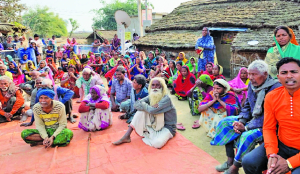
In disaster management, radio is not nostalgia-it is a necessity. Community radio stations broadcast real-time weather warnings, evacuation instructions, and relief information in local languages. In remote villages cut off from highways and digital networks, radio remains the lifeline. Closely linked to disaster response is ham radio-amateur radio operated by trained enthusiasts. When all conventional communication systems break down, ham operators step in. During earthquakes, floods, and cyclones in India, ham radio volunteers have played a silent yet heroic role in coordinating rescue efforts and connecting stranded communities with authorities. The portability of radio makes it indispensable. It does not demand literacy or expensive data plans. In recent years, radio has experienced a remarkable revival, largely due to Prime Minister Narendra Modi’s monthly programme, ‘Mann Ki Baat.’ Launched in 2014, it transformed perceptions of radio from an ageing medium into a dynamic tool of governance and public engagement. Mann Ki Baat reflects what communication scholars describe as the “mass line” approach-direct engagement between leadership and the people. The human voice, calm and conversational, created intimacy. Millions felt personally addressed. The programme has undeniably popularised and revitalised radio. Radio, in this context, is not merely transmitting information; it is building participation. It is governance through conversation. Meanwhile, community radio continues to empower marginalized voices. Women’s groups discuss self-help initiatives. Farmers exchange practical knowledge. Fisher folk receive storm alerts. Each small transmitter strengthens the democratic fabric of the nation.In a hyper-visual age, radio offers a rare gift-imagination. It allows listeners to visualize stories in their own way. It accompanies them while driving, cooking, studying, or working. It informs without overwhelming. As World Radio Day is observed on February 13, the celebration is not about sentimentality. It is about acknowledging a medium that remains India’s most inclusive classroom and most portable parliament.
The next time the internet falters and screens go blank, the old transistor may still whisper steady news and reassuring voices. In that quiet reliability lies radio’s enduring power. Perhaps the satire is true after all: when the noise of the digital world fades, it is the invisible waves in the air that keep a nation connected.
The writer is Professor at Centre For South Asian Studies, Pondicherry Central University; views are personal