Precision, Power, and Innovation: The Science Behind Operation Sindoor
On a night, while around 1.7 billion people across two countries were asleep, India decided to settle a score for a cowardly act done by terrorists in Pahalgam.
No declarations. No televised warnings. Just precise and impactful action. In a few minutes, retaliation wasn’t just delivered — it was redefined and reframed. That night, revenge gave way to a new doctrine: swift, surgical, tech-driven warfare. A clear and loud message was sent by the top leadership to the harbinger of terror.
But that night, instead of just revenge, a new chapter was silently written — neither in speeches nor headlines, but in the precise language of strategic retaliation.
It is a remarkable new lesson in modern warfare and technology-driven military tactics where silence carries the weight of power and revenge. A hard-hitting message — enough is enough, the nation will not sit quietly in the face of such acts — was sent, powerful enough to reflect the intent of bold leadership. It echoed far beyond borders, impossible for global leaders to ignore. The world took notice of it.
Operation Sindoor — from a precision missile strike by India across the border, deep into the heart of Pakistan, targeting the terrorist camps they had nurtured — was not just a military response to the wounds inflicted in Pahalgam, but it was also a message to our adversaries about our technological advancement.
It signified that India is no longer merely a buyer of military equipment; rather, it has become a proud producer capable of indigenously developing and deploying next-generation war technologies with excellence.
This wasn’t a case of luck or last-minute brilliance. It was the result of the hard work of our scientific community, and its years of relentless effort which was highly focused and deeply purposeful. Behind the calm and composure was a nation often underestimated, steadily transforming the way it thinks about, builds, and commands its defence sector.
Operation Sindoor wasn’t just a mission; it became a milestone in the journey that began with one bold, simple idea: What if India no longer had to depend on anyone else to defend itself? That question became a vision, that vision became a resolve, and that resolve became a reality.
This transformation is the result of the grand vision of the nation’s visionary leadership — a vision patiently nurtured over the last decade years through bold initiatives like NIDHI (National Initiative for Developing and Harnessing Innovations), Make in India, the rise of defence-tech startups, and the emergence of a thriving innovation ecosystem. Operation Sindoor is not just a mission; it has become the grand proclamation of this transformation.
This vision became a reality. It stepped out of boardrooms and policy papers and roared onto the global stage. In the labs where startups take birth our young engineers and scientists are fighting a silent war, battling challenges with innovative ideas, crafting technologies that ensure peace through power and strength. Warriors working in the field of science,
technology and research are fighting a different kind of battle — not with guns and grenades, but with the grit, code and relentless innovative imagination.
These are the warriors working in the startups. Each breakthrough is a victory for them which motivates them to undertake a new challenging task.
There are quite a few remarkable startups that have made us proud by showcasing their capabilities in drone technology and Unmanned Aircraft Systems (UAS). Apart from HAL and IIT-Bombay, it is companies like L&T, Paras Defence and Space Technologies, Drone Destination, IdeaForge Technology and Zeus Numerix are doing path-breaking work.
Their innovations tackle real-world problems, from defence tech to climate solutions, proving that technology is India’s strongest shield and startups are its sharpest edge.
Rafale, the magic of engineering from France, soared in perfect synchrony with our very own BrahMos, together executing one of the most precise strikes the modern world has witnessed. This was not mere retaliation; it was a symphony of bold intent and sovereign resolve, where every note was calibrated, every movement deliberated against the attack made by terrorists on the sovereignty of the nation.
India’s method of retaliation, language of retaliation, and grammar of retaliation in response to the point-blank killings by asking about the religion of innocents by Pakistani terrorists in Pahalgam have now become a case study for military strategists and defence experts across the globe.
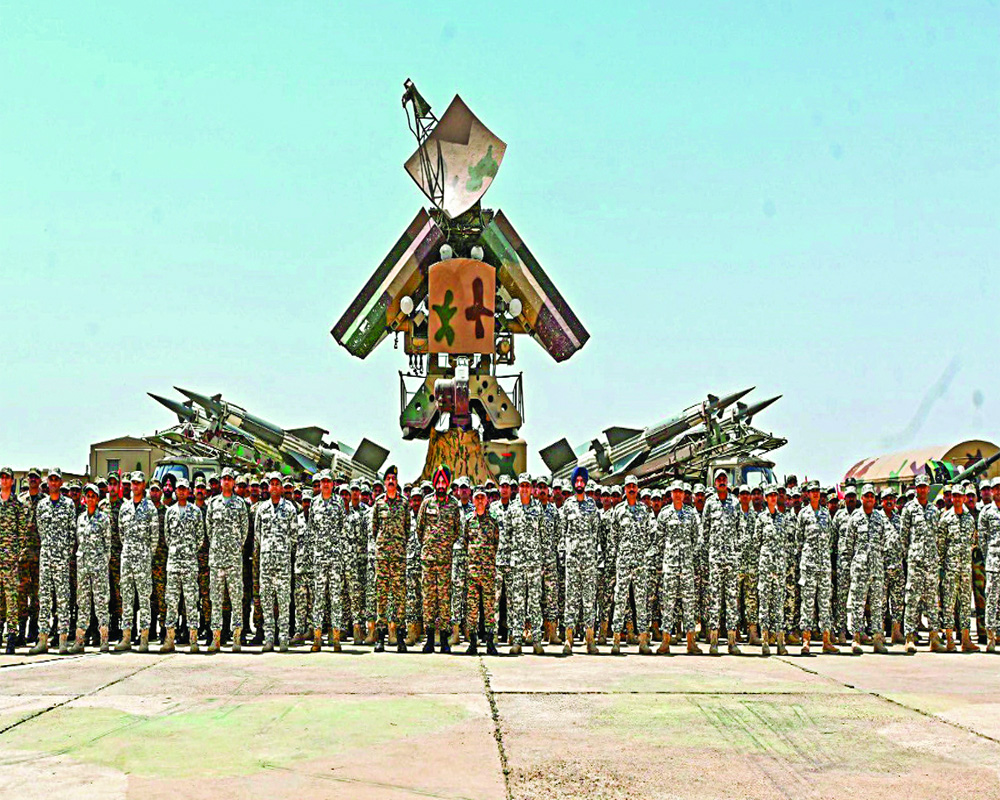
This wasn’t just a military manoeuvre — it was a calibrated expression of resolve and bold intent. With the help of fifth-generation fighter jets like Rafale in the skies and the S-400 Sudarshan Chakra air defence system on guard, India showed that the fusion (Sangam) of global firepower and homegrown innovation isn’t just possible — it’s formidable and too powerful.
At a critical hour, indigenously developed technology spoke louder than words, with precision, clarity, and impact and delivered a message that — one the world won’t soon forget. The unwavering contribution of our armed forces — marked by sacrifice, dedication, and deep love for the nation — is truly invaluable and incomparable.
We salute their valour and honour their commitment towards protecting our country.And how can we forget the contributions of Dr APJ Abdul Kalam, the “Father of India’s missile programme� Dr Kalam was instrumental in adding muscle to India’s defence capabilities.
Operation Sindoor was not just retaliation — it was India’s declaration of a new era in warfare: silent, swift, tech-driven, and sovereign. It marked the rise of indigenous innovation, the boldness of visionary leadership, and the resilience of a nation ready to defend its people with precision and pride. From Pahalgam’s pain emerged a powerful message: India will not bow — it will build, strike, and lead. A new doctrine was born, and the world could no longer look away.
(Vinay Pathak is Assistant Professor, IIIT-Sonepat, and Sandeep Joshi is a freelance journalist. Views are personal)