Marvels of India - Harappan-Mesopotamian Trade
Commerce
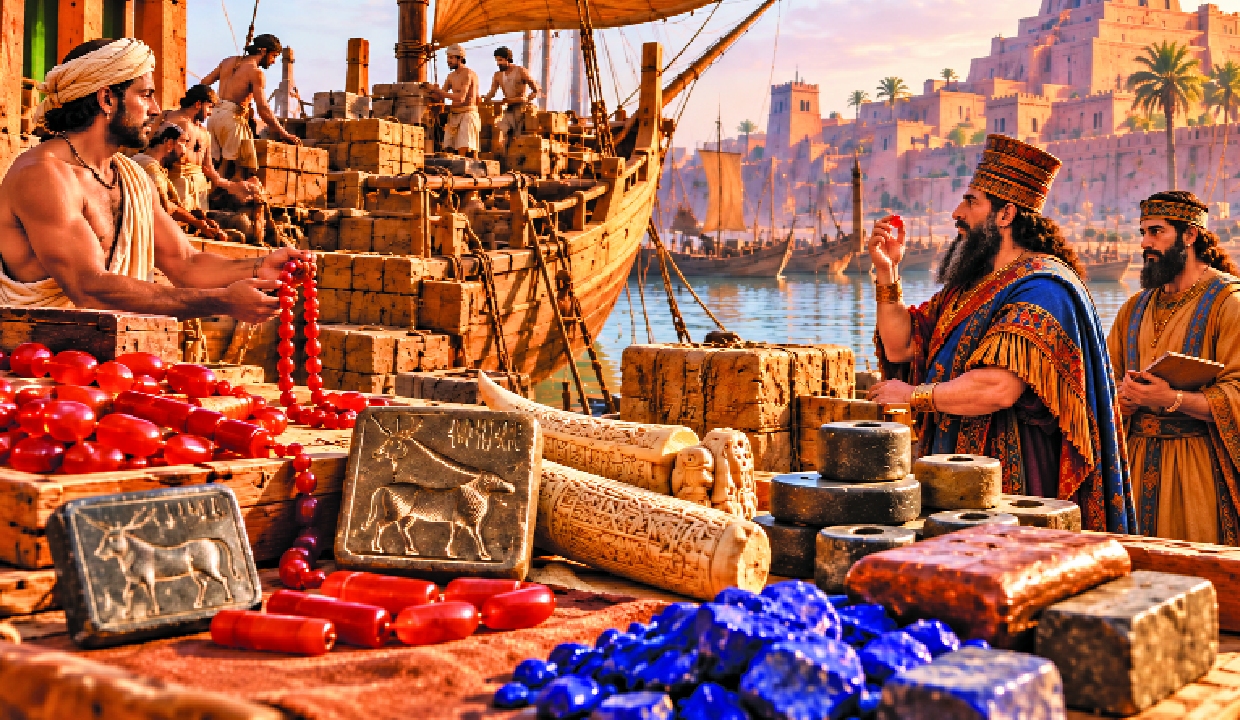
Sumerian writings from ancient Mesopotamia (the earliest known writing systems) mention the Sindhu-Saraswati, or Harappan civilisation, as Meluhha. The first ruler of the Akkadian Empire, Sargon of Akkad, recorded that ships from Meluhha, Magan and Dilmun (all Bronze Age civilisations) docked at his capital. Harappa-type carnelian beads adorned Queen Puabi's cloak (an elaborate garment made of precious and semi-precious stones) found at the Royal Cemetery at Ur (a major city-state of ancient Mesopotamia). Harappan seals and ivory also reached Central Asian sites such as Altyn Depe and Gonur Depe (two major Bronze Age archaeological sites in Turkmenistan), thereby evidencing a vast commercial exchange.
Economy
Mesopotamian elites prized Harappan carnelian and lapis as prestige goods. Ur's merchants, acting like venture capitalists, imported copper, timber and pearls by sea. A famed American anthropologist, Gregory Possehl, observes that this trade shaped the cultural landscape in the Greater Harappan Valley.
Standardisation
Researchers found stamped seals, some bearing Harappan script, in Bahrain alongside stone weights matching Harappan units. This suggests that merchants relied on shared measurement and authentication. Together, these mark one of the Indian subcontinent's earliest documented international commercial networks.