CJP leaders walk free under one-year peace bond as Capital remains on edge
In the early hours of Sunday, three senior figures of the Cockroach Janta Party stepped out of Delhi’s executive magistrate court after nearly a full day in preventive detention. Abhijeet Dipke, Ashutosh Ranka and Saurav Das had been taken from an aircraft at Indira Gandhi International Airport the previous morning, moments after landing from Mumbai. Police acted under Sections 126 and 170 of the Bharatiya Nagarik Suraksha Sanhita, citing the need to prevent a breach of peace ahead of the group’s planned gathering at Jantar Mantar.
The Special Executive Magistrate at Delhi Cantonment accepted a surety bond of Rs 50,000 and ordered their release on the explicit condition that they maintain peace and good behaviour for one year. CJP legal affairs head Ratna Singh confirmed the terms, while advocate Soutik Banerjee noted that the three were free to leave. The party itself framed the outcome as a “major legal victory” after what it called nearly 24 hours of unlawful preventive detention. On X, it declared, “Finally Delhi police is forced to release Abhijeet Dipke, Ashutosh Ranka and Saurav Das. Cockroaches never die.”
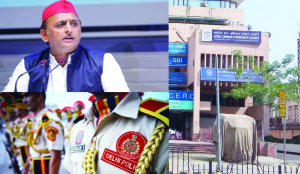
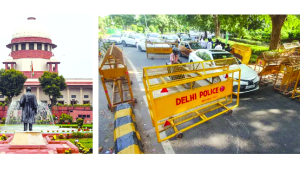
Delhi Police insisted that “all due legal procedures” had been followed and that the leaders were produced before the magistrate within the required timeframe. The detentions occurred against a backdrop of an extraordinary security deployment, more than 30,000 police and paramilitary personnel across the city, that had already led to the detention of over 7,000 people the day before, including former chief ministers Arvind Kejriwal, Mamata Banerjee, Pinarayi Vijayan and Manik Sarkar. The protest itself never reached the designated site; the capital’s streets were effectively sealed.
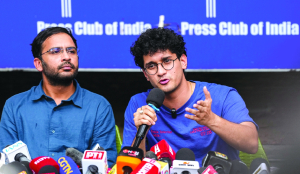
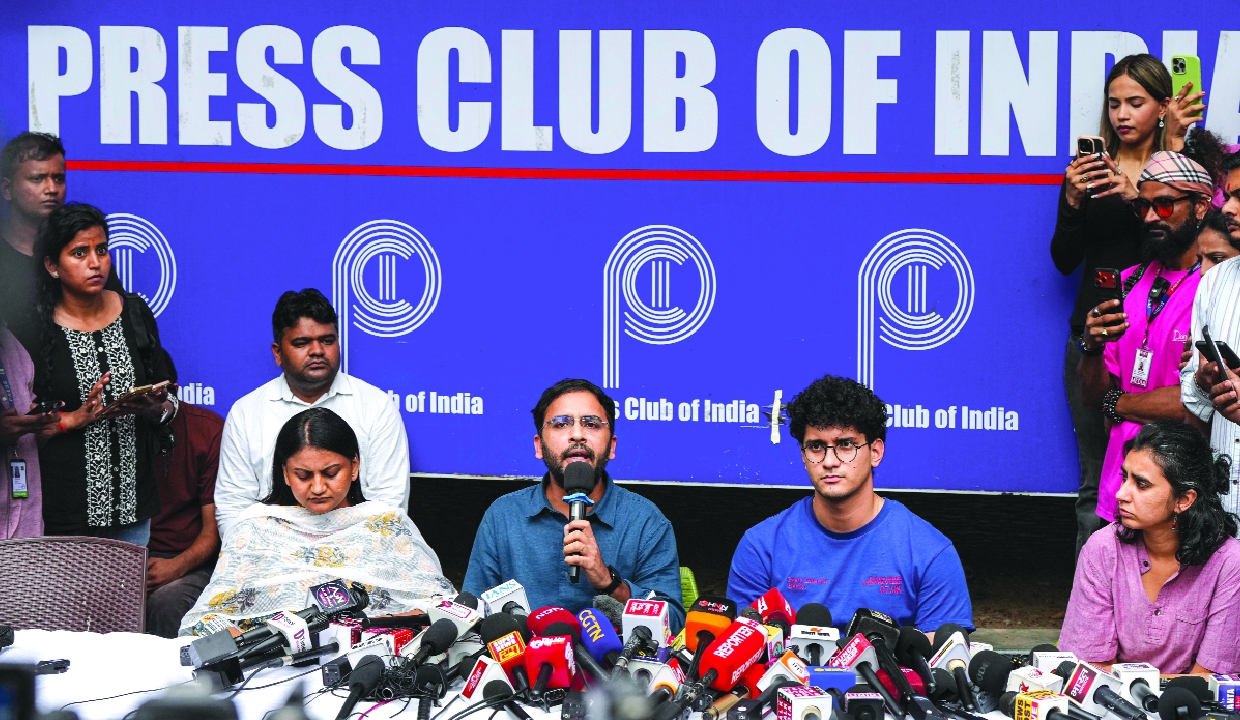
Hours later, Ranka and Das addressed the media at a press conference. Dipke, whose grandmother had died, returned to his village in Maharashtra for the last rites and left the briefing to his colleagues. At the presser, the two leaders said police seized their phones without a proper seizure memo and held them for the full period of detention. They said the devices might have been cloned or otherwise tampered with. Das said they were picked up “as if we were criminals” and taken to separate locations. Responding to the one-year peace condition, Ranka stated that “Prime Minister Modi and Amit Shah were causing the actual breach of peace.”
He characterised the weekend’s mass detentions and the sealing of Jantar Mantar as a “war-like situation” created by the central leadership, arguing that the clampdown had damaged the country’s image and inconvenienced ordinary residents.
Both leaders insisted the agitation would continue peacefully until Chief Election Commissioner Gyanesh Kumar resigns over alleged irregularities in the Special Intensive Revision of electoral rolls. Ranka thanked the opposition leaders who had joined the previous day’s attempt to reach the protest site and noted that further detentions and alleged assaults on CJP workers, SFI and AISF members were still occurring. The party renewed its call for supporters to gather at Jantar Mantar even as heavy security remained in place.
With the three leaders free under a year-long restraint and the capital still under intense policing, the immediate question is whether the movement can convert online energy and street pressure into sustained, orderly action, or whether the authorities’ preventive measures will keep the protests contained.