LPG shock and energy vulnerability, time to fast-track hydrogen
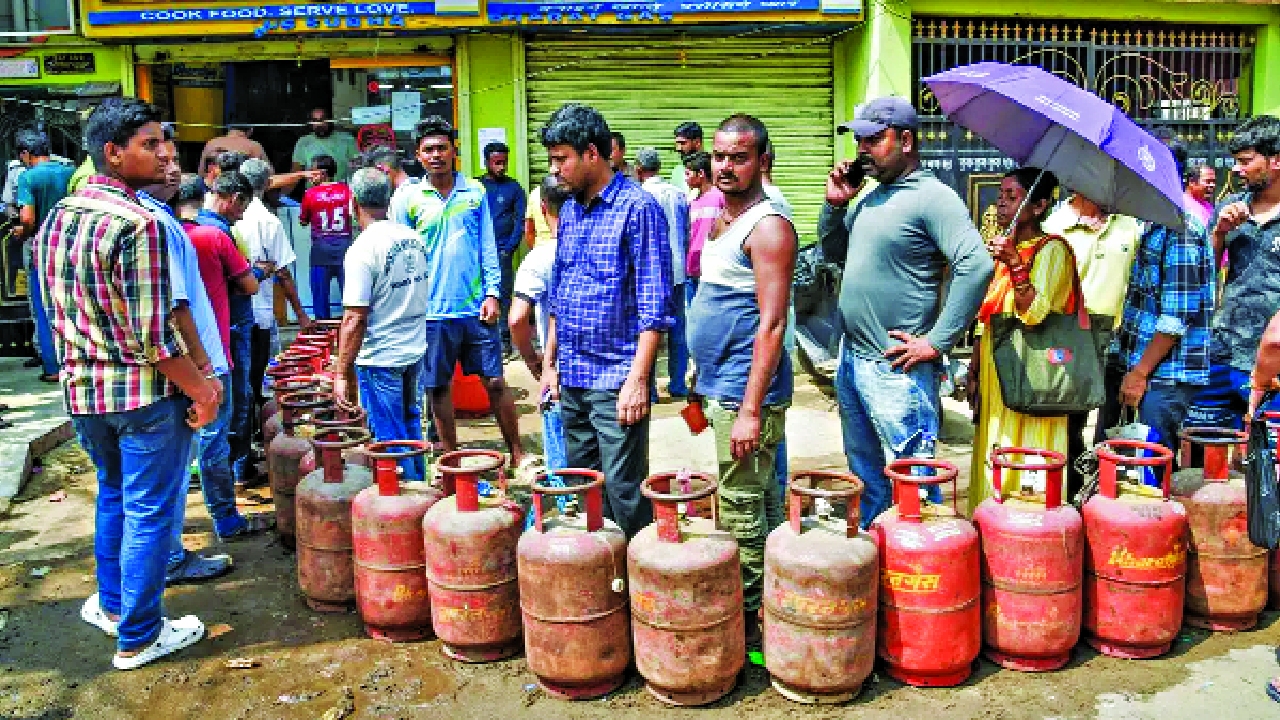
The recent surge in LPG prices and supply anxieties across parts of India has once again underscored persistent import dependence in the country’s energy architecture. Triggered by escalating geopolitical tensions involving Iran, global crude oil prices have witnessed sharp fluctuations, crossing uncomfortable thresholds and transmitting shocks across fuel markets. For a country that imports nearly 85 per cent of its crude oil and a significant share of its LPG requirements, such volatility is not an aberration; it is a recurring structural risk.
The consequences are already visible. Rising LPG prices are straining household budgets, while supply disruptions in certain regions have raised concerns about accessibility and affordability. These developments are not isolated; they are symptomatic of a deeper dependence on imported fossil fuels whose pricing and availability remain subject to geopolitical currents far beyond India’s control.
While immediate policy responses, such as price stabilisation measures and supply management, are necessary, they do little to address the underlying challenge. The present moment, therefore, calls not just for mitigation but for strategic reflection. We need to find out how India can insulate its energy future from recurring external shocks.
One part of the answer lies in accelerating the transition to alternative fuels that are both cleaner and domestically anchored. In this context, hydrogen, particularly green hydrogen, has begun to emerge as a serious contender in India’s long-term energy strategy.
Hydrogen holds significant potential to strategically replace CNG in India, but this transition will be gradual and sector-specific rather than universal. While CNG will continue to serve as a transitional fuel in the near term, hydrogen offers a pathway for deep decarbonisation in segments where electrification is constrained, especially in heavy transport and certain industrial applications.
India’s experience with CNG provides an instructive parallel. Over the past two decades, the expansion of the City Gas Distribution network has enabled cleaner urban mobility and reduced local air pollution. Yet, as the current crisis demonstrates, CNG remains linked to global gas markets and is not immune to the same volatility affecting LPG today.
Hydrogen presents a fundamentally different proposition. Produced domestically using renewable energy, it offers the possibility of decoupling energy supply from global fossil fuel markets. Early pilots of hydrogen blending with CNG, up to 18-20 per cent, have already demonstrated technical feasibility, allowing for incremental adoption without immediate large-scale infrastructure overhaul.
However, the pathway to a hydrogen-based transition is neither simple nor immediate. Cost remains the most significant barrier. At present, green hydrogen is considerably more expensive than both LPG and CNG, largely due to the high cost of electrolysers and the substantial electricity required for production. Without sustained cost reductions driven by technological advancements and economies of scale, hydrogen will struggle to achieve widespread adoption.
Infrastructure poses an equally tough challenge. Unlike LPG and CNG, which benefit from established supply chains, hydrogen requires dedicated systems for storage, transport and refuelling. Its physical characteristics necessitate high-pressure storage and specialised handling, increasing both complexity and cost. Building this ecosystem will require long-term investment and coordinated planning across multiple stakeholders.
There is also a gap between policy ambition and on-ground execution. India’s National Green Hydrogen Mission has generated considerable interest and investment announcements, but a large proportion of projects remain at early stages. Accelerating implementation will require faster clearances, regulatory clarity and stronger coordination between central and state agencies.
Equally critical is the need to create demand. For hydrogen to move beyond pilot projects, there must be assured markets. Public transport systems, freight corridors and industrial users can serve as anchor consumers, but this will require clear policy signals, including mandates, incentives and long-term procurement frameworks.
The lessons from the current LPG and crude oil volatility are clear. Energy security cannot be achieved solely through diversification of imports or short-term price interventions. It must be rooted in structural transformation, one that reduces dependence on external supply chains and builds resilience through domestic capabilities.
The transition from CNG to hydrogen must therefore be carefully sequenced. High-impact sectors such as heavy-duty transport and industry should be prioritised, where hydrogen offers clear advantages over both fossil fuels and battery-electric alternatives. A phased approach, beginning with blending, moving to dedicated applications and eventually scaling up, can ensure that the transition is both economically viable and operationally feasible.
The success of this transition will depend on achieving cost reductions, building infrastructure, creating demand and ensuring policy coherence. If these conditions are met, hydrogen can evolve from a niche energy carrier to a central component of India’s clean energy and mobility landscape.
Energy transitions are often catalysed by moments of crisis. The current volatility in LPG and crude oil prices is one such moment. It presents India with a choice: to continue managing recurring shocks or to accelerate the shift towards a more resilient and self-reliant energy future. Hydrogen may not replace CNG overnight, but it has the potential to define what comes after.
The writer is an Executive Director at the Integrated Research and Action for Development (IRADe) and former CMD of PTC India Limited ; views are personal