Leaders come and go institutions endure
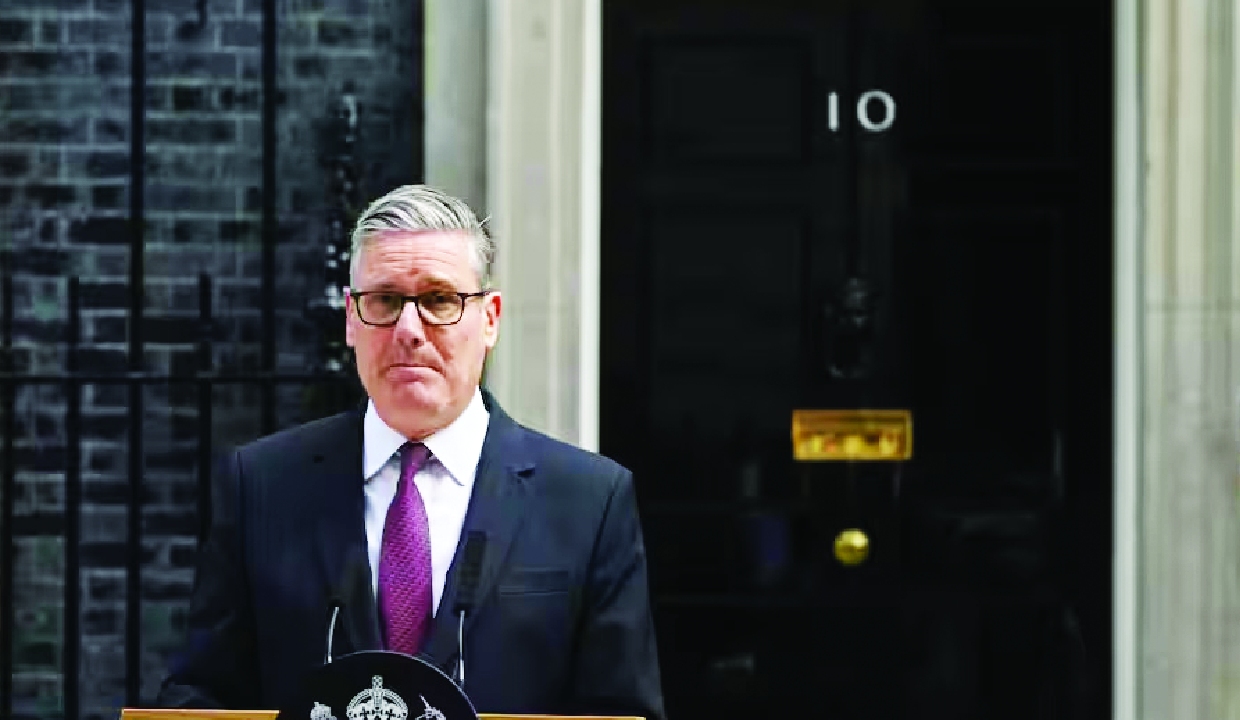
Six Prime Ministers of the United Kingdom have left office in the last ten years (2016-2026). Only one-Rishi Sunak-departed as a result of electoral defeat. The other five-David Cameron, Theresa May, Boris Johnson, Liz Truss, and now Keir Starmer-left office primarily due to internal party pressure, perceived failure to deliver, or loss of parliamentary confidence. Many observers have prematurely interpreted this phenomenon-the "revolving door" at 10 Downing Street-as evidence of institutional decline or systemic instability within British democracy. But does such turnover necessarily produce persistent policy paralysis? Does it automatically indicate weak leadership legitimacy or strategic drift?
While frequent leadership change can certainly create short-term uncertainty, policy discontinuity, and even public fatigue, it would be an overstatement to assume that the United Kingdom is uniquely unstable in this respect. Other advanced parliamentary democracies with similarly episodic leadership turnover-such as Japan, Australia, and Belgium-have not experienced existential threats to democratic continuity or governance itself. Conversely, countries with comparatively stable leadership tenures can still suffer democratic erosion if the institutions responsible for scrutinising executive power weaken over time. Stability in leadership, therefore, is not synonymous with democratic health.
An alternative interpretation is that frequent leadership change may reflect a form of internal democratic responsiveness rather than systemic breakdown. In the UK context, it can be seen as an expression of robust parliamentary control over the executive. Leaders can be removed swiftly when they lose the confidence of their party or Parliament, allowing for rapid correction of perceived governance failures. This mechanism avoids prolonged dysfunction and reduces the risk of entrenched ineffective leadership. Unlike systems where leadership change requires fixed electoral cycles or extraordinary constitutional procedures, the Westminster model enables relatively immediate adjustment when political consensus collapses.
Crucially, this form of accountability can remove failing leadership without destabilising the state itself. It does not require constitutional rupture, military intervention, or prolonged administrative paralysis. Instead, it operates through established parliamentary conventions, preserving continuity in governance even as individuals at the top change. In this sense, accountability becomes real-time rather than episodic, discouraging complacency and reinforcing performance-based legitimacy.
Moreover, the British political system structurally discourages long-standing personality cults and hereditary political dominance. Leadership is not derived from personal mandate alone but is continuously contingent on parliamentary support. While charismatic leaders certainly exist, their authority remains institutionally constrained. The electorate chooses a Parliament, not a Prime Minister, and the Prime Minister serves only so long as they command the confidence of the House of Commons. This principle is often summarised in the constitutional logic that the executive is accountable to the legislature rather than directly insulated by a fixed term.
As Winston Churchill famously observed, "The Prime Minister is the servant, not the master, of the House of Commons." This principle is not merely rhetorical; it is embedded in the operational logic of the system. Churchill himself became Prime Minister in 1940 without a general election following the resignation of Neville Chamberlain, and he later made way for Anthony Eden in 1955, again without a direct electoral contest for the premiership. These transitions established a core tenet of Westminster governance: leadership may change when parliamentary confidence shifts, but the continuity of the state remains intact, and electoral legitimacy resides in the legislature rather than the individual officeholder.
Within this framework, leadership transitions are often treated as constitutional normality rather than political rupture. This helps explain why figures such as Keir Starmer could frame resignation as an acceptance of parliamentary judgment rather than a personal or ideological defeat. As he noted in his resignation speech: "My party has asked whether I am best placed to lead us into the next general election. I have heard the answer of my parliamentary party to that question, and I accept that answer with good grace." This reflects a political culture in which leadership change is institutionalised rather than personalised, and where resignation is often interpreted as procedural rather than adversarial. Similarly, the post-office trajectories of former prime ministers illustrate a relatively non-confrontational political culture. David Cameron briefly returned as Foreign Secretary under Rishi Sunak.
Theresa May now serves in the House of Lords as a senior stateswoman. Boris Johnson remains an active public commentator. Liz Truss participates in political discourse outside formal office. Rishi Sunak continues as a Member of Parliament while engaging in private-sector advisory roles. While disagreements certainly persist, there is comparatively limited evidence of prolonged factional rupture or personalised political vendettas following departure from office.
However, frequent turnover is not without cost. Repeated leadership changes can lead to policy inconsistency, disruption in long-term planning, and uncertainty among international partners and domestic stakeholders. Governments are ultimately responsible for decisions, and effective decision-making often requires continuity, coherence, and time. Excessive volatility at the top may therefore undermine strategic clarity, even if institutional stability remains intact.
At the same time, there is a countervailing temptation to prioritise continuity at the expense of responsiveness, potentially weakening democratic accountability. The challenge lies in balancing stability with adaptability. As Churchill also famously remarked, "Democracy is the worst form of Government except for all those other forms that have been tried from time to time." This acknowledgment captures the inherent imperfections of democratic systems, including those that permit frequent leadership turnover.
Ultimately, the experience of the "revolving door" at 10 Downing Street underscores a fundamental feature of the Westminster system: leaders are temporary, but institutions endure.