H-1B lottery with salary twist
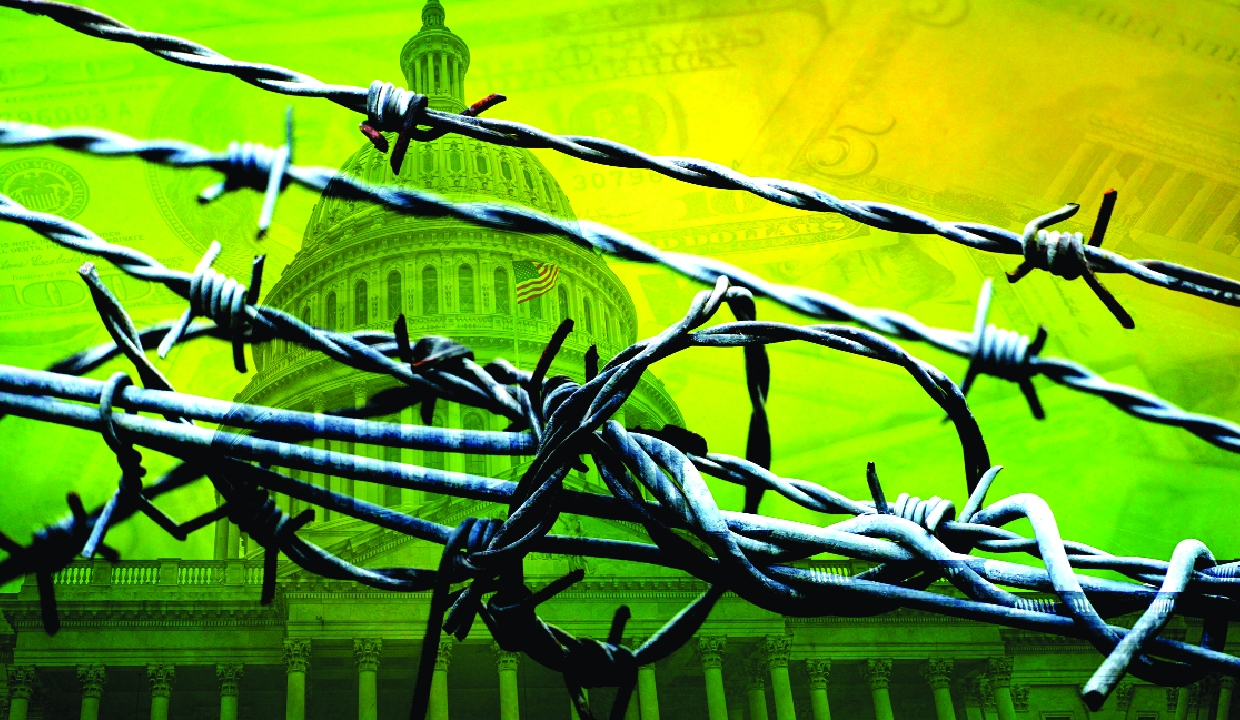
The first H-1B visa lottery, although it is a travesty to call it that, under new norms and fees, seems to have helped the Indian and US firms, applicants, and American administration. The first impressions, based on media reports, and not on official data that was not released, the selection and success rates improved dramatically. This implies that the chances of the applicants, as well as the firms went up, went up, although we are sure that the entire quota was filled up, or the higher success rate would not mean anything in practical terms.
According to several law firms, the winning chances went up to 50-60 per cent, or 1:2 or more. This implies that the applications of at least one out of two applicants were approved. The ratio is much higher than the 1:3, or one out of three, under the old lottery system. The old regime, apart from lower fees, was based on random selection, where the applications were put in a single pool, and selection was done through a random computerised system. Any name could crop up based on luck and destiny. The way to game it was to pile the system with enough applications to secure a reasonable win ratio.
Under the new system, which is still called a lottery for no rhyme or reason, the applications are stacked up as per salaries. The one with the highest salary is on the top, followed by lower ones subsequently, in a descending order. The top 65,000, which is the requisite quota, are automatically selected. Randomness, luck, and destiny do not play any role. Only the salary does. In this sense, it is not a lottery, or it is a lottery to the extent that the applicants and firms are unaware of the salaries of the competitors and, hence, are unsure if their names will come in the list of the top 65,000. Indeed, if they fail to get the visa, they may never know the cut-off salary unless officials disclose it.
However, the better success rate can be explained by various factors. The first is that the high visa fees of $1,00,000 dissuaded several applicants, firms, and institutions, which stayed away from the so-called salary-based lottery. For example, according to reports, academic institutions, universities, and hospitals “halted almost all their international recruiting as they cannot pay the exorbitant fee.” Even tech firms and US clients, which normally queue up for the visas, and accounted for 40 per cent of the applications in the previous years, stayed away. Either they too did not wish to pay the high fee, or they did not want to recruit highly-paid foreigners.
Over the past few years, before Donald Trump’s second term as the US president, and before the new norms were implemented, Indian IT had deliberately decided to stay away from H-1Bs, and reduce their reliance on them. Media reports indicate that the hirings under it had reduced considerably in the past 2-3 years. Even the Indian IT minister said that the visa did not feature in the India-US bilateral trade talks because the IT industry was not enthusiastic about it. Dependence on AI, both by Indian IT and American clients, dented visa demand.
In effect, it is logical to assume that the number of applications this time, for various reasons, plummeted. Hence, the pool of applications was a lot smaller than the previous years. Indeed, as we stated earlier, there was no reason to game the system through excessive applications given the new norms that are based on salaries, and not random chance. Once the overall numbers of applications reduce, and the quota remains the same, it is evident that the success or selection rate will invariably go up. For it to almost double, from 33 per cent on average to 50-60 per cent, implies that the only reason was the shrinkage in the pool.
One can contend that this is good news for the applicants, who may know for certain that their chances of getting the visa is 50 per cent. The same goes for the firms, both in India and the US. If the US filled up the quota in one go, in this lottery, the official revenues will zoom, thanks to the visa fee of $1,00,000. A net of 65,000, plus an additional 20,000 later, implies an inflow of $6.5-8.5 billion. Since the success rate is 50-60 per cent, it means that the number of applications were at least more than 1,00,000, and possibly up to 1,30,000.
For the American job seekers, the salary-based so-called lottery implies that the jobs at the lower level, especially entry-level, freshers, and first-timers are open to them. This is a positive as recent reports indicate that joblessness among the American graduates, post-graduates, and doctorates is among the highest in recent times. Most of the highly-educated people fail to find jobs, either because they are unavailable, or the applicants do not like what they get. On the flip side, more Indians, and outsiders will grab the lucrative mid- and senior-level jobs that attract higher salaries.
In the future, such high-ranking foreigners may manage large IT or tech teams, which will include the majority of Americans at the lower levels, with lower salaries. The power structure, management hierarchies, and salary structures may undergo a change. The better jobs will go to the outsiders, and the lower ones to the Americans. In the next five years or a decade, it may lead to fresh controversies and charges about how the foreigners capture lucrative jobs, while the puny, meaningless, and irrelevant ones come to the Americans. Today, critics talk about cheap jobs to foreigners, which outwit the Americans. Tomorrow, they will be concerned with joblessness at the top.
Indians too will be on the back foot. Tens of thousands of students used to spend huge sums, funded via sale of assets and personal loans, to study in the US. The hope, desire, ambition, and confidence were that they would land American jobs, via H-1Bs, earn enough to repay the loans, and either remain in the US, or come back after a few years. Such choices and options are out the window. The salary-based lottery system has virtually shut them off. No firm will pay a $1,00,000 fee, and pay a high salary to a fresher to crack the visa selection code. Hence, they will remain out, or seek their future elsewhere.
New selection mode, higher fees help to improve visa chances