Global leaders call for restraint after US-Israel strikes on Iran
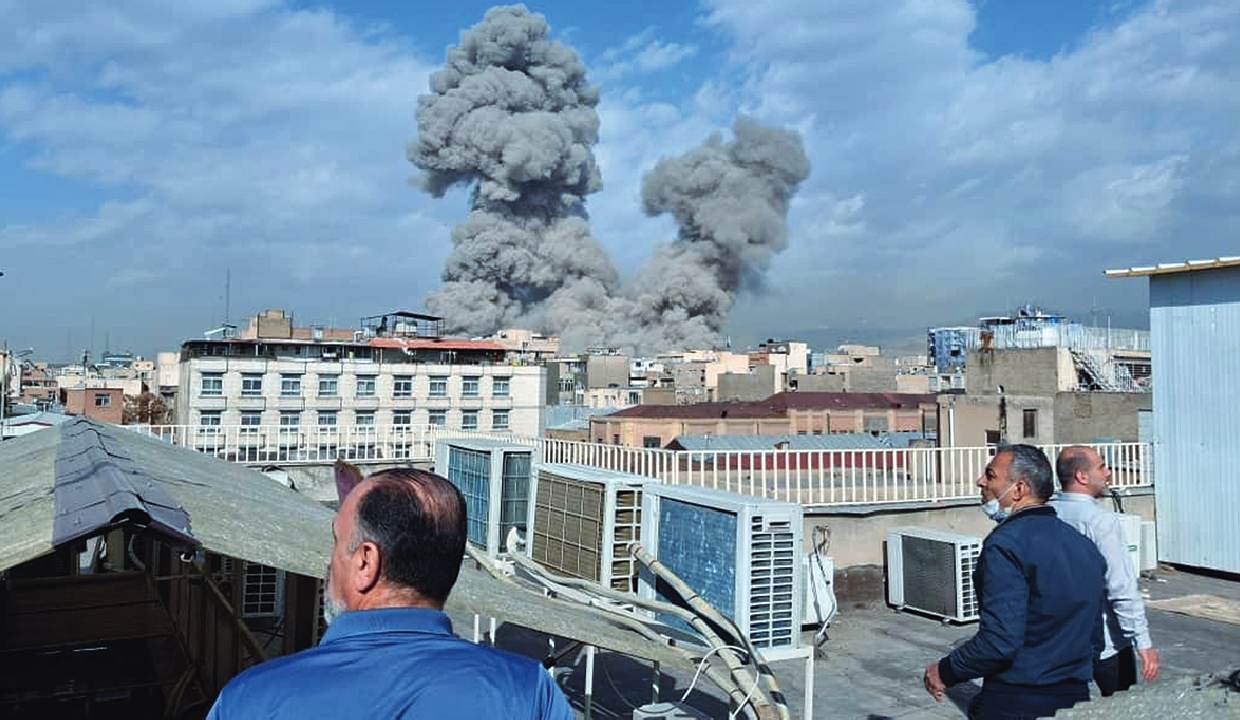
International concern mounted on Saturday after the United States and Israel carried out coordinated military strikes on Iran, with leaders across Europe and beyond urging restraint and warning against a dangerous regional escalation.
The joint operation, which reportedly targeted key Iranian military and strategic installations, has intensified tensions across the Middle East and triggered fears of retaliatory action that could widen the conflict footprint.
European Commission President Ursula von der Leyen described the situation as “deeply concerning” and emphasised the importance of avoiding further provocation.
She underlined that protecting civilians and ensuring nuclear safety must remain paramount, cautioning that any action undermining the global non-proliferation framework would have far-reaching consequences.
European Council President Antonio Costa joined the call for “maximum restraint,” urging all sides to adhere to international law and prevent further deterioration of the security environment.
The European Union's foreign policy chief, Kaja Kallas, characterised the unfolding developments as “perilous,” noting that diplomatic channels must remain open despite the sharp escalation. She said the EU was engaging with regional partners to explore avenues for de-escalation while reviewing precautionary steps to ensure the safety of its personnel in the region.
Germany said it was closely assessing the rapidly evolving situation, with its crisis response mechanisms activated to monitor developments in Iran and Israel.
Norway went further, questioning the legal basis of the strikes. Norwegian Foreign Minister Espen Barth Eide observed that the concept of a preemptive strike under international law requires the presence of an imminent threat - a threshold that, he suggested, remains subject to scrutiny. He reiterated the need for diplomatic engagement over military escalation.
Russia issued a strong condemnation of the operation, warning that it risked pushing the region toward a humanitarian and economic crisis. Moscow described the strikes as destabilising and cautioned against steps that could further inflame tensions in an already volatile theatre.
The strikes follow weeks of mounting strain between Washington and Tehran, including stalled diplomatic contacts over Iran's nuclear programme and an expanded US military presence in the region. US President Donald Trump had recently warned that Iran's nuclear activities would invite firm counter measures.
Security analysts warn that any sustained confrontation could have serious implications for global energy markets, maritime trade routes in the Gulf, and the fragile security equilibrium across West Asia.
As diplomatic efforts intensify behind closed doors, global leaders continue to stress that restraint, dialogue and adherence to international norms remain the only viable path to prevent a broader regional conflagration.
Australian Prime Minister Anthony Albanese has said Canberra backs the United States in its efforts to prevent Iran from acquiring nuclear weapons, even as leaders in the United Kingdom and the European Union cautioned against further escalation in the Middle East and called for restraint.
Following coordinated strikes by the US and Israel and reports from Iranian media of attacks across multiple locations, the Australian Government advised its citizens against travelling to Iran and urged those already there to depart as soon as it is safe to do so. In a joint statement with Foreign Minister Penny Wong and Defence Minister Richard Marles, Albanese said Australia “stands with the brave people of Iran in their struggle against oppression.”
The statement affirmed Canberra's position that Iran must not be allowed to develop nuclear weapons, arguing that Tehran's nuclear programme poses a serious risk to international peace and security.
It added that the global community has consistently maintained that Iran should never be permitted to obtain such capabilities.