India highlights people-centric migration governance at a global round table
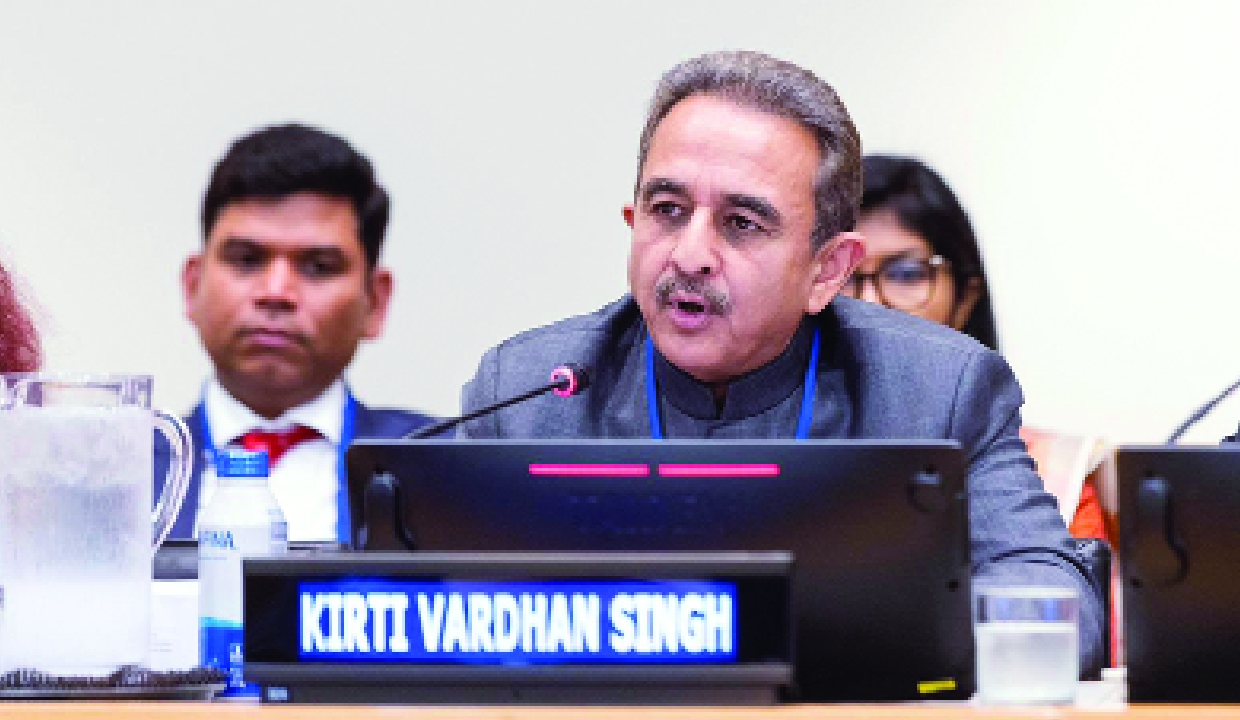
India underscored its commitment to people-centric migration governance during a high-level round table on the implementation of the Global Compact for Safe, Orderly and Regular Migration, emphasising inclusive growth, digital innovation, and international cooperation as key pillars of its approach.
Addressing distinguished delegates and global leaders, India reaffirmed that placing people at the heart of migration policy remains a core principle guiding its national strategy. Officials noted that the country’s policies are aligned with the objectives of the Global Compact while remaining adaptable to evolving global migration trends. India described its migration governance framework as both holistic and pragmatic, shaped by coordinated institutional mechanisms and active societal participation. A central aim, representatives said, is to ensure that migration is a matter of choice—supported by opportunity, dignity, and access to resources.
To this end, the government has prioritised inclusive development, livelihood generation, and financial inclusion. Recognising the growing importance of mobility in a globalised economy, India highlighted its expanding network of international partnerships.
The country has established 27 migration and mobility agreements with 23 nations, facilitating structured, skills-based migration pathways. These agreements place strong emphasis on worker welfare, social protection, and ethical recruitment practices, while safeguarding the rights of Indian nationals abroad.
Officials also stressed the importance of fair and transparent migration systems.
India’s Digital Public Infrastructure has played a transformative role in this regard. Platforms such as the eMigrate system, the National Career Service portal, and the Skill India Digital Hub are enhancing governance, improving transparency, and protecting migrant workers from exploitation. These digital initiatives are complemented by pre-departure orientation programs designed to better prepare workers for overseas employment.
The welfare of migrants, particularly those in vulnerable situations, remains a top priority. India pointed to initiatives such as the Indian Community Welfare Fund and the MADAD portal, which provide critical support to citizens abroad, including legal assistance, financial aid, and insurance coverage.
Responsive consular services have further strengthened the country’s ability to assist its diaspora in times of need. Skilling was highlighted as another cornerstone of India’s migration strategy.
Through Skill India International Centres and digital platforms, the country is aligning its workforce with global standards while working with partner nations to advance mutual recognition of skills.
Despite progress, India acknowledged ongoing challenges, including the need to strengthen social protection systems, address migrant vulnerabilities, and improve data collection and analysis.
Officials emphasised the importance of leveraging technology, deepening partnerships, and adopting a lifecycle approach to migration governance.
Concluding its intervention, India called for sustained international collaboration to translate shared commitments into tangible outcomes. “Our collective effort must be to ensure that migration is safe, orderly, and genuinely beneficial for all,” the delegation stated.
The round table brought together global stakeholders to review progress and identify future pathways for implementing the Global Compact, reinforcing a shared commitment to humane and effective migration governance.