Food security: The foundation for national stability, economic growth and public health
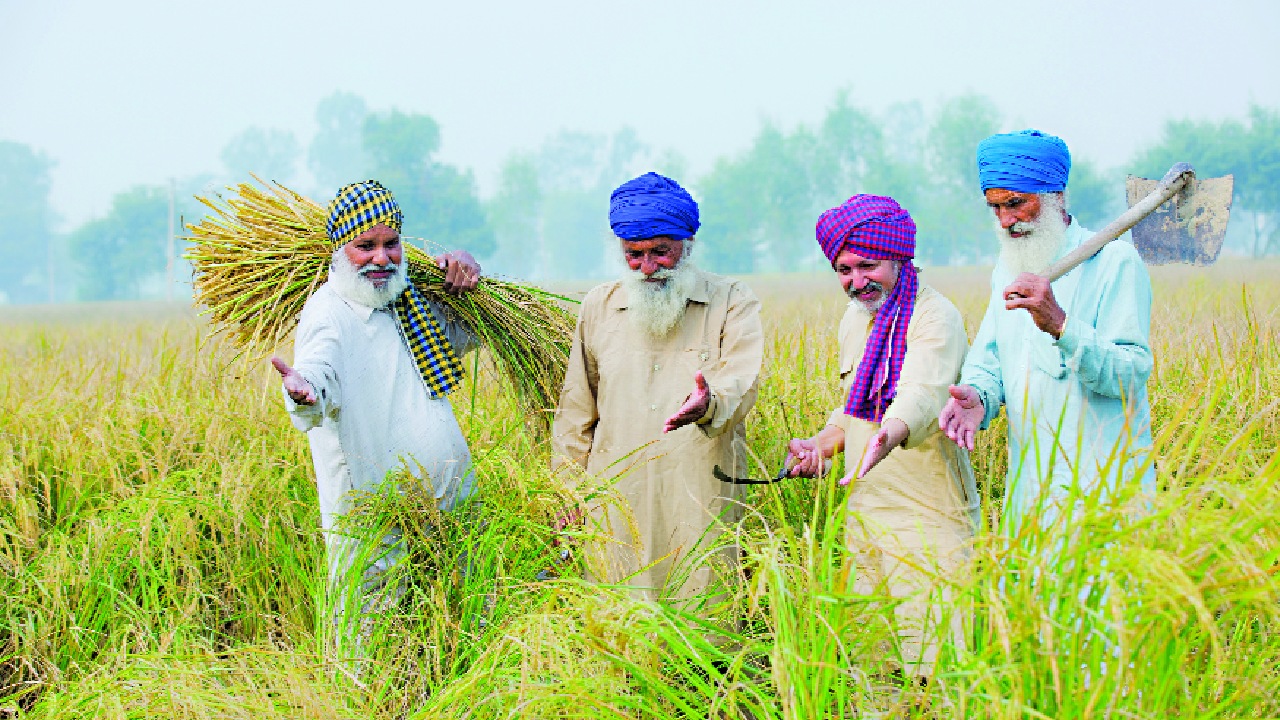
During his visit to Oman, the Prime Minister of India observed that food security is going to become a major global challenge in the coming years. He stated that, “Food security is as important as energy security.”
The importance of food security has been well stressed in our ancient texts. And this is what our ancient scriptures have stressed upon. The Vedas, Upanishads, ‘Bhagavad Gita’ and texts like the ‘Arthashastra’ emphasise food security as foundational to life, society and spiritual well-being. Food (anna) is not merely sustenance but a divine principle intertwined with cosmic order, duty and prosperity. The Taittiriya Upanishad (part of the Yajur Veda) elevates food to the status of Brahman (the ultimate reality). It declares:“Annam brahma” (Food is Brahman).All beings arise from food, live by food, and return to it upon death.The texts prescribe vows like:“Annam na nindyat” (never scorn food).“Annam bahu kurvita” (produce food in abundance).
This underscores food security as a moral and spiritual imperative: abundance prevents scarcity, fosters generosity and sustains life. The Bhagavad Gita (chapter 3) links food production to a divine cycle requiring human duty (karma) and sacrifice (yajna). The Vedas (e.g. Rig Veda and Atharva Veda) praise agriculture as essential, with hymns invoking deities for fertile fields, timely rains and bountiful harvests. Terms like ‘ksetra’ (field) and ‘urvara’ (fertile land) highlight systematic farming, irrigation and crop diversity.
Food security was fundamental to good governance as Kautilya linked food security with political stability. The relevance of food security in ancient times has lessons in tiding over difficult times, as this is a daunting challenge for our nation as well as the world. As we are well aware, agriculture was the backbone of the economy in ancient times and it was given primary importance. One of the most important agricultural policies laid down in the Arthashastra is the creation of new rural settlements (janapadanivesha). Kautilya identifies cultivators (karshakas) as vital to state prosperity. Private peasants were obliged to cultivate their fields. It was a punishable offence for a farmer to neglect or abandon his field at the time of sowing.
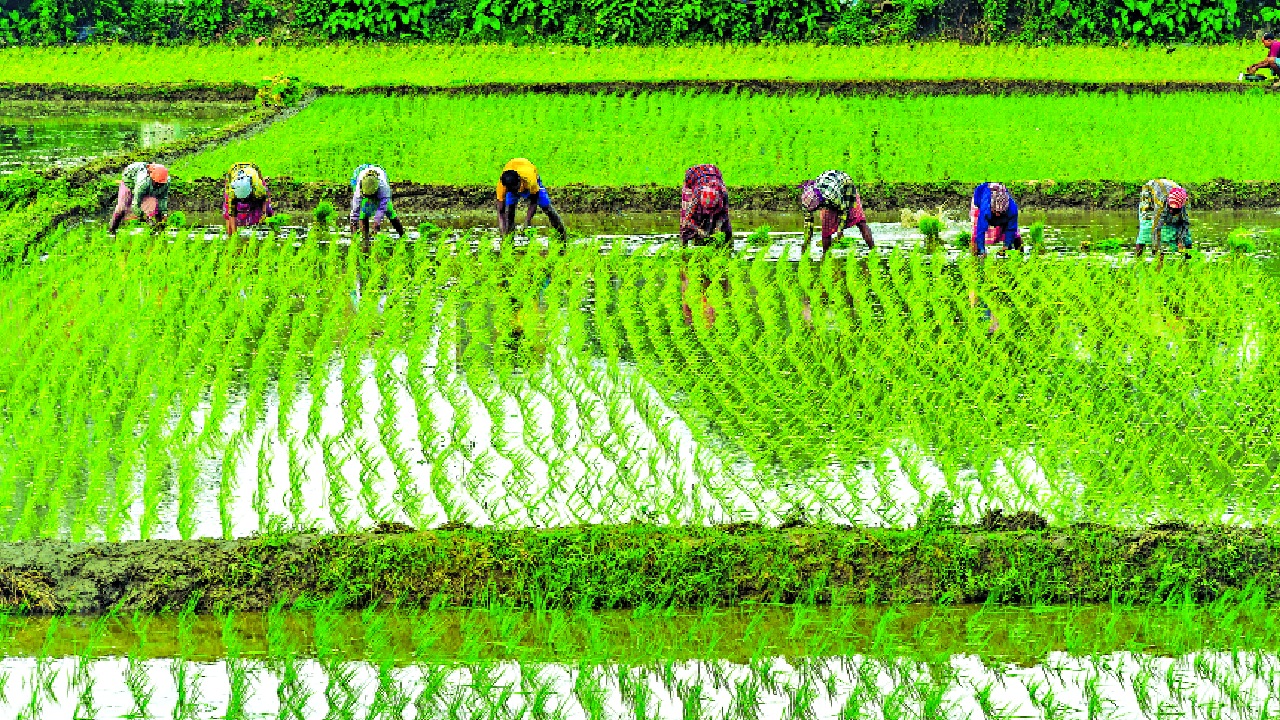
The state actively regulated grain markets to prevent hoarding, black marketing and artificial scarcity. Price controls ensured that food remained affordable, particularly for the poor. The state supervised markets through officials like the Panyadhyaksha (Superintendent of Trade) who would keep the traders under check. Five per cent profit on indigenous goods was allowed. For merchants who sought higher profit margins, for every additional 5 per cent the penalty was 200 panas. If the merchants were found conspiring to hoard food grains with the aim of selling at a higher price, they were to pay a fine of 1,000 panas. If brokers and middlemen were found accumulating stock in quantities exceeding those authorised by the chief controller, the excess was to be confiscated.
Ancient Indian farmers had well-developed knowledge of agrarian practices such as crop rotation, inter-cropping, mixed cropping and seasonal sowing. Texts like the ‘Vrikshayurveda,’ ‘Arthashastra’ and ‘Krishi Parashara’ enumerate different methods of improving productivity. Ancient farmers had an in-depth understanding of different soil types, categorising them as urvara (fertile) and usara (sterile), and identified which crops were best suited for specific land types. Kautilya classified soil according to the economic importance of the crops grown and their productivity, as these parameters helped fix the amount of taxation to be imposed. The Yajurveda mentions that before taking a second crop, manuring the field was a must. Organic manures in the form of cow dung, compost and the mud from the bottom of water tanks were commonly used to maintain long-term soil fertility and add nutrients.
Surapala’s Vrikshayurveda mentions natural ways of getting rid of plant insects, like watering the infected trees with cold water for seven days. The worms could be controlled by the paste of milk and kunapa (liquid manure), and also by smearing the roots with a mixture of white mustard and medicinal plants like vidanga.
Kautilya devotes an entire section to irrigation, detailing canals, reservoirs, dams (setu), tanks and wells. He prescribes fines for damaging irrigation works and incentives for constructing new ones, recognising water as central to food security. Two types of setu are mentioned in the Arthashastra - hydraulic projects with a natural source of water (sahodak setu) and those which were fed with water brought artificially (ahaaryodak setu). Wells and tanks/ponds were local-level irrigation projects.
There is evidence that the Harappans constructed low-cost water-harvesting devices such as small check dams and bunds using rock-cut pieces and boulders. Mohenjo-daro, a major urban centre, received water from hundreds of wells which helped access water from underground. Canalising flood waters through ditches for irrigating the rabi crops (crops of the dry season) was also practised at that time. The maintenance and upkeep of the Sudarshana Lake through time indicates the huge importance attached by the monarchs to conserving water. Sudarshana Lake was an artificial reservoir in Gujarat, originally built during the reign of Chandragupta Maurya by his governor, Pushyagupta Vaishya, for water conservation and irrigation. From a later period, Rani-ki-Vav is an exceptional example of a distinctive form of subterranean water architecture of the Indian subcontinent - the stepwell - which is located on the banks of the Saraswati River in Patan, Gujarat.
Since the beginning of civilisation, storing food has been crucial to ensure survival. That the Harappan civilisation was capable of generating sufficient surplus for its rural and urban population as well is proved by the granaries at Mohenjo-daro and Harappa. Air ducts were provided to keep grains dry and free from moisture.
The Arthashastra specifies punishments in case standing crops were damaged due to the negligence of certain people. If animals ate crops, the owner of the offending animal was meant to pay double the damage calculated according to the expected harvest to the one who had suffered. If animals strayed and ate grains in stores and threshing floors, the owner of the cattle was to pay a penalty of 48 panas to the state. The farmers were supposed to sell their produce (fruits, vegetables, flowers, etc.) only at the market; otherwise, they were liable to a penalty. The punishment for stealing agricultural produce was 200 panas.
Our ancestors were far ahead of their times in devising strategies and making use of traditional wisdom to ensure high productivity and to be able to feed the non-food-producing populations. Food security is crucial for making India formidable as it forms the foundation for national stability, economic growth, improved public health and human capital development. Ensuring all citizens have access to sufficient food is absolutely imperative for India to achieve its full potential as she marches toward becoming one of the leading nations of the world.
(The writer is the Director, Bharat Ki Soch. He is a retired IPS and has served as Chairman of Haryana Public Service Commission, DG - ITBP, DG - NDRF and Commissioner of Police, Kolkata)